




Ceramic Washstand Pitcher
A ceramic washstand pitcher brings utility and historic charm to a room, offering generous handles and pouring lips designed for domestic wash sets.
Ceramic Washstand Pitcher
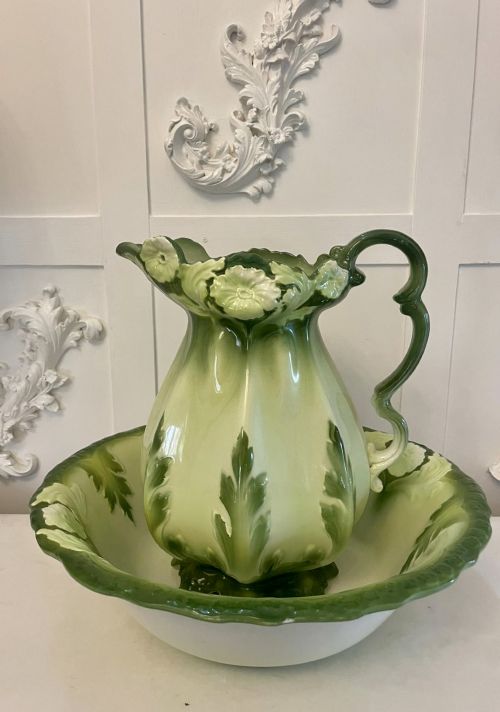
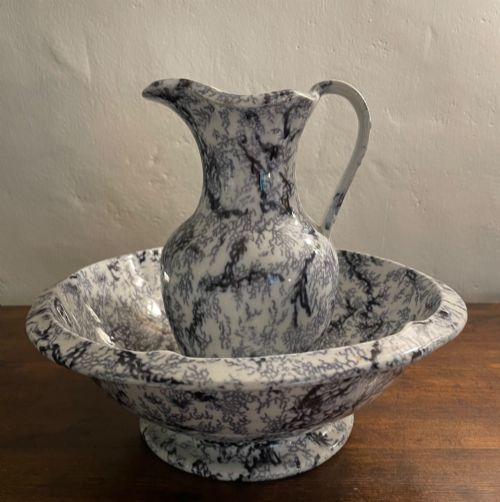
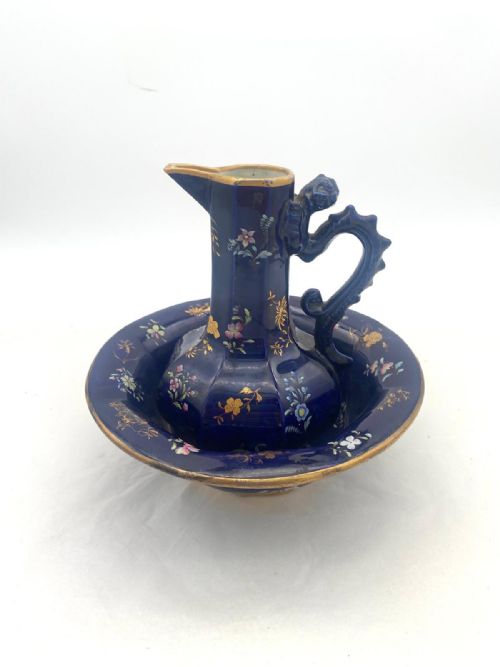
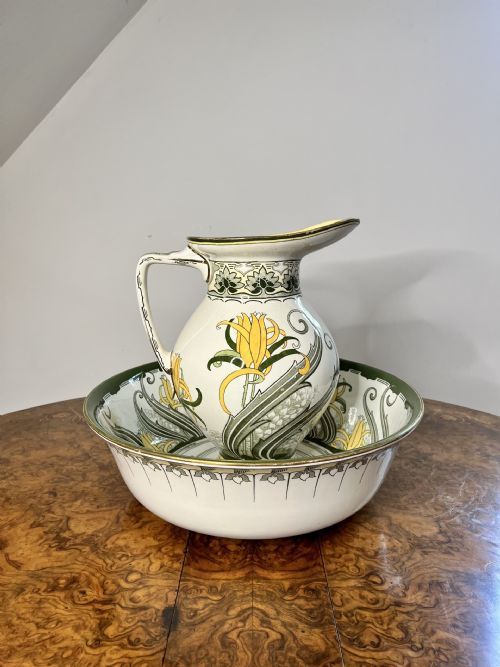
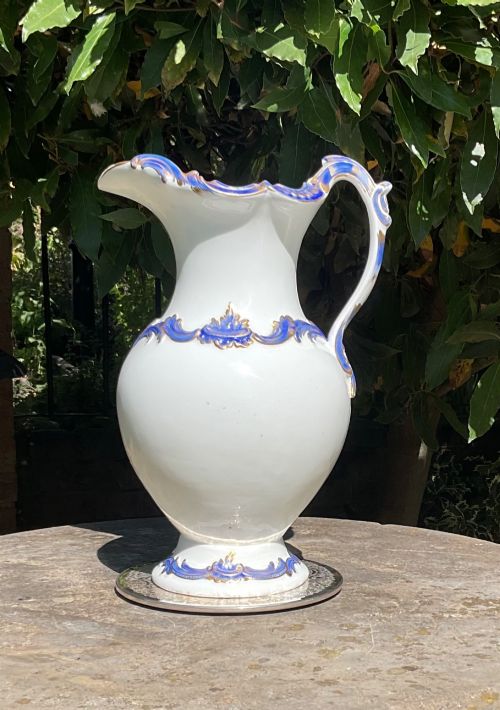
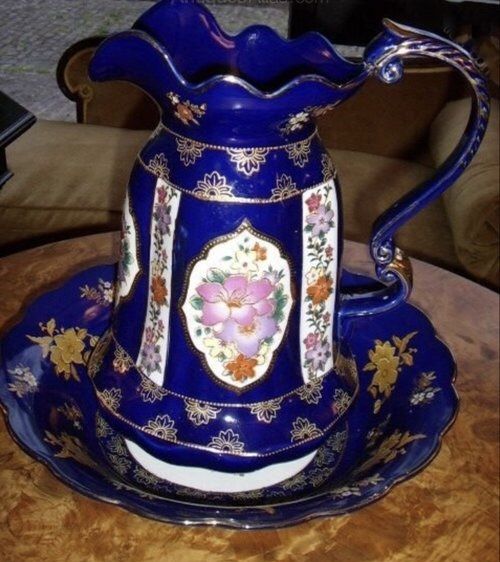
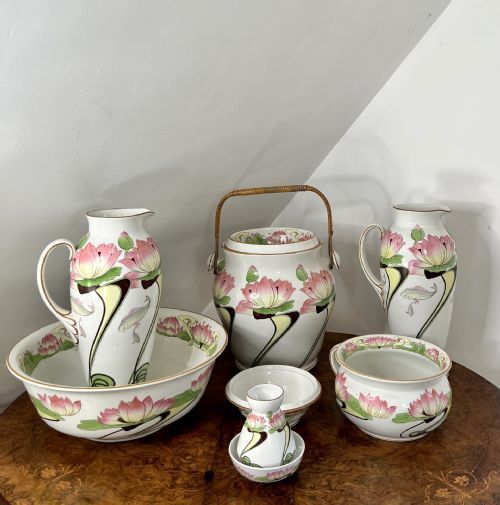
A ceramic washstand pitcher forms the central vessel of a traditional wash set, designed alongside matching basins for bedroom ablutions before modern plumbing. The pieces on this page span the nineteenth century, the Victorian and Edwardian eras, and into the early twentieth century, taking forms such as washstand sets, jug and bowl sets, and individual water jugs.
Buyers will frequently encounter examples from the Victorian and Edwardian periods, alongside earlier nineteenth-century pieces and later twentieth-century iterations. These objects appear in various configurations, from single large water jugs to complete four-piece bathroom sets and miniature sets.
Materials and production methods
Potters utilised earthenware, ironstone, and porcelain as the primary foundations for these vessels, applying glazes and enamel colours to finish the surfaces. Ironstone provided a robust body suitable for heavy daily domestic use, whilst porcelain allowed for finer, more delicate forms.
Decoration techniques included flow blue transfer printing, cobalt blue glazing, flower designs, and the application of gold leaf and gilt accents. Potters also employed specialised moulding to achieve octagonal shapes and architectural contours.
Ceramic Washstand Pitcher Retail Price Guide 2026
Typical asking prices for ceramic washstand pitcher among the pieces listed under this phrase on Sellingantiques today, from the lower quarter to the upper quarter. They describe what is for sale here now, not the wider market.
The documented periods span from the early nineteenth century through the Victorian and Edwardian eras up to the nineteen-thirties.
Distinctions in quality
Quality rests upon the crispness of the transfer printing, the evenness of the glaze, and the precision of hand-applied gilt or enamel details. Superior vessels display a balanced weight and clean potting without distortion from the kiln.
The sophistication of the design - whether an elaborate Art Nouveau contour, an Aesthetic Movement motif, or a detailed Chinoiserie pattern - separates standard utility items from superior examples. Complete matched sets demonstrate higher desirability than individual surviving jugs.
Doulon Burslem·Masons Ironstone·Minton·Mark Jones And Sons·Shelley
The Ceramic Washstand Pitcher Glossary
- Ironstone
- A heavy, durable type of earthenware patented in the nineteenth century to imitate porcelain. It resists chipping better than standard pottery.
- Flow Blue
- A nineteenth-century transfer printing technique where cobalt blue ink blurred slightly into the glaze during firing. This created a hazy, soft-edged decorative effect.
- Transfer Printing
- A method of applying pre-printed patterns from a copper plate onto ceramic surfaces via tissue paper. It allowed complex pictorial scenes to be replicated quickly.
- Basin
- A large bowl designed to pair with a pitcher for washing. It formed the lower half of a washstand set.
- Gilt
- A thin layer of gold applied to ceramic surfaces for ornamentation. It catches the light and highlights moulded rims and handles.
Ceramic Washstand Pitcher: Frequently Asked Questions
What is a ceramic washstand pitcher used for?
These pitchers held water for washing hands and faces in bedrooms before plumbed bathrooms became standard. They sat on washstands alongside matching basins and soap dishes.
Today, buyers utilise them as decorative display items, umbrella stands, or large vases for dried and fresh floral arrangements.
How do I date a ceramic washstand pitcher?
Dating relies upon stylistic clues such as handle shapes, transfer printing colours, and registration marks stamped on the base. Victorian examples often display heavier ornamentation, whilst Edwardian pieces lean towards lighter floral patterns and Art Nouveau lines.
Material composition also assists, as robust ironstone pieces often point to the nineteenth century, whereas finer porcelain examples frequently appear in later decades.
Are washstand pitchers waterproof?
Most glazed ceramic pitchers remain capable of holding water safely for everyday tasks like displaying flowers. The impervious nature of the fired ceramic body and interior glaze protects the fabric.
Buyers should examine older vessels for hairline cracks that might weep moisture over polished wooden furniture if filled entirely.