



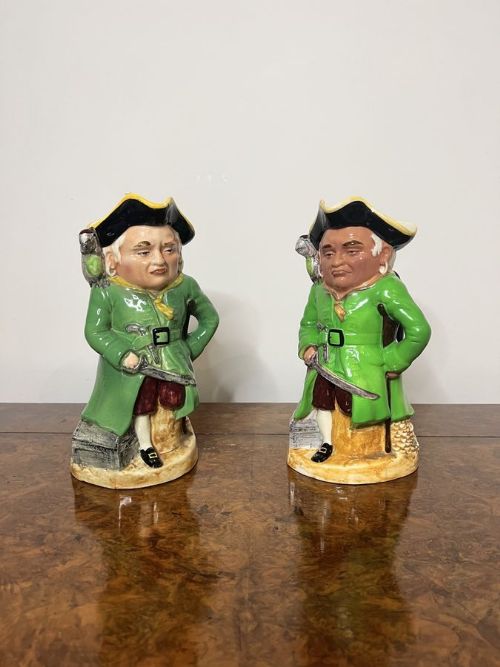

Ceramic Toby Jug
These ceramic toby jug pieces bring characterful eighteenth and nineteenth century drinking figures to your mantelpiece.
Ceramic Toby Jug
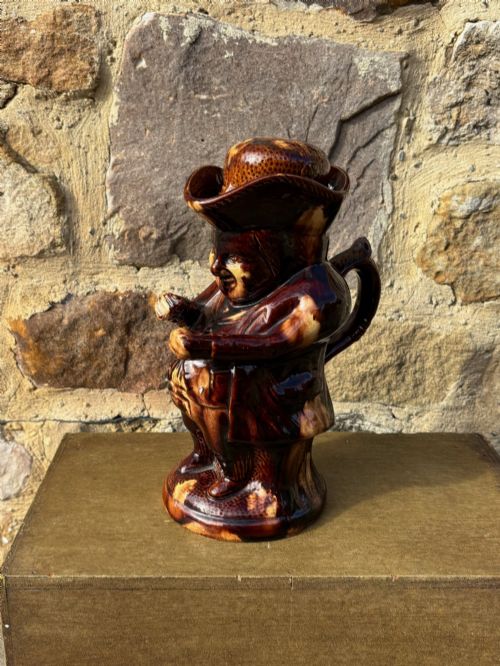
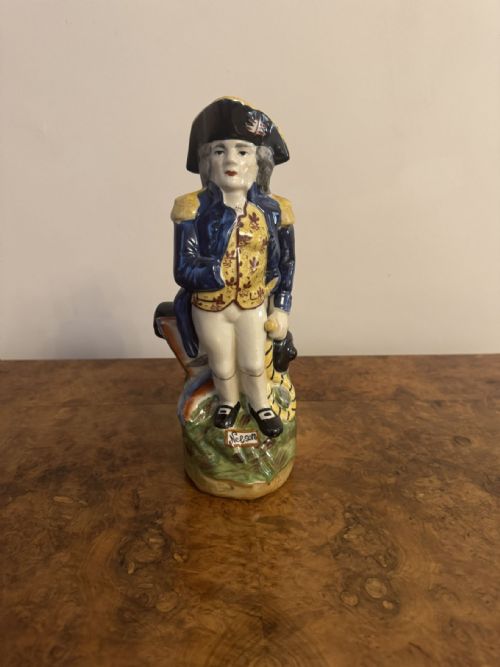
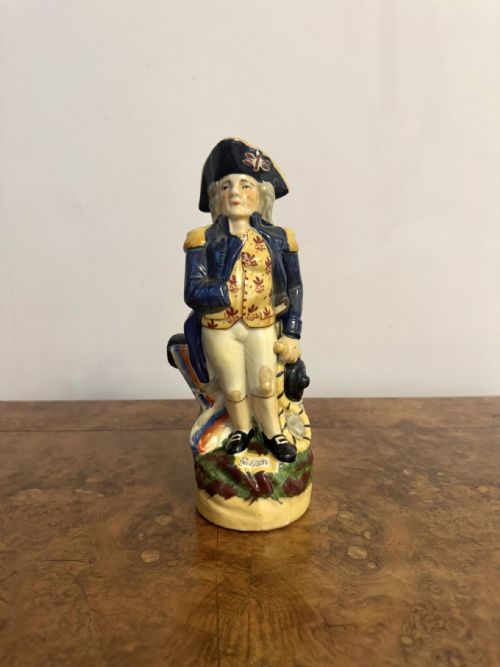
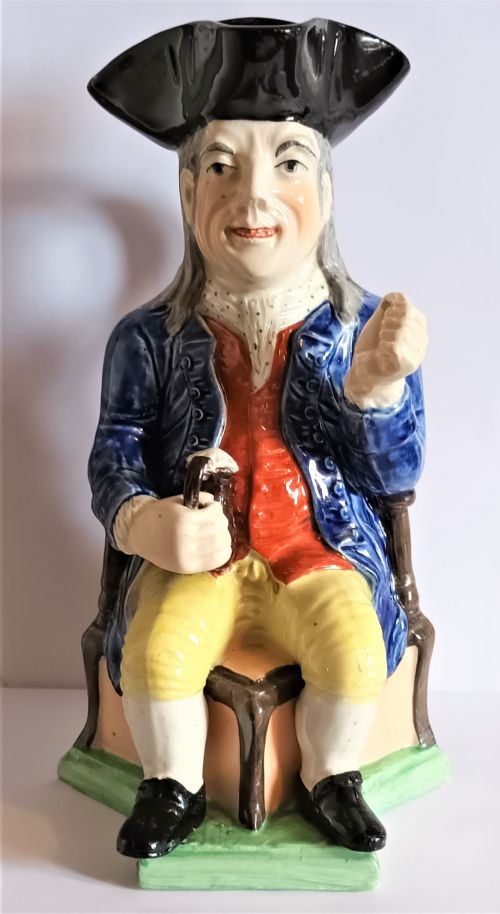
A ceramic toby jug represents a seated, beer-drinking figure in traditional eighteenth or nineteenth century attire, often wearing a tricorn hat. These vessels serve both decorative and functional purposes, depicting distinct personalities such as Lord Nelson, Admiral Nelson, Lord Kitchener, or archetypes like the Squire and Mr Snuff.
The pieces on this page span from the Georgian period through the Victorian and Edwardian eras, with notable examples originating from Staffordshire potteries and Dutch Delft faience workshops. You will encounter standard jugs alongside smaller pepperpot figures and hybrid vase forms.
Materials and methods
Potters utilised earthenware and tin-glazed earthenware to shape these vessels, often employing press moulds to achieve the rounded, seated body of the drinker. The porous clay body required a protective coating to hold liquids effectively.
Makers applied lead glazes, tin glazes, and hand-painted enamel colours over the fired clay to bring out the details of the facial expressions and garments. Faience pieces received similar tin-glazed treatments, sometimes bearing factory or pseudo marks on the underside.
Ceramic Toby Jug Retail Price Guide 2026
Typical asking prices for ceramic toby jug among the pieces listed under this phrase on Sellingantiques today, from the lower quarter to the upper quarter. They describe what is for sale here now, not the wider market.
A monkey wearing a tricorn hat joins the lineup, proving that eighteenth-century potters enjoyed dressing primates as British squires.
Assessing quality and execution
Hand-painted enamel work varies considerably between simpler production pieces and finer studio output. Skilled brushwork defines the eyes, buttons, and clothing patterns with precision, whereas lower-tier examples show hasty application.
Pieter Verburg·Stevenson & Hancock
The Ceramic Toby Jug Glossary
- Earthenware
- A type of porous pottery fired at lower temperatures, commonly used for traditional Staffordshire figures. It requires a vitreous glaze to become completely watertight.
- Tin-Glazed Earthenware
- Pottery coated with a white glaze containing tin oxide, providing an opaque surface for painted decoration. This technique is typical of Dutch Delft faience production.
- Polychrome
- Decoration utilising multiple colours painted onto the ceramic body or glaze. These pigments are fixed during a secondary firing stage.
- Pepperpot
- A small tabletop container pierced with holes at the top for dispensing seasoning. Certain figural forms replicate the seated toby design on a miniature scale.
- Staffordshire Pottery
- Ceramics manufactured in the pottery region of Staffordshire, England, renowned for figural earthenware. These works form a large portion of nineteenth-century output.
Ceramic Toby Jug: Frequently Asked Questions
What is a toby jug?
A toby jug is a pottery pitcher shaped as a full-bodied person, typically an eighteenth-century gentleman holding a mug of beer and a tobacco pipe. They combine practical pouring functions with humorous figural sculpture.
The form emerged in England during the eighteenth century and remained popular through the Victorian era. Potters modelled them on various historical figures, military leaders, and fictional characters.
How do I date a ceramic toby jug?
Dating relies on stylistic clues, clothing fashions, glazing techniques, and known historical subjects depicted in the clay. Georgian examples display different modelling characteristics compared to later Victorian Staffordshire output.
Markings on the base, such as pseudo marks or specific factory stamps, also assist in narrowing the production era. However, many early pieces remain unmarked and require visual comparison with documented examples.
Were these jugs used for drinking?
Many historical toby jugs functioned as actual serving vessels for ale or beer at taverns and private homes. The removable tricorn hat frequently doubled as a drinking cup.
Other examples served primarily as decorative ornaments or humorous mantelpiece displays rather than everyday tableware. Collectors examine the interior glaze condition to determine past utility.
What are character jugs?
Character jugs generally depict just the head and shoulders of a specific person or fictional character rather than the full seated figure seen in traditional toby jugs. They share the same ceramic traditions and practical origins.
The listings here include both full-body toby jugs and related character pieces, spanning the nineteenth and early twentieth centuries.