

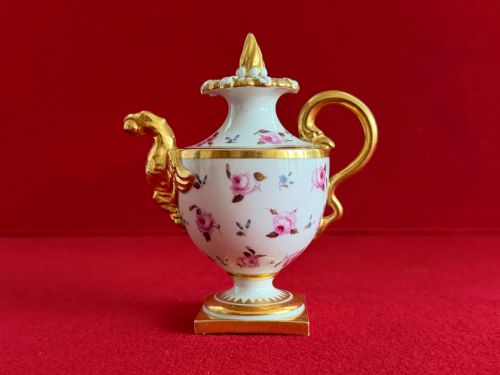
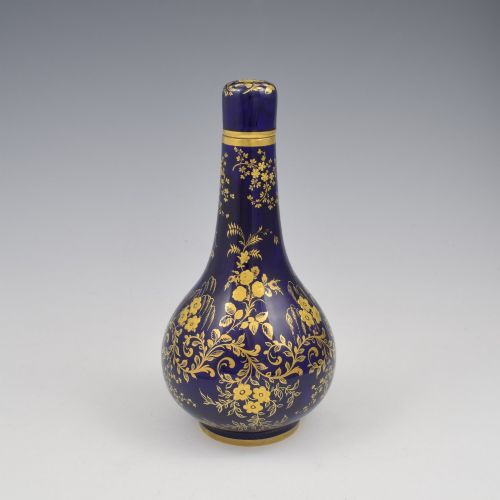
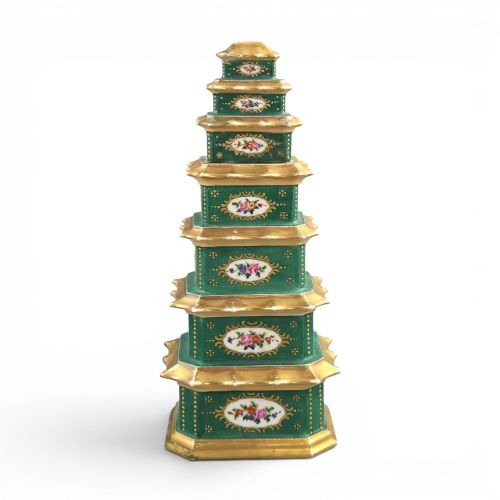
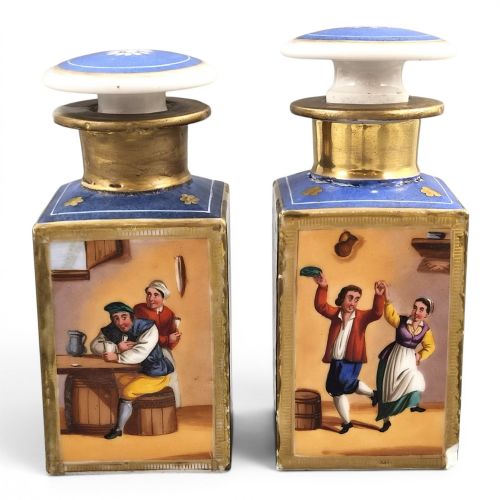





Ceramic Scent Bottle
A ceramic scent bottle holds small volumes of perfume and displays delicate hand-painted scenes, miniature forms, and precious metal mounts.
Ceramic Scent Bottle
A ceramic scent bottle is a compact vessel designed to hold perfume, often fitted with a stopper and small mounts. When you search for a ceramic scent bottle, you encounter miniature vases, figural representations, and flask forms originating from various European and Chinese makers.
The selections span the eighteenth, nineteenth, and twentieth centuries, incorporating Regency, Victorian, Edwardian, and Art Deco periods. English porcelain factories and French porcelain houses dominate the selection alongside Chinese porcelain and enamel pieces.
Vessels take many shapes, including pagodas, ewers, eggs, and figural models. Most items survive from the nineteenth century, reflecting the popularity of personal perfume containers during the Victorian era.
How they were made
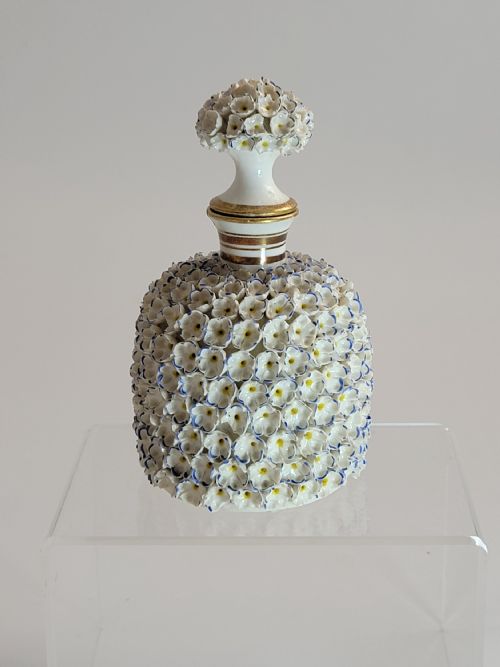
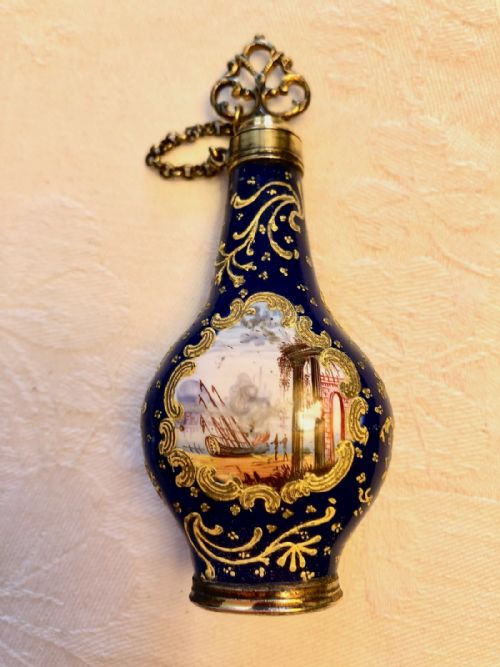
Makers shaped hard-paste porcelain and standard ceramics into intricate forms, often applying hand-painted polychrome scenes, enamel details, and flower encrustations. Many pieces feature gilding and gold leaf applied to glazed surfaces to accentuate moulded details.
Certain English and French works integrate silver mounts and stoppers produced by silversmiths alongside the ceramic body. Kiln techniques varied from simple earthenware firing to complex multi-stage porcelain and enamel processing.
Ceramic Scent Bottle Retail Price Guide 2026
Typical asking prices for ceramic scent bottle among the pieces listed under this phrase on Sellingantiques today, from the lower quarter to the upper quarter. They describe what is for sale here now, not the wider market.
Listings feature porcelain, enamel, and hard-paste porcelain materials across nineteenth-century and Art Deco periods.
What varies in quality
Quality rests in the crispness of the porcelain moulding and the delicacy of the hand-painted decoration. Finer examples display meticulous brushwork in figural scenes and secure attachment of applied floral encrustations.
The presence of original stoppers and undamaged metal mounts elevates a piece. Superior works combine balanced proportions with vibrant, stable glazes and clean gilding.
Flight Barr and Barr·Jacob Petit·Crown Staffordshire·Macintyre·Royal Worcester·Minton
The Ceramic Scent Bottle Glossary
- Hard-paste porcelain
- A dense, vitreous ceramic material composed of kaolin and petuntse, fired at high temperatures. It forms the durable white body of many nineteenth-century scent bottles.
- Enamel
- A glassy substance fused to a metal or ceramic substrate through firing. It provides a smooth, glossy surface for detailed miniature paintings.
- Gilt
- A thin layer of gold applied to the surface of porcelain or metal mounts. This technique highlights rims, handles, and decorative motifs.
- Bleu de Roi
- A deep, rich royal blue glaze developed at the Sèvres pottery and adopted by other European makers. It frequently serves as a backdrop for gilt ornamentation.
- Parian ware
- A type of fine unglazed biscuit porcelain developed in the nineteenth century to imitate marble. It produces a matt, white sculptural surface.
Ceramic Scent Bottle: Frequently Asked Questions
What is a ceramic scent bottle?
A ceramic scent bottle is a small, decorated container made from porcelain or pottery designed to hold liquid perfume. They typically feature a narrow neck, a fitted stopper, and hand-painted or gilt ornamentation.
These vessels served as functional vanity accessories for personal use and display on dressing tables. Their compact scale allowed owners to carry fragrance safely.
How were these bottles used?
Owners filled these vessels with concentrated perfumes and floral waters for daily personal grooming. The tight stoppers prevented evaporation of the precious contents.
They also functioned as decorative objects in domestic interiors, displayed on mantelpieces or within vanity sets. Their intricate designs made them popular gifts among the wealthy.
How do I care for my bottle?
Keep ceramic scent bottles away from direct sunlight and harsh cleaning chemicals to protect delicate enamel and gilt surfaces. Dust them gently with a soft, dry brush.
Avoid handling historical stoppers roughly, as the ceramic or metal tenons can be fragile. Store them on stable, flat surfaces where they will not be knocked over.
How do I identify the period?
Examine the style of decoration, glaze characteristics, and any factory marks stamped or painted on the base. Victorian and Regency pieces often show distinct neoclassical or floral motifs.
Material composition and manufacturing techniques also offer clues to age. Hard-paste porcelain bodies and specific blue grounds correspond to known nineteenth-century production periods.