



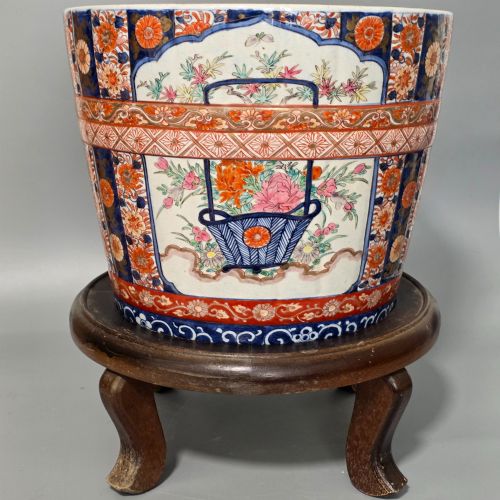


Ceramic Planter on Stand
These ceramic planter on stand pieces combine a potted vessel with a matching base, offering height and presence for displaying indoor greenery.
Ceramic Planter on Stand
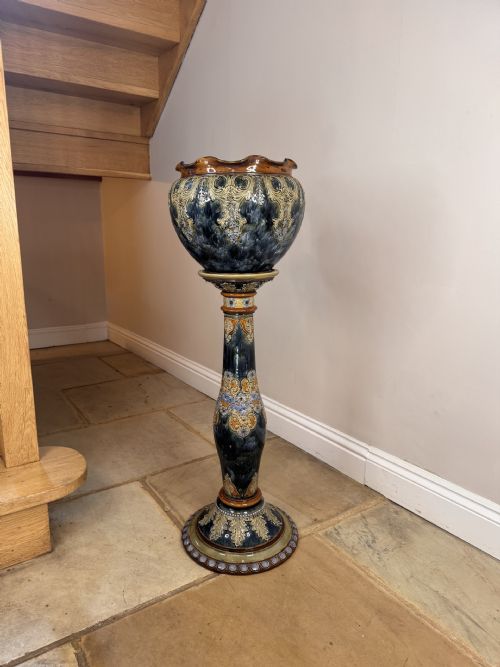
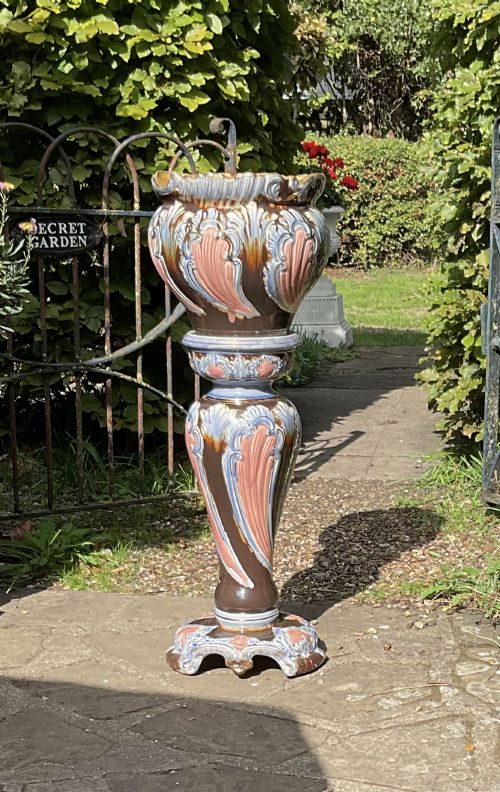
A ceramic planter on stand brings together a decorative vessel and a dedicated base, creating an elevated display piece for indoor flora. When searching for this form, buyers encounter substantial glazed earthenware vessels paired with matching ceramic pedestals, wrought iron frames, or hardwood supports. The pieces serve both a practical function for holding soil and plants and a decorative role as architectural elements within a room.
The selections span distinct historical periods from the eighteenth century through to the early twentieth century, encompassing Victorian, Edwardian, and Art Nouveau aesthetics. Production origins stretch across English potteries, European manufactories, and Japanese kilns, bringing diverse regional styles to the form. Many combinations unite a jardiniere with its original or associated pedestal, whilst others pair earthenware pots with metal or wooden frames.
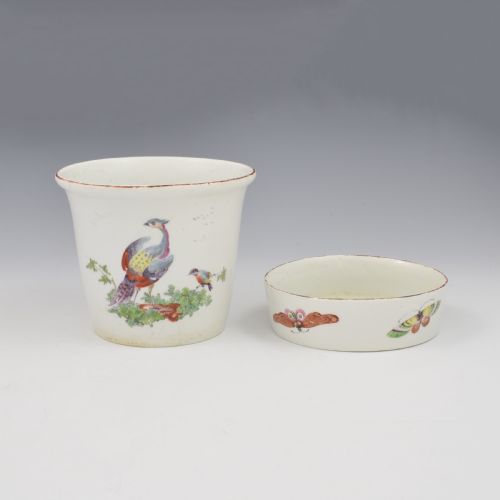
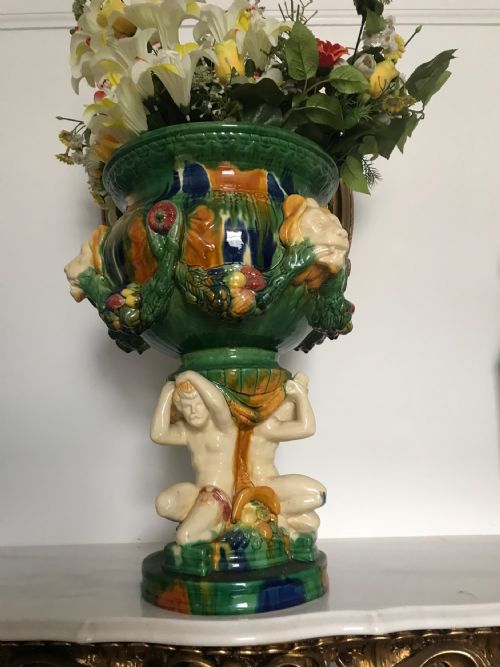
The most common formats on this page feature Majolica glazes, rich earthenware bodies, and figural or naturalistic supports. Examples range from large Italian Majolica vessels with lion head decorations to delicate porcelain pots resting on silver plated frames. Buyers frequently find matching pairs of oil jars or cache pots alongside tall ceramic pedestals designed to elevate the planting bowl.
Materials and construction methods
Potters shaped these vessels primarily from earthenware, terracotta, and porcelain, utilising wheel-throwing and mould-pressing techniques to form the deep bodies required for planting. Earthenware forms received thick colourful glazes, particularly the vibrant tin and lead glazes seen on Majolica and lustre pieces. These surface treatments provided both waterproofing for the porous clay and a glossy decorative finish.
Stands and pedestals demanded varied construction methods depending on the material selected by the maker. Ceramic pedestals were thrown or moulded in sections to bear the weight of a filled planter, whilst alternative supports utilised carved hardwood, wrought iron, or silver plated metal frames. The integration of ceramic bowls with structural metal or wooden stands required careful balancing of weight and proportion.
Ceramic Planter on Stand Retail Price Guide 2026
Typical asking prices for ceramic planter on stand among the pieces listed under this phrase on Sellingantiques today, from the lower quarter to the upper quarter. They describe what is for sale here now, not the wider market.
Gaze upon stern lion heads and mythical griffins keeping watch from the clay pedestals beneath these botanical vessels.
Indicators of quality and execution
Quality rests in the crispness of the modelling and the depth of the glaze application across both the vessel and its support. Finer examples display intricate hand-painted details, complex figural elements such as griffins or lions, and harmonious proportions between the planter and the pedestal. Superior earthenware bodies show an even distribution of glaze without pooling or dry patches.
The relationship between the planter and its stand influences the overall integrity of the piece, particularly where original matching pairs remain intact. Pieces that retain their factory-matched ceramic pedestals or purpose-built hardwood and metal frames demonstrate superior design coherence. The precision of the fit and the quality of secondary materials like wrought iron or silver plating further distinguish the work.
Burmantofts·Enoch Wood and Sons·Julius Dressler·Clement Massier·Minton·Royal Worcester
The Ceramic Planter on Stand Glossary
- Jardiniere
- A large ornamental pot or bowl for holding plants or flowers. These vessels form the upper portion of a ceramic planter on stand.
- Majolica
- A type of earthenware decorated with opaque colourful tin glazes over a white ground. This technique produced vibrant green, brown, and yellow hues popular in nineteenth-century decorative wares.
- Cache pot
- An ornamental flower pot designed to conceal a plain inner plant pot rather than hold soil directly. They frequently sit upon matching pedestals or tables.
- Lustre glaze
- A metallic glaze technique that produces an iridescent sheen on the surface of pottery. Clement Massier utilised this method to create shifting colour effects.
- Pedestal
- A structural support or column beneath a statue, urn, or jardiniere. They provide elevation and balance to heavy ceramic planters.
Ceramic Planter on Stand: Frequently Asked Questions
What is a ceramic planter on stand?
A ceramic planter on stand is a combined furnishing consisting of a deep planting bowl, jardiniere, or cache pot resting upon a matching pedestal, column, or structural frame.
These pieces were designed to elevate greenery within interior spaces, adding vertical presence and decorative detail to drawing rooms and hallways.
Were these planters meant for indoor use?
Most antique ceramic planter on stand pieces were intended for indoor display in conservatories, drawing rooms, or entrance halls rather than outdoor garden exposure.
The refined glazes and associated wooden or plated metal stands indicate they served as prominent interior decorative furnishings.
Are the stands usually original to the pots?
Many ceramic planter on stand combinations bring together the original factory-matched vessel and pedestal, whilst others pair antique pots with associated hardwood or metal stands.
Listings specify whether a pairing is matching or associated to help buyers understand the provenance of the combination.