



Ceramic Lidded Jug
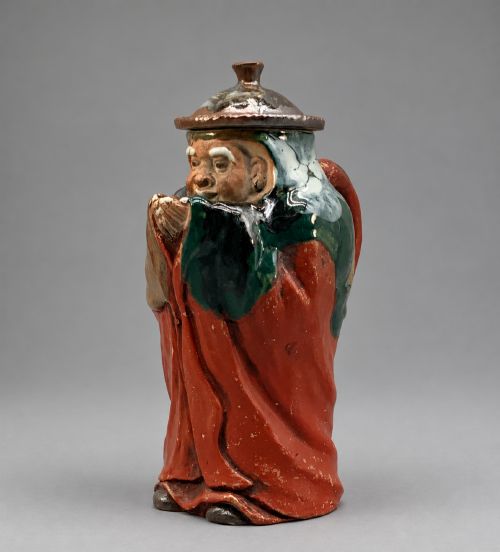
These ceramic lidded jug examples bring historic earthenware, stoneware, and porcelain together with fitted metal lids for daily pouring and display.
Ceramic Lidded Jug
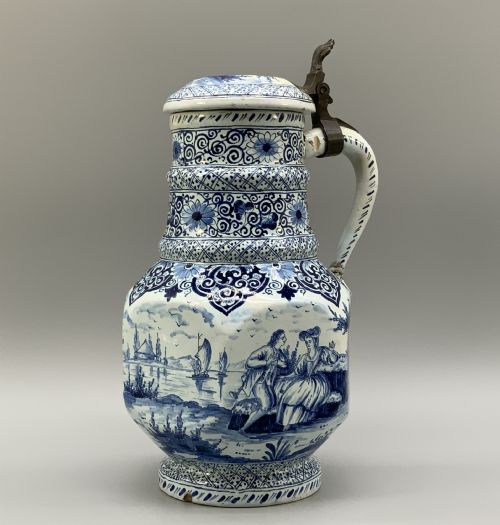
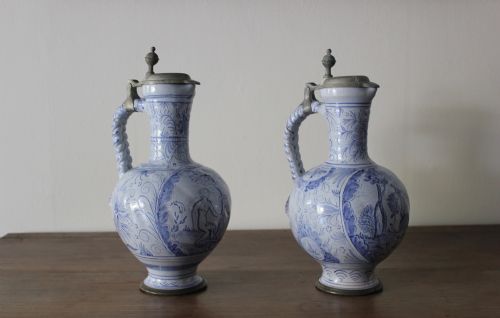
A ceramic lidded jug combines a robust clay or porcelain body with a secure metal lid, serving various functions from water pouring to ale service across the eighteenth and nineteenth centuries. Buyers searching for a ceramic lidded jug encounter diverse regional forms, ranging from Dutch delftware to English earthenware and German stoneware.
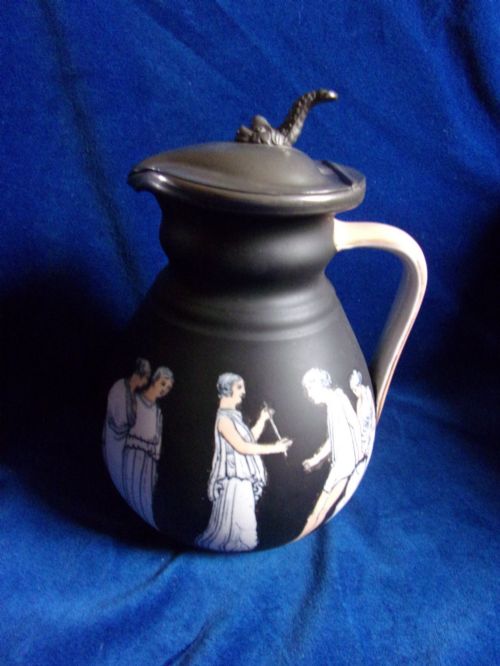
The evidence shows forms categorized as pitchers, water jugs, tankards, and ewers, often outfitted with pewter or silver-plated lids. Victorian neoclassical designs and Dutch baroque traditions dominate the aesthetic landscape of these vessels.
Makers and potteries such as Wedgwood, Charles Meigh, and Royal Doulton produced notable examples in this category. Pieces span specific dates like 1844 alongside broader periods including the eighteenth and nineteenth centuries.
Materials and construction methods
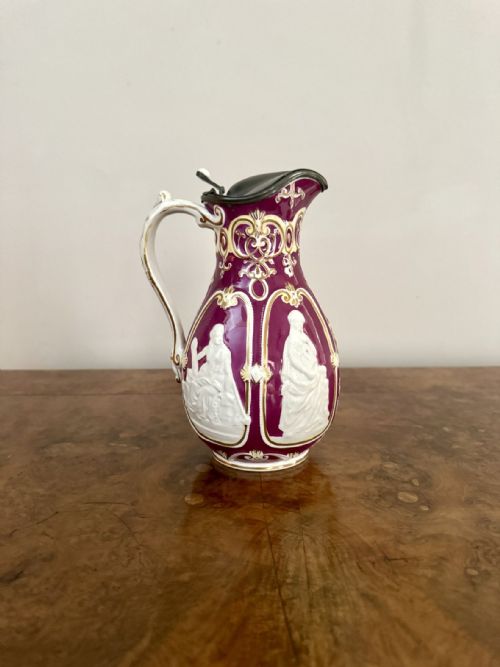
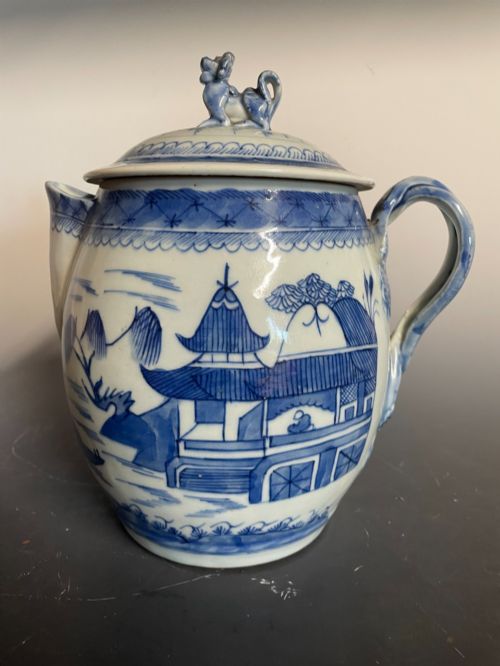
Potters shaped these vessels using earthenware, stoneware, porcelain, and tin-glazed earthenware, applying blue and white or polychrome pigments before firing. Relief-moulded techniques and hand-painted decorations appear frequently across the documented inventory.
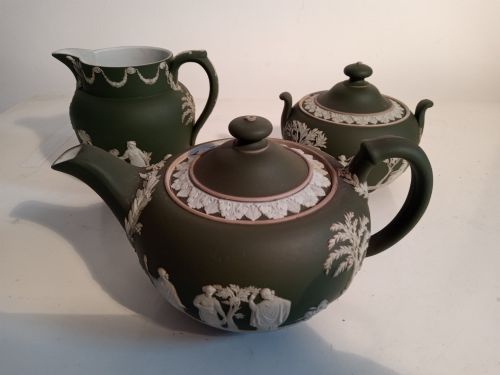
Lids were constructed from pewter or silver plate, hinged and fitted securely to the ceramic mounts of jugs, tankards, and steins. Specialised bodies like jasperware and salt glaze also define the fabrication of these historical containers.
Ceramic Lidded Jug Retail Price Guide 2026
Typical asking prices for ceramic lidded jug among the pieces listed under this phrase on Sellingantiques today, from the lower quarter to the upper quarter. They describe what is for sale here now, not the wider market.
Bacchanalian dance scenes frolic across nineteenth-century relief-moulded surfaces, reminding us that historic tea sets and ale jugs knew how to party.
Factors of distinction
The refinement of the ceramic body and the crispness of relief-moulded details separate standard vessels from superior examples. Hand-painted polychrome execution and delft glazing require precise kiln control that distinguishes finer workshop output.
The integration and preservation of the metal lid, whether pewter or silver plate, heavily influence the overall integrity of the piece. Intact hinges and well-matched metalwork indicate higher original craftsmanship and careful survival.
Wedgwood·Charles Meigh·Royal Doulton·Royal Vienna
The Ceramic Lidded Jug Glossary
- Tin Glaze
- A lead glaze made opaque by the addition of tin oxide, providing a white surface for painted decoration. This technique underpins traditional delftware and faience production.
- Jasperware
- A type of fine stoneware developed by Wedgwood, typically featuring contrasting white reliefs on a coloured clay background. Olive green and other hues characterise this distinct ceramic body.
- Pewter
- A malleable metal alloy primarily composed of tin, used historically for casting hinged lids on jugs and tankards. Its subdued metallic sheen complements historic earthenware and stoneware.
- Salt Glaze
- A vitreous coating formed by throwing common salt into the kiln during high-temperature firing, creating a textured pebble-like finish. This durable glaze protects utilitarian stoneware vessels.
- Relief-Moulded
- A method where decorative motifs are raised above the flat surface of the vessel during the moulding process. This technique highlights narrative scenes on nineteenth-century jugs.
- Ewers
- Large water pitchers featuring an elegant spout and handle, often designed for formal service. They bridge ornamental display and practical utility within historic table settings.
Ceramic Lidded Jug: Frequently Asked Questions
What were ceramic lidded jugs used for?
These vessels served functional roles for holding water, ale, wine, and beer at the table or during communal gatherings. The fitted lid helped protect contents from dust and insects while maintaining temperature.
Over successive centuries, households utilised them for both active dining service and decorative display in parlours and dining rooms.
How do you date a lidded jug?
Dating relies on examining the ceramic material, glaze characteristics, stylistic markers, and the construction of the metal lid. Eighteenth-century pieces often show tin-glazed earthenware or delft traits, whereas nineteenth-century items frequently display relief-moulded stoneware or Victorian neoclassical styling.
Maker marks, where present, provide definitive production periods and workshop attributions to refine the chronology further.
Are pewter lids original to the jugs?
Pewter and silver-plated lids were typically manufactured specifically for the ceramic body, matching the scale and hinge requirements of the specific form. Original mounts show consistent wear patterns and appropriate metallurgical composition for their stated period.
Careful inspection of the hinge pin and attachment point reveals whether the lid has remained with the vessel since its initial creation.
How should I clean my antique jug?
Dusting with a dry, soft cloth is generally sufficient for regular maintenance of historic ceramic surfaces and metal lids. Moisture should be avoided on porous earthenware or tin-glazed bodies to prevent damage to the glaze and historic pigments.
Harsh chemical cleaners or immersion in water can permanently harm antique metalwork and delicate hand-painted enamel details.