



Ceramic Greyhound Statue
A ceramic greyhound statue captures the lean, elegant lines of the coursing hound in earthenware or porcelain, bringing a touch of Victorian or Art Deco character to a mantelpiece.
Ceramic Greyhound Statue
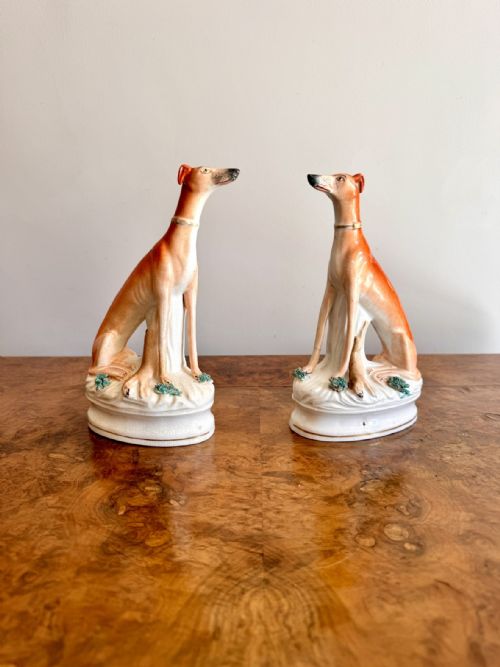
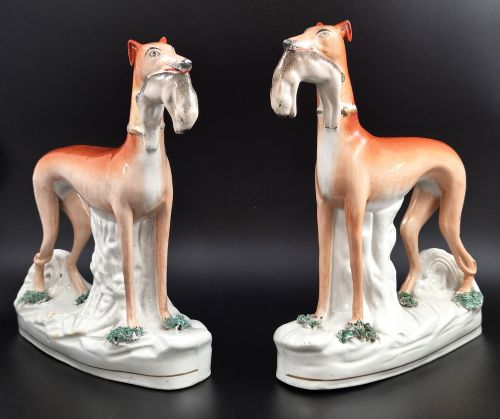
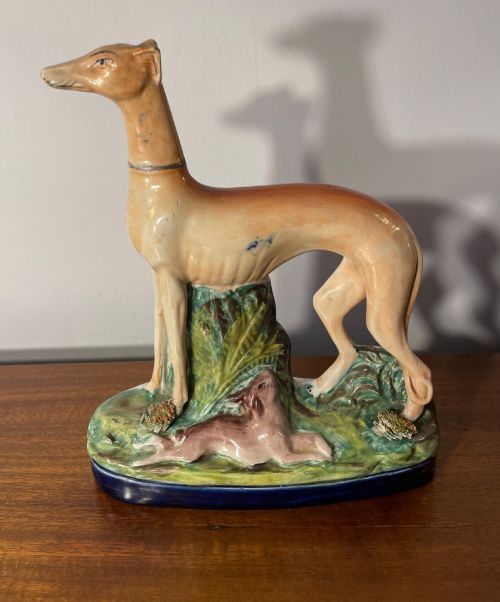
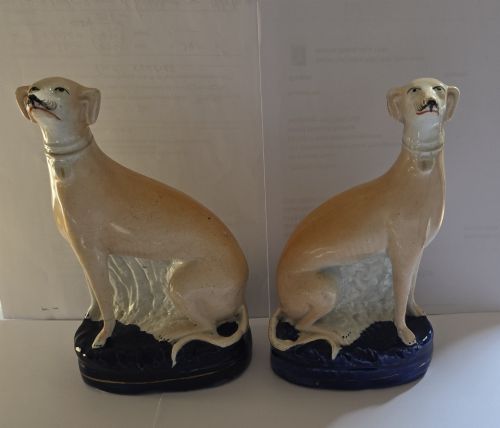
When you search for a ceramic greyhound statue, you enter a field dominated by nineteenth-century Staffordshire pottery figures and early twentieth-century continental works. These decorative objects take the form of seated or recumbent hounds, often modelled alongside hares or acting as functional desk accessories like quill holders.
Collectors seek out these figures for their sculptural presence and the variety of expressions captured by different potters. Whether rendered as a large seated hound or a delicate desk accessory, each statue reflects the prevailing decorative tastes of its manufacturing era.
How they were made
Potters shaped these figures using earthenware, pottery, or fine porcelain, often forming them in moulds to achieve the characteristic slender silhouette of the breed. Once shaped, the bodies received a lead glaze or smooth enamel finish to seal the clay and provide a glossy surface.
Enamel paint was applied by hand to add facial expressions, collars, and markings, after which the pieces underwent a final firing to set the colours. This combination of moulded ceramic and hand-painted detail defines the construction methods seen across the Victorian and twentieth-century examples.
Ceramic Greyhound Statue Retail Price Guide 2026
Typical asking prices for ceramic greyhound statue among the pieces listed under this phrase on Sellingantiques today, from the lower quarter to the upper quarter. They describe what is for sale here now, not the wider market.
Listings span multiple eras from the early nineteenth century through the 1940s, featuring earthenware, porcelain, and majolica materials.
What varies in quality
Proportion and scale also separate standard figures from exceptional works, particularly in larger pairs where maintaining symmetry during the firing process requires high skill. The depth and clarity of the glaze further distinguish superior pottery from simpler commercial output.
Rosenthal
The Ceramic Greyhound Statue Glossary
- Staffordshire
- Pottery produced in the Staffordshire region of England, famous for its animal figures and decorative figurines from the nineteenth century onwards.
- Earthenware
- A common porous pottery material fired at relatively low temperatures, typically glazed to hold water and provide a smooth surface.
- Majolica
- A type of pottery glazed with tin-enamel and painted with colourful metal oxides, often associated with Italian Renaissance Revival styles.
- Quill holder
- A desk accessory featuring a moulded figure with built-in channels or rests designed to hold writing feathers.
- Enamel paint
- A glossy paint applied over fired ceramics to add decorative surface colour and fine details.
Ceramic Greyhound Statue: Frequently Asked Questions
How are antique greyhound statues displayed?
These figures look best placed on flat surfaces such as mantelpieces, sideboards, or large tables where their sculptural form can be viewed clearly.
Pairs are traditionally arranged facing one another, mirroring the careful symmetry intended by the original nineteenth-century potters.
Were these figures used for anything practical?
While most serve purely as decorative ornaments, certain examples include integrated hollows or slots designed to function as quill holders on a writing desk.
This practical addition combined desk utility with the fashionable depiction of hunting hounds popular in the Victorian period.
Why are hares often shown with the dogs?
The inclusion of hares reflects the traditional association of greyhounds and whippets with coursing and the hunt during the nineteenth century.
Potters incorporated these small prey animals into the base design to add narrative interest and balance to seated pairs of dogs.