

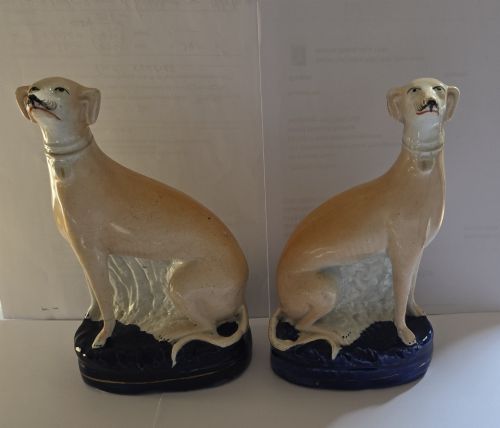
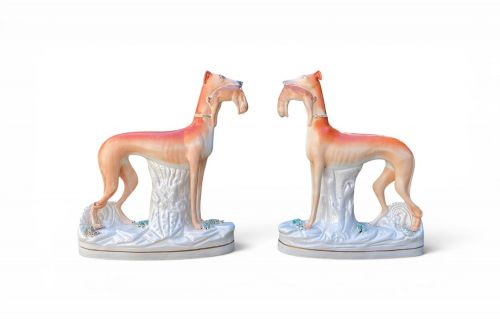


Ceramic Greyhound Ornament
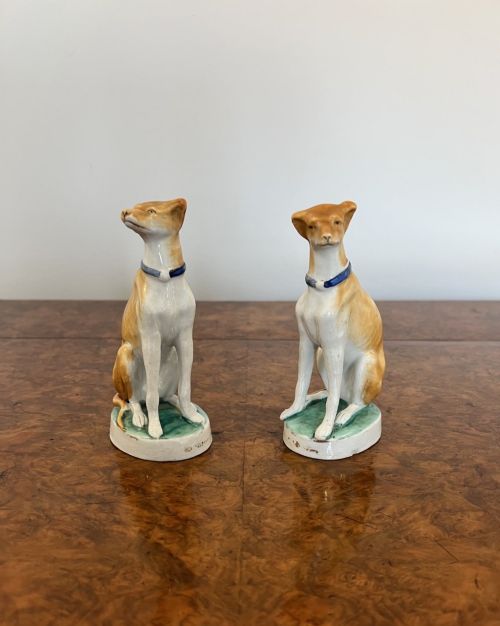
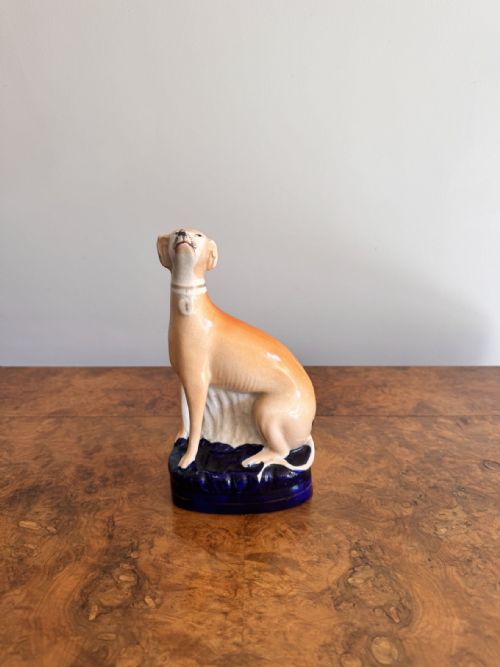
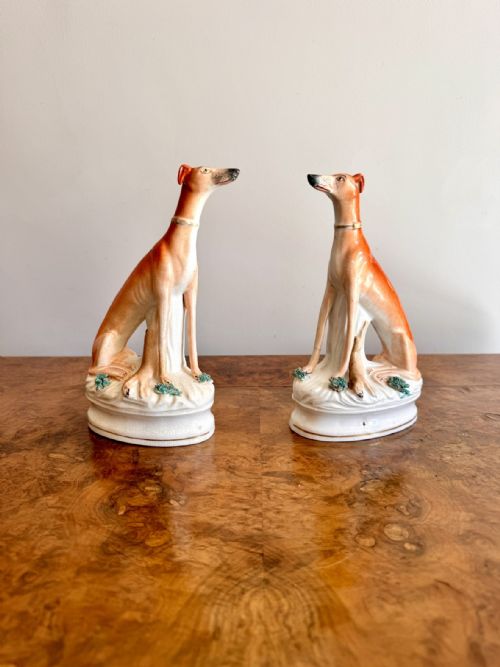
A ceramic greyhound ornament captures the alertness and grace of the hound, bringing character to a mantelpiece or desk.
Ceramic Greyhound Ornament
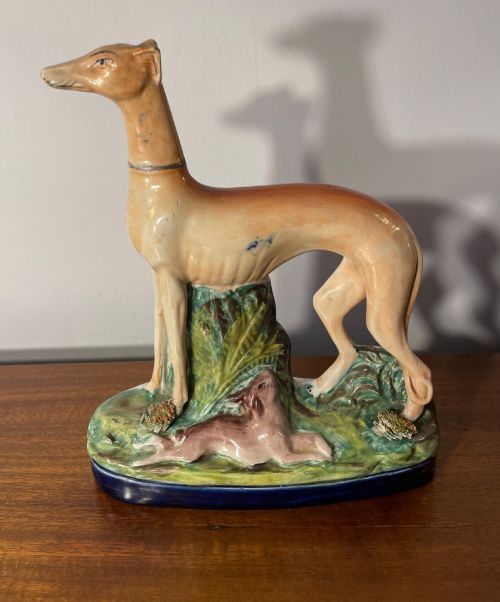
These decorative figures appear in several forms, including seated dogs, pairs with hares, and functional pieces like quill holders. The designs span simple country pottery styles to finely painted models associated with named makers.
Originating largely from nineteenth century British traditions, these ornaments capture the distinct silhouette of the hound. Each piece reflects the aesthetic preferences of its era, from robust early nineteenth century figures to later Victorian productions.
Materials and construction
The construction of these ornaments relies on traditional ceramic materials such as earthenware and porcelain, shaped into distinct canine forms. Workshops utilised lead glazes and enamel paint to finish the surfaces, occasionally adding details in gold leaf.
Potters employed moulding techniques to achieve the characteristic shapes of the greyhounds, whippets, and hares. Subsequent firing and glazing processes secured the enamel colours and created the characteristic glossy sheen seen on the finished figures.
Ceramic Greyhound Ornament Retail Price Guide 2026
Typical asking prices for ceramic greyhound ornament among the pieces listed under this phrase on Sellingantiques today, from the lower quarter to the upper quarter. They describe what is for sale here now, not the wider market.
Some attentive hounds keep watch beside painted hares, forever frozen in mid hunt.
Factors determining quality
The preservation of the original glaze and enamel decoration significantly influences the standing of an individual piece. Finer examples retain their original surface sheen and colour saturation without extensive wear or later restoration.
Thomas Parr·Rosenthal
The Ceramic Greyhound Ornament Glossary
- Earthenware
- A porous pottery body fired at lower temperatures, commonly used for nineteenth century Staffordshire figures before being glazed. It forms the foundation for many traditional animal ornaments.
- Lead glaze
- A glossy coating applied to pottery before firing, imparting a smooth, reflective surface to the ceramic body. This finish protects the underlying enamel paint.
- Enamel paint
- Vitreous colours applied over the glaze of a ceramic piece and fixed with a low temperature firing. It provides the detailed markings on the coats and eyes of the figures.
- Quill holder
- A desk accessory featuring a modelled figure alongside a trough or channel designed for resting writing implements. These functional pieces combine ornamentation with utility.
- Staffordshire pottery
- Earthenware produced by numerous potteries situated in the English Midlands region known as the Potteries. The region dominated the manufacture of nineteenth century animal figures.
Ceramic Greyhound Ornament: Frequently Asked Questions
Are these greyhound ornaments original Victorian pieces?
Many of the listed items date from the Victorian era, particularly the mid to late nineteenth century, reflecting traditional Staffordshire methods.
Later examples from the twentieth century also appear, offering different ceramic styles and materials like porcelain.
How were these ceramic figures used historically?
These pieces served primarily as decorative ornaments on mantelpieces and tables within domestic interiors.
Some variants, such as quill holders, incorporated functional elements for desk use alongside the sculptural canine form.
How can I distinguish between different periods?
Stylistic indicators and the type of ceramic body help differentiate between early nineteenth century models and later Victorian productions.
Pottery techniques and glaze characteristics evolved over the decades, providing clues to the date of manufacture.