



Ceramic Greyhound Figures
Ceramic greyhound figures capture the sleek grace of the hound in earthenware and porcelain, offering mantelpieces a touch of nineteenth-century charm.
Ceramic Greyhound Figures
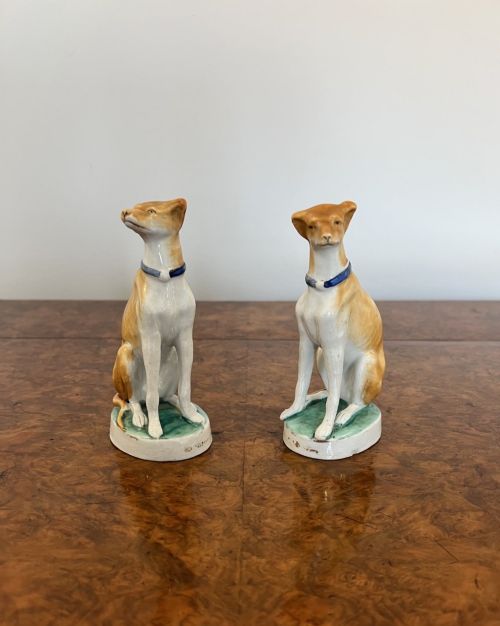
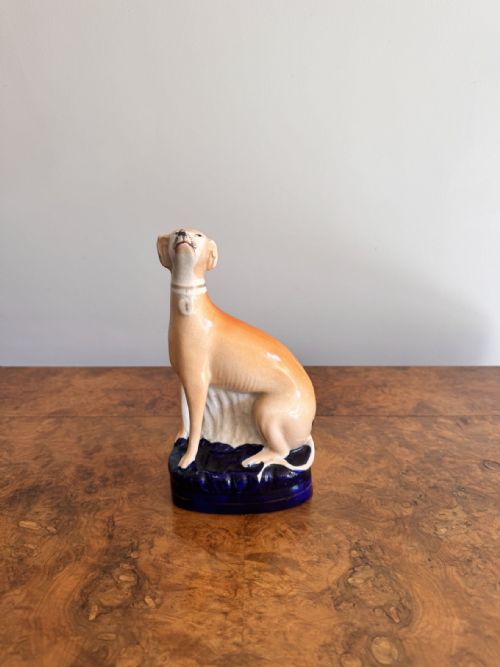
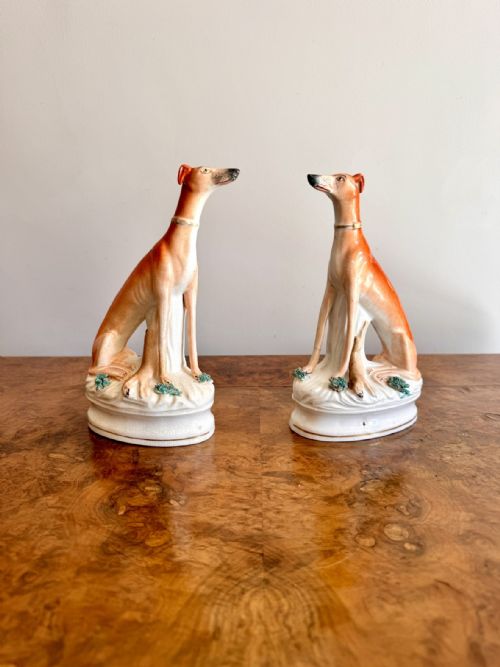
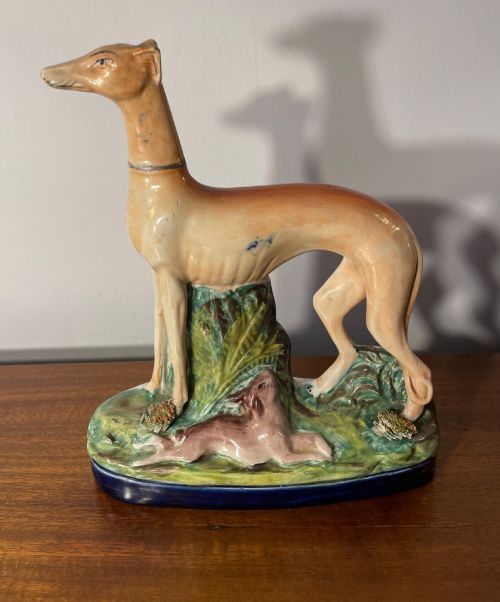
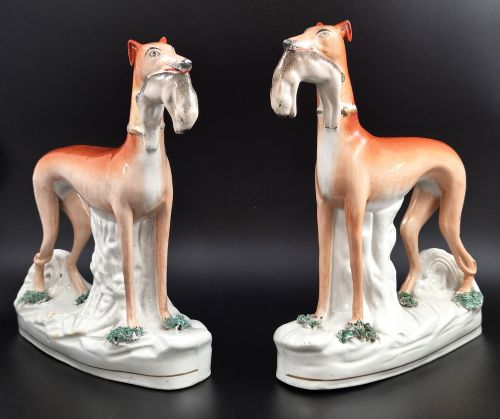
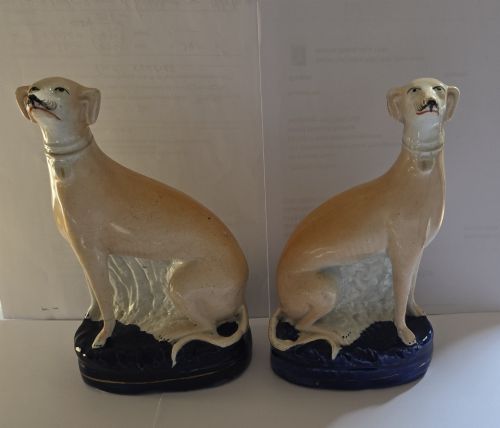
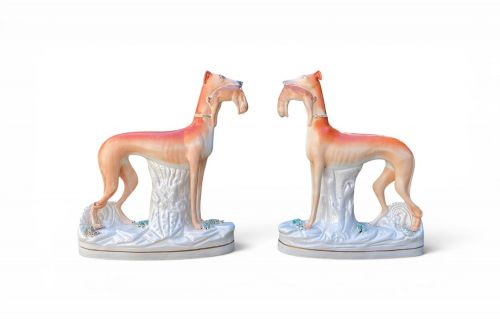
Ceramic greyhound figures include Staffordshire pottery pairs, inkwells, quill holders, and Italian majolica dogs originating from the nineteenth and early twentieth centuries. These decorative ornaments and desk accessories depict the dogs seated or paired with hares, reflecting domestic tastes of the Victorian era.
The most common version to meet on this page is the Victorian Staffordshire pair, frequently modelled with hares at their feet or configured as functional desk pieces. Examples stretch from early nineteenth-century Staffordshire works up to later porcelain and majolica interpretations from continental makers.
Materials and construction
Makers shaped these animals using earthenware and porcelain, applying lead glazes and enamel paint to render the coats and facial details. Artisans utilised gold leaf highlights on collars and bases, while others employed majolica glazes for richer coloration on Italian works.
Potters formed the figurines via traditional moulding techniques, often hollow-backed in the Staffordshire tradition, before firing and hand-painting the surface details. Desk accessories integrated functional elements like inkwells and quill holders directly into the ceramic bodies.
Ceramic Greyhound Figures Retail Price Guide 2026
Typical asking prices for ceramic greyhound figures among the pieces listed under this phrase on Sellingantiques today, from the lower quarter to the upper quarter. They describe what is for sale here now, not the wider market.
Several ceramic hounds double as stationery holders, proving that Victorian desk accessories could maintain a brisk hunting theme.
Assessing quality and finish
Quality rests in the modelling of the animal anatomy and the crispness of the painted decoration, distinguishing superior Staffordshire figures from simpler productions. The survival of original enamel paint, gold leaf accents, and associated hares elevates the appeal of a matched pair.
Scale and proportion separate standard ornaments from larger, more ambitious works, such as unusually large figures or pieces attributed to known potteries like Thomas Parr. The depth of the glaze and the preservation of fine details across the face and paws define the higher tier of the range.
Thomas Parr
The Ceramic Greyhound Figures Glossary
- Staffordshire pottery
- Earthenware figures produced by potteries in the English Midlands. These pieces formed staple ornaments for nineteenth-century mantelpieces.
- Lead glaze
- A shiny coating applied to pottery before firing. It gives earthenware a glossy surface that protects the painted decoration beneath.
- Majolica
- Opaque tin-glazed earthenware with bright coloured pigments. This technique produces vibrant surfaces seen on Italian decorative figures.
- Quill holder
- A desk accessory featuring built-in channels or slots for writing feathers. Greyhound figures were sometimes adapted to this dual decorative and practical purpose.
Ceramic Greyhound Figures: Frequently Asked Questions
Are ceramic greyhound figures always found in pairs?
Many nineteenth-century Staffordshire greyhounds were modelled and sold as matched pairs to flank fireplace openings or ornaments on a mantelpiece.
However, single figures and functional pieces such as inkwells or quill holders also appear independently in the record.
How do I date an antique ceramic greyhound?
Dating relies on stylistic markers, such as the modelling of the Victorian Staffordshire style, base characteristics, and glaze types.
Nineteenth-century examples typically show heavier earthenware bodies and hand-applied enamel paint compared to twentieth-century porcelain versions.
What is the difference between a greyhound and a whippet figure?
Makers often used the terms interchangeably in Victorian titles, though physical proportions in the ceramics sometimes point towards specific hound breeds.
Staffordshire potters focused on capturing the slender silhouette and characteristic posture rather than strict anatomical definitions.
Were these figures purely decorative?
While most served as decorative ornaments on Victorian mantelpieces, many examples incorporated practical functions into their design.
Potters integrated inkwells and quill holders into the bases to create functional accessories for nineteenth-century desks.