






Ceramic Fruit Vases
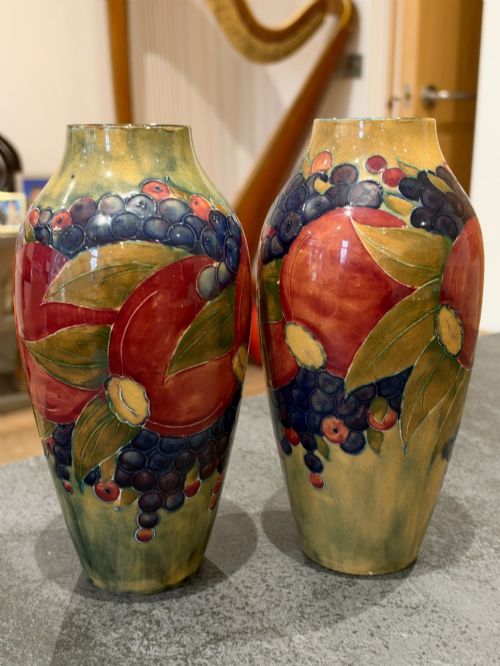
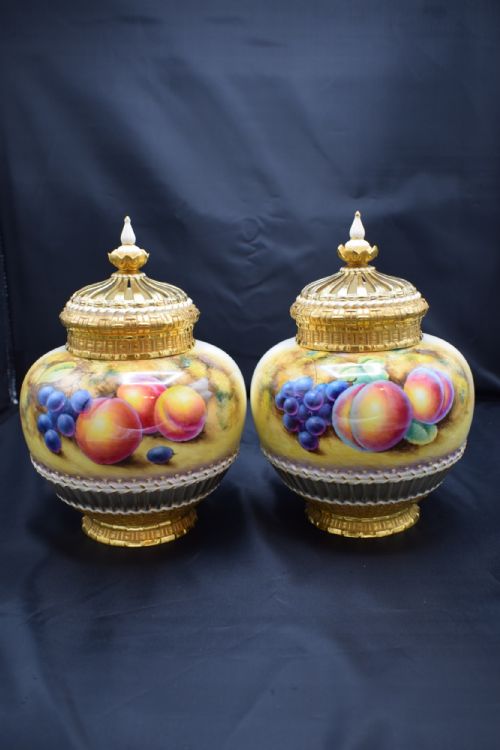
These ceramic fruit vases bring hand-painted studies of garden produce into interior displays through porcelain and bone china vessels.
Ceramic Fruit Vases
Ceramic fruit vases encompass vessels decorated with hand-painted studies of apples, pears, grapes, and berries, frequently rendered against shaded backgrounds. The pieces on this page lean heavily toward British production, particularly pot pourri jars, ginger jars, ewers, and standard vases.
The objects span several decades from the Victorian era through the mid-twentieth century, capturing shifts in domestic ornament. You will encounter works carrying distinct signatures from notable hand-painters of botanical and fruit subjects.
Forms range from miniature spill vases to large covered pot pourri vessels with pierced lids designed to diffuse scent. Each item serves primarily as a decorative focal point rather than a practical holder for cut flowers.
Materials and construction methods
Makers utilised porcelain, bone china, and glazed earthenware as the foundational bodies for these painted vessels. The clay is shaped into forms such as urns, ginger jars, and spill vases before undergoing high-temperature firing.
Surface decoration relies on hand-painted enamel pigments applied over white grounds, often complemented by gilding, gold leaf, and gilt accents on handles, rims, and covers. The painted fruit scenes require multiple firings to fix the colours and metallic details permanently onto the glaze.
Ceramic Fruit Vases Retail Price Guide 2026
Typical asking prices for ceramic fruit vases among the pieces listed under this phrase on Sellingantiques today, from the lower quarter to the upper quarter. They describe what is for sale here now, not the wider market.
Listings on this page feature porcelain and bone china vessels decorated with enamel and gilding across the Edwardian and Art Deco periods.
Evaluating quality and execution
Quality rests primarily on the skill of the artist, visible in the naturalism and depth of the painted fruit and foliage. Recognised artists whose names appear in the evidence demonstrate superior brushwork compared to unmarked or standard production pieces.
The complexity of the vessel shape and the application of gilding or gold leaf also separate ordinary items from finer examples. Covered pot pourri vases with pierced lids and detailed handles represent a higher level of ceramic manufacturing skill than simple spill vases.
Royal Worcester·William Moorcroft·Charlotte Rhead·Eichwald
The Ceramic Fruit Vases Glossary
- Pot pourri vase
- A vessel featuring a pierced or perforated cover designed to hold and release the scent of dried aromatic plant material inside. These often take the form of jars or urns with matching lids.
- Ewer
- A large jug with a wide spout and handle, originally intended for pouring water but frequently produced as a purely decorative ornamental piece in ceramic collections.
- Ginger jar
- A high-shouldered ceramic container with a domed lid, originally made for storage but adapted in later periods as a decorative display object.
- Gilding
- The application of gold leaf or gold powder to ceramic surfaces, typically highlighting handles, rims, and structural borders.
- Spill vase
- A tall, narrow cylindrical vessel designed to hold slender tapers used for lighting fires and candles.
Ceramic Fruit Vases: Frequently Asked Questions
What are ceramic fruit vases?
These are decorative ceramic vessels decorated with hand-painted studies of fruit, foliage, and natural scenes. They include forms such as ginger jars, ewers, and covered pot pourri containers.
Produced across various periods from the Victorian era into the mid-twentieth century, they function primarily as ornamental display pieces rather than functional vases.
How were these vases used?
Many of these vessels served as decorative ornaments on mantelpieces, sideboards, and drawing-room tables. Covered versions like pot pourri jars held dried fragrant herbs and flowers to scent rooms.
Open forms such as spill vases held taper lights, though their primary purpose remained visual display rather than holding water for floral arrangements.
How do I identify the maker?
Makers and individual artists often marked their work with factory stamps, impressed signatures, or painted artist signatures directly onto the base or surface of the ceramic body. Examining the bottom of the vessel usually reveals factory ciphers and date codes.
Signatures written within the painted fruit scene itself indicate the specific artist responsible for the decoration, such as those recorded by painters working in British potteries.
How do I care for a painted vase?
Keep painted ceramic vessels out of direct sunlight to prevent fading of the enamel colours and delicate gilding over time. Dust them gently with a dry, soft cloth rather than using liquid cleaning agents.
Avoid filling antique painted vessels with water, as moisture can seep through historic body cracks or damage external gilt and enamel decorations.