




Ceramic Figurines Set
These ceramic figurines set examples range from eighteenth-century soft-paste porcelain to twentieth-century sancai glazed pottery.
Ceramic Figurines Set
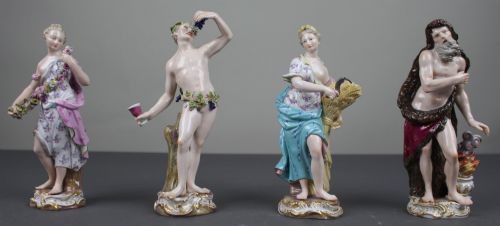
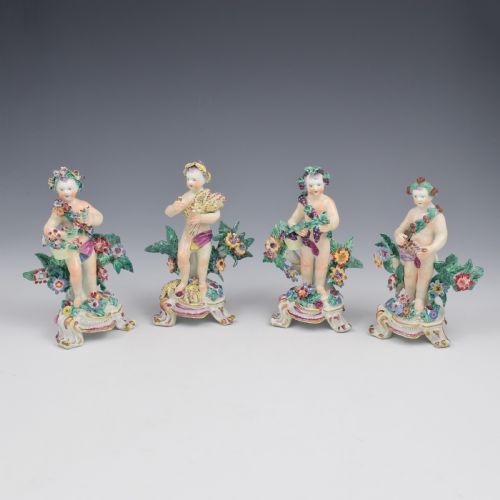
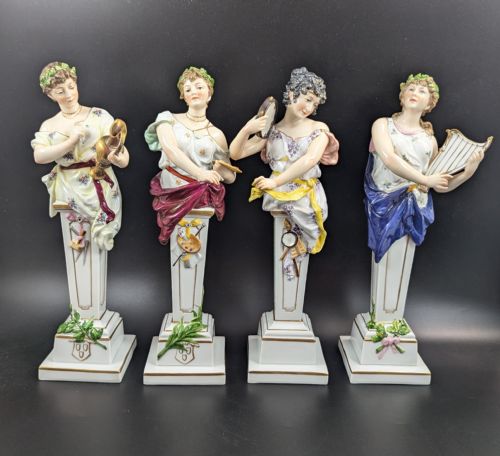
A ceramic figurines set brings together coordinated sculptural groups, often depicting allegorical themes, seasonal representations, or musical ensembles across various historical periods.
Buyers encounter groups representing the four seasons, individual continents, musical bands, and playful animal subjects created by European manufactories and Eastern workshops.
The selections span from eighteenth-century soft-paste porcelain figures to nineteenth-century Staffordshire flatbacks and Meissen porcelain groups.
How they were made
Makeries shaped these pieces using soft-paste porcelain, hard-paste porcelain, and pottery clay, often finishing the surfaces with intricate glaze and enamel decoration.
Artisans applied overglaze enamel and gold leaf detailing to enhance the sculptural forms of Rococo, Victorian, and Neoclassical figures.
Ceramic Figurines Set Retail Price Guide 2026
Typical asking prices for ceramic figurines set among the pieces listed under this phrase on Sellingantiques today, from the lower quarter to the upper quarter. They describe what is for sale here now, not the wider market.
The listings feature porcelain, pottery, enamel, and gold leaf across eighteenth and nineteenth-century styles.
What varies in quality
The sophistication of the modelling and the precision of the hand-painted enamel work distinguish finer sculptural groups from simpler utilitarian ornaments.
The delicacy of applied floral elements and the preservation of original gilding reveal the skill of the original workshop.
Edmé Samson·Meissen·Bow Porcelain·Achille Mollica·Derby
The Ceramic Figurines Set Glossary
- Soft-paste porcelain
- A translucent ceramic body composed of clay and glass frit, fired at lower temperatures than hard-paste porcelain. It is characteristic of eighteenth-century English manufactories.
- Enamel
- Vitreous material fused to the ceramic surface during firing to provide colour. Overglaze enamels are applied after the initial glaze firing.
- Flatback
- A figure moulded with a flat unglazed or minimally decorated back designed for placement against a mantelpiece. This method saved materials and production time for regional potteries.
- Putti
- Plump winged infant figures frequently depicted in allegorical sculptural groups. They appear often in eighteenth-century European porcelain sets representing seasons or arts.
Ceramic Figurines Set: Frequently Asked Questions
How are ceramic figurine sets displayed?
These sets look best displayed together on a dedicated mantelpiece, sideboard, or within a glass-fronted cabinet where their coordinated themes can be fully appreciated.
Grouping the pieces close to one another preserves the narrative relationship between the individual figures, such as the four seasons or musical band members.
What periods do these figures represent?
The selections span from the eighteenth century through the nineteenth century and into the early twentieth century, encompassing various European and Asian traditions.
Stylistic shifts reflect the transition from Rococo and Neoclassical aesthetics to Victorian domestic ornamentation.
How do I care for antique porcelain figures?
Dust these delicate pieces gently using a soft, dry brush to avoid catching fragile applied elements like leaves or ribbons.
Keep them away from direct sunlight and areas prone to sudden temperature fluctuations to protect the painted enamels and gilding.
Are these sets complete?
Some offerings comprise full original groupings, such as four seasons or musical bands, while others represent surviving subsets.
Examining the individual motifs helps determine the original scope of the sculptural series.