


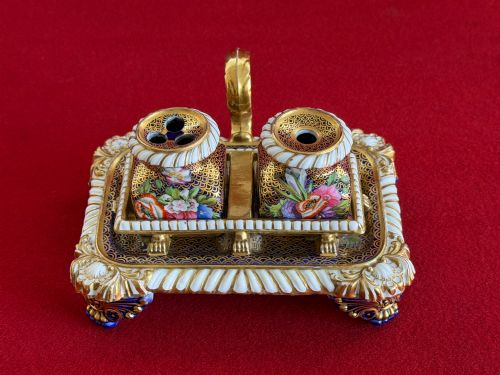


Ceramic Desk Stand
These ceramic desk stand pieces bring tactile inkwells and quill holders to a desktop, offering functional history through porcelain, earthenware and tin-glazed pottery.
Ceramic Desk Stand
A ceramic desk stand combines inkwells, quill holders and desk accessories into a single desk accessory designed for writing. When you browse this page, you are most likely to meet Victorian Staffordshire pieces and porcelain examples from various periods.
The forms span from simple blue and white faience desktop inkwells to elaborate porcelain inkstands mounted on brass bases. Makers produced these items to serve writing desks across Georgian, Regency and Victorian eras.
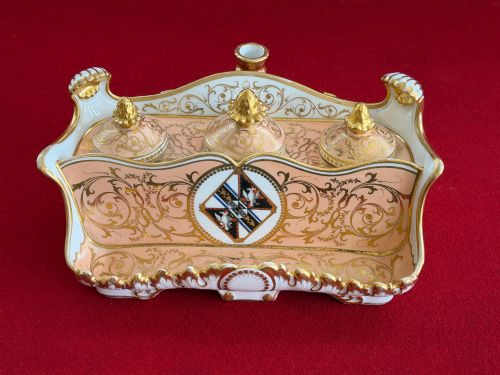
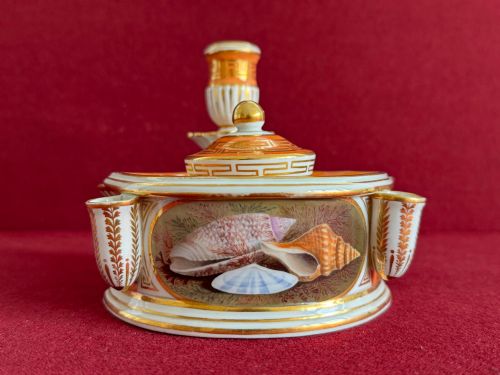
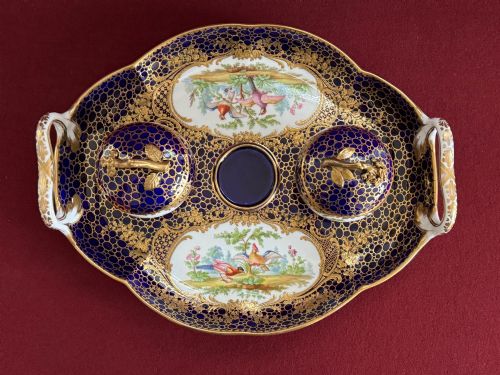
Objects range from figural greyhound inkwells and dog quill holders to patterned porcelain stands decorated in Dutch Delft, Chinoiserie and Sevres revival styles. Each piece reflects the desk storage needs of its respective period.
Materials and construction
Makers utilised ceramic, earthenware and porcelain bodies shaped into inkstands, inkwells and quill holders. Glaze finishes protected the porous clay bodies while adding smooth surfaces to the desk accessories.
Some examples incorporated enamel painting, gold leaf detailing and blue and white pigments to decorate the ceramic surfaces. Brass bases and tin-glazed earthenware techniques also appear across the selection.
Potters combined moulded clay forms with applied decorative motifs, creating figures like greyhounds and dogs holding baskets alongside standard inkstand trays.
Ceramic Desk Stand Retail Price Guide 2026
Typical asking prices for ceramic desk stand among the pieces listed under this phrase on Sellingantiques today, from the lower quarter to the upper quarter. They describe what is for sale here now, not the wider market.
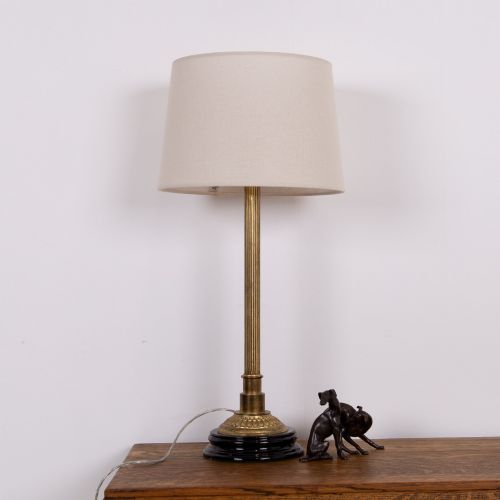
Several Staffordshire pottery dogs patiently double as quill holders, guarding pens on the Victorian desk.
Variations in quality
Quality rests in the precision of the ceramic moulding and the execution of the painted decoration. Fine porcelain pieces display crisp detail and careful gilding, whereas earthenware items show simpler folk art characteristics.
The integration of mixed materials, such as porcelain mounted on brass bases, distinguishes more complex desk stands from basic pottery inkwells. Painted patterns, from Chinoiserie scenes to Sevres style motifs, show varying degrees of artistic skill.
Minton·Flight & Barr·Spode·Worcester
The Ceramic Desk Stand Glossary
- Inkstand
- A tray or stand holding inkwells, sanders, and pen holders for a writing desk. It forms the central fixture of a ceramic desk stand arrangement.
- Quill Holder
- A support designed to hold writing feathers when not in use. These often take figural forms such as dogs or greyhounds.
- Tin-Glazed Earthenware
- Pottery covered with a white tin-oxide glaze that provides an opaque surface for painted decoration. It is characteristic of Dutch Delft pieces.
- Faience
- European tin-glazed earthenware produced in imitation of Chinese porcelain and traditional styles. Blue and white examples frequently appear on desks.
- Sevres Revival
- A 19th-century style imitating the decorative richness of the French Sevres porcelain factory. It often includes fine gilding and painted panels on porcelain inkstands.
Ceramic Desk Stand: Frequently Asked Questions
What is a ceramic desk stand?
A ceramic desk stand is a pottery or porcelain tray designed to hold writing equipment like ink and quills.
These pieces served practical writing needs on desks during the Georgian, Regency and Victorian periods.
How were ceramic inkstands used?
They held liquid ink in small wells and provided resting places for feather quills during correspondence.
Users dipped their pens into the inkwell while keeping the desk tidy with the integrated stand.
How do I date a ceramic desk stand?
Dating relies on identifying the material, pottery style and manufacturing period seen in the piece.
Victorian Staffordshire figures differ visually from earlier Georgian porcelain or Regency earthenware designs.
How do I care for antique ceramic desk stands?
Keep the ceramic surfaces clean with a dry cloth and avoid exposing old glazes to harsh moisture.
Handle brass mounts and painted enamel or gold leaf details with care to preserve the original finish.