
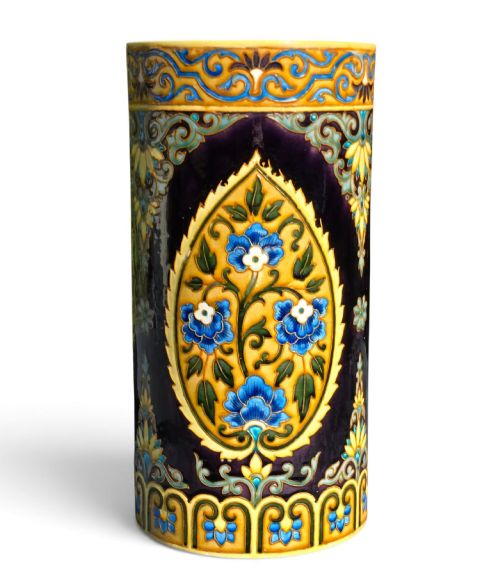


Ceramic Cane Stand
These ceramic cane stand examples range from Victorian earthenware to studio pottery, offering a practical way to store walking equipment.
Ceramic Cane Stand
A ceramic cane stand serves as a functional hall vessel for holding walking sticks, canes, and umbrellas. The selections on this page span the nineteenth century into the early twentieth century, taking forms such as barrels and cylindrical vessels.
Buyers encounter pieces originating from English art potteries alongside continental and Asian workshops. These vessels utilise robust ceramic bodies designed to withstand daily use in domestic hallways.
How they were made
Potters shaped these vessels using earthenware, porcelain, and saltglaze stoneware. Hand-painted decoration appears alongside glazes and enamel highlights.
Techniques range from industrial studio methods to specialised faience production, creating durable waterproof interiors for utilitarian halls.
The selection includes pieces from the Victorian era, the Arts and Crafts movement, and the early twentieth century, utilising materials like earthenware, porcelain, and saltglaze stoneware.
What varies in quality
The sophistication of the painted decoration and the complexity of the glaze distinguish standard production from exceptional studio examples. Finer pieces demonstrate deliberate control over kiln temperatures and pigment application.
The weight and consistency of the ceramic body separate heavy utilitarian vessels from delicate decorative porcelain forms.
Théodore Deck·Fukagawa·Burmantofts Faience
The Ceramic Cane Stand Glossary
- Saltglaze stoneware
- A ceramic type fired at high temperatures where salt is thrown into the kiln to produce a glossy, textured surface finish.
- Faience
- Tin-glazed earthenware decorated with opaque colours over a white background, often associated with Arts and Crafts production.
- Canton porcelain
- Chinese export porcelain featuring distinct hand-painted enamel decoration, typically produced during the Qing dynasty.
- Majolica
- A type of pottery glazed with tin enamel and painted with metallic oxide colours, popular during the nineteenth century.
Ceramic Cane Stand: Frequently Asked Questions
What is a ceramic cane stand?
A ceramic cane stand is a tall vessel designed to hold walking sticks, canes, and umbrellas upright in an entrance hall. They provide a stable, waterproof base to keep wet or muddy items contained.
These functional pieces became popular in the nineteenth century, combining utility with decorative styles ranging from plain stoneware to elaborate majolica and porcelain.
How were these stands used?
Households placed these vessels in hallways, vestibules, and boot rooms to store walking aids and umbrellas when returning from outdoors. Their heavy ceramic construction prevented tipping when loaded with multiple sticks.
Over time, they transitioned from purely utilitarian hall furniture to decorative items showcasing specific artistic movements like Arts and Crafts or Iznik Revival.
How do I date a ceramic stand?
Dating relies on stylistic clues, ceramic bodies, and manufacturing marks found on the base. Victorian pieces often utilise heavy earthenware or saltglaze, while early twentieth-century examples lean towards studio pottery.
Glaze types and decorative motifs, such as Chinoiserie or Japanese export designs, also help narrow down the period of production.
How do I live with a ceramic stand?
Place the stand on a hard floor surface in a hallway or entranceway where walking sticks and umbrellas accumulate. Ensure the interior remains dry to protect the ceramic body over time.
Because these vessels are heavy and rigid, keep them away from high-traffic corners where they might be knocked by heavy furniture.