




Central Asian Camel Panel
A central asian camel panel is a striking tribal weaving from the steppes, prized for rich natural dyes and bold nomadic motifs.
Central Asian Camel Panel
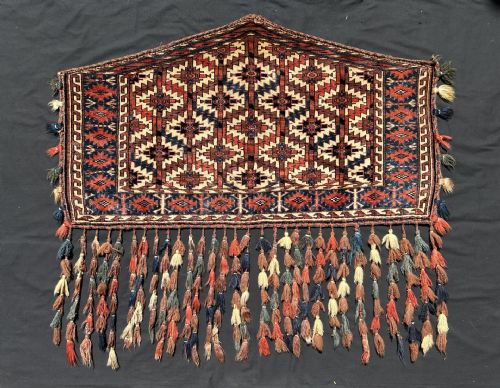
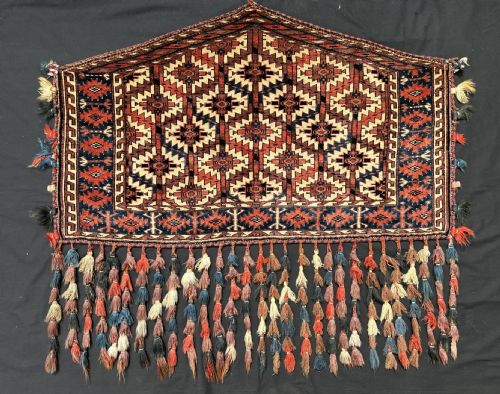
A central asian camel panel represents traditional nomadic textile art created across the Trans-Caspian steppes and the Middle Amu Darya region during the nineteenth and early twentieth centuries. These woven trappings served functional roles in tribal life, particularly for wedding processions and animal ornamentation.
The selection here encompasses various specific forms created by distinct tribal groups such as the Yomut, Tekke, Saryk, Karadashli, and Ersari peoples. Buyers will encounter asmalyks, dizyks, chuvals, and torbas, each fulfilling particular domestic and ceremonial duties within tribal communities.
Tribal weaving traditions dictate the geometric layouts and specific tribal guls that identify the origin of each piece. These textiles demonstrate the rich cultural heritage of Central Asian nomadic groups through distinct regional designs and banded flatweave techniques.
What varies in quality
The refinement of the knotting and the complexity of the tribal guls determine the visual impact of an individual textile. Tighter structures and more intricate drawing separate standard utilitarian weavings from exceptional tribal examples.
Completeness significantly influences the standing of a trapping, with surviving backs and paired sets holding particular interest for textile historians. The vibrancy and consistency of the natural dyes further elevate the overall merit of these nomadic works.
Listings feature nineteen-century nomadic weavings created by Yomut, Tekke, Saryk, Karadashli, and Ersari tribes using wool, cotton, and natural dyes.
The Central Asian Camel Panel Glossary
- Asmalyk
- A pentagonal trappable weaving traditionally mounted on the flanks of a camel during wedding processions. These pieces display elaborate tribal guls.
- Chuval
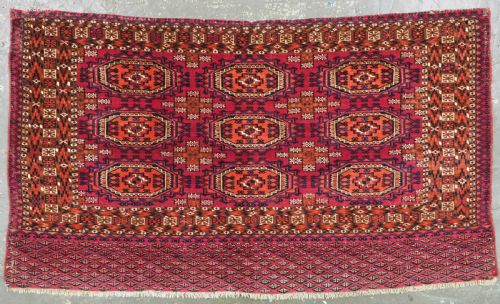
- A large rectangular storage bag used within nomadic tents for household possessions. They frequently feature repeated primary guls across the face.
- Torba
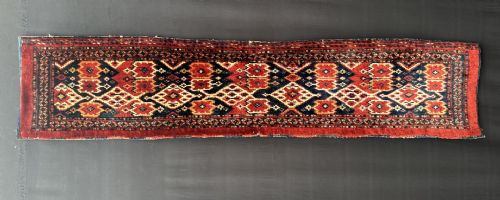
- A smaller storage bag utilised for domestic items inside the yurt. These measure smaller than chuvals but share similar tribal design attributes.
- Gul
- A repeated medallion or octagonal motif central to Turkmen carpet and textile design. Each tribal group utilises distinct variations to denote identity.
- Flatweave
- A textile constructed without pile by interweaving warp and weft threads directly. This technique appears in mafrash panels and banded designs.
Central Asian Camel Panel: Frequently Asked Questions
How were these trappings used?
Nomadic tribes utilised these textiles as functional hangings, storage bags, and animal decorations within their portable dwellings. Specific forms like asmalyks adorned the flanks of wedding camels during important ceremonies.
Other variants such as chuvals and torbas functioned primarily as containers for household goods inside the yurt.
How do I identify tribal designs?
Tribal attribution relies on specific structural layouts, colour palettes, and repeating primary guls characteristic of groups like the Yomut, Tekke, and Saryk. Each region developed distinct geometric vocabularies over generations.
Examining the border configurations and subsidiary motifs helps distinguish one tribal weaving tradition from another.
How should I care for a textile?
Protect antique tribal weavings from direct sunlight to preserve the stability of the natural dyes. Gentle vacuuming through a mesh screen helps remove dust without damaging the wool pile.
Mounting these pieces securely on a breathable backing distributes weight evenly for safe wall display.