

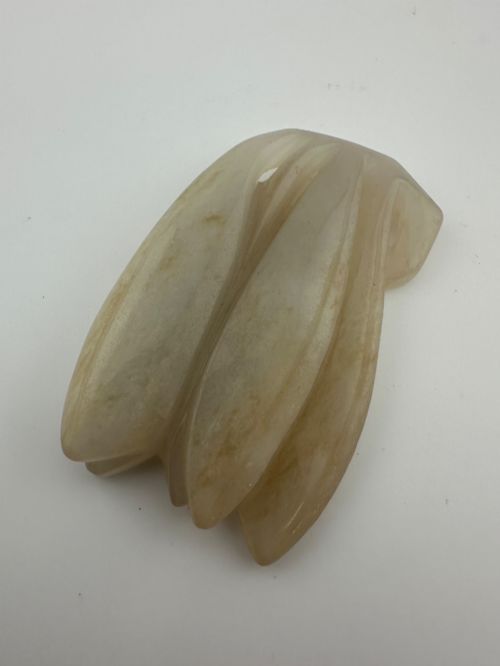


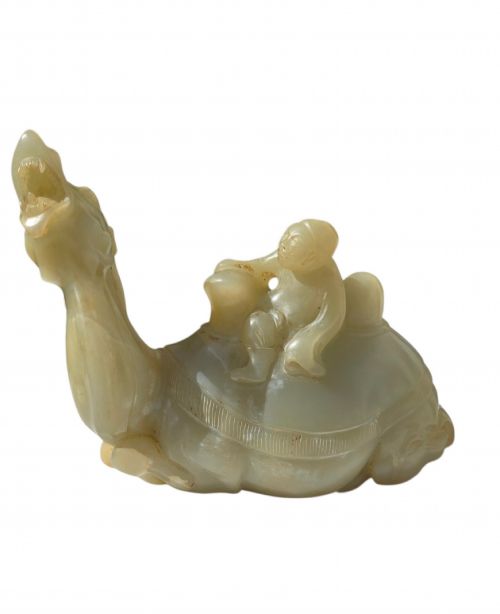


Celadon Jade Sculpture
These celadon jade sculpture pieces bring carved mineral forms into interior spaces, offering tactile surfaces shaped across centuries.
Celadon Jade Sculpture
A celadon jade sculpture presents carved mineral forms ranging from miniature fish and cicadas to large mountain landscape sculptures and ceremonial vessels. These pieces draw on Chinese traditions spanning from the late Ming and Qing dynasties into the twentieth century, often accompanied by fitted hardwood stands.
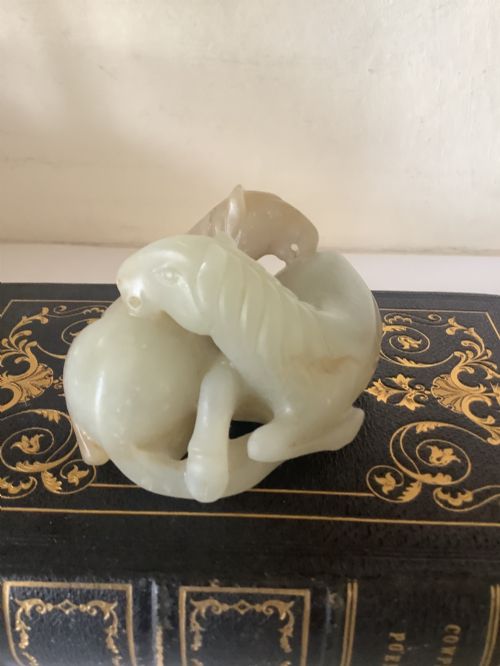
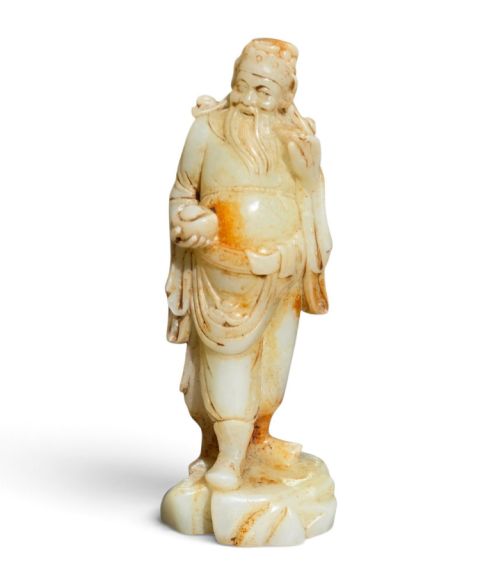
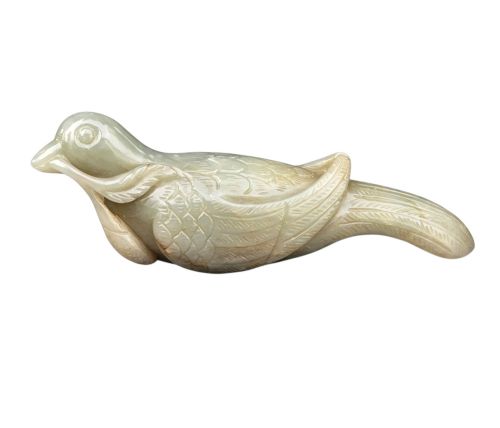
The selection here includes scholarly table ornaments, water birds, figures with lotus, and animal groups such as camels and riders or horses. Buyers encounter pale celadon tones, russet inclusions, and related hardstone varieties like bowenite serpentine and jadeite.
Works originate primarily from Qing Dynasty workshops and the late Qing or early Republic periods, alongside pieces dated around nineteen-hundred through nineteen-thirty. Forms vary from simple lotus-form cups to monumental double-sided dragon carvings and intricate aquatic motifs.
Materials and methods
Carvers shaped these objects from nephrite, jadeite, bowenite, and general hardstone using abrasive cutting and polishing techniques developed over generations. Artisans worked directly with the natural variations of the mineral, incorporating pale celadon hues and russet skins into the final design of each sculpture.
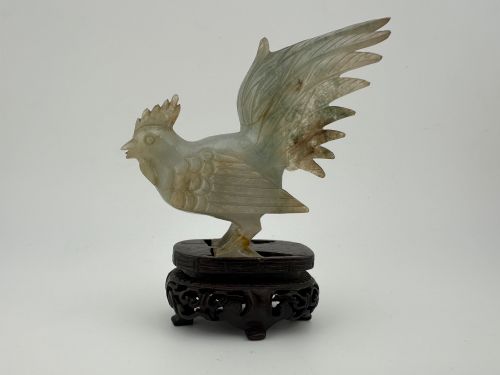
Many figural and landscape carvings rest upon custom-made hardwood stands designed to complement the contours of the stone. Craftsmen utilised the subtle tonal shifts within the jade family to define details on figures, animals, and botanical subjects without surface painting.
Celadon Jade Sculpture Retail Price Guide 2026
Typical asking prices for celadon jade sculpture among the pieces listed under this phrase on Sellingantiques today, from the lower quarter to the upper quarter. They describe what is for sale here now, not the wider market.
Listings feature works in jade, nephrite, jadeite, bowenite, and hardstone, set across periods from pre-sixteenth century to the nineteen-thirties.
Assessing quality
Quality rests upon the sensitivity of the carving relative to the natural qualities of the stone, where fluid lines define subjects like water birds, dragons, and figures. Superior pieces display deep undercut relief and careful attention to the grain and colour variations of the mineral.
The relationship between the sculpture and its fitted hardwood stand contributes to the integrity of the piece, particularly in larger landscape and figural groups. Mastery of form is evident in how well the carver utilises pale celadon tones and russet inclusions to give dimension to the subject.
The Celadon Jade Sculpture Glossary
- Celadon jade
- A pale green or grey-green variety of nephrite or jadeite valued for its subtle colour and smooth lustre. This material forms the primary medium for many traditional scholarly carvings.
- Nephrite
- A dense amphibole mineral comprising one of the two distinct mineral species classified as jade. It possesses a tough fibrous structure well suited to intricate historical carving.
- Scholar's object
- An item created for the desk of a traditional scholar, including brush washers, water pots, and small table sculptures. These pieces combined utility with contemplative artistic form.
- Qing Dynasty
- The final imperial dynasty of China, ruling from sixteen-forty-four until nineteen-and-twelve. This era produced a vast range of intricate jade carvings and decorative hardstone vessels.
Celadon Jade Sculpture: Frequently Asked Questions
What is celadon jade?
Celadon jade refers to nephrite or jadeite displaying a pale green, grey, or blue-green tone. The colour arises naturally from trace minerals within the stone.
Carvers utilised these gentle hues to enhance organic subjects like lotus cups, water birds, and mountain landscapes.
How do I display a jade sculpture?
These sculptures rest well on stable surfaces with adequate lighting to highlight the translucency of the stone. Many pieces include fitted hardwood stands designed to support their specific weight and form.
Placement should avoid direct sunlight and dramatic temperature fluctuations to protect the mineral and any associated wooden mounts.
How do I date a jade carving?
Dating relies on stylistic markers, subject matter, and carving techniques associated with periods such as the Qing Dynasty or the Republic period. Tool marks and the treatment of surface details also provide clues to the era of manufacture.
Comparative study of known imperial and scholarly pieces helps narrow the timeframe of production.
What subjects appear in these sculptures?
Common motifs include mythical figures, dragons, horses, camels, cicadas, fish, and botanical arrangements like lotus flowers and bonsai jardinières. Each subject draws on traditional symbolism within Chinese art.
Scholarly items such as brush washers and water vessels also feature frequently among the mineral carvings.