

Caucasian Weave
A caucasian weave represents hand-knotted and flat-woven rugs carrying the distinct geometric iconography and saturated pigments characteristic of nomadic traditions in the Caucasus.
Caucasian Weave
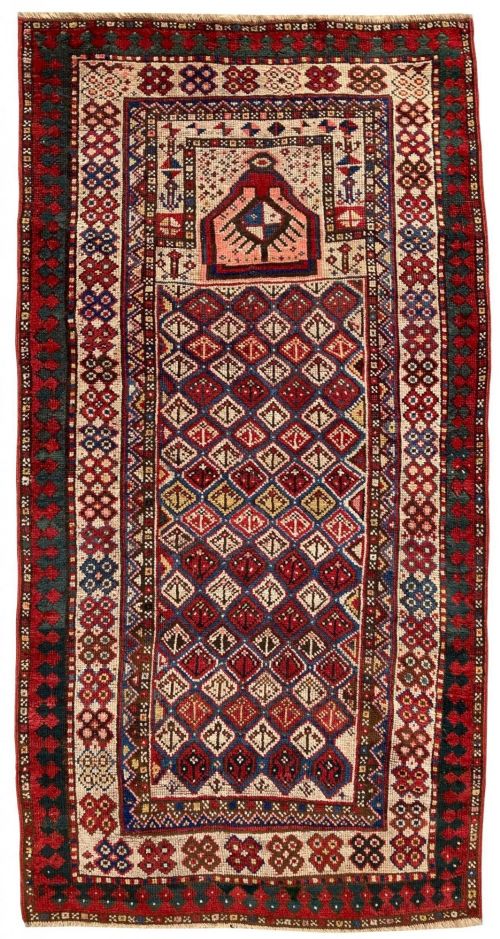
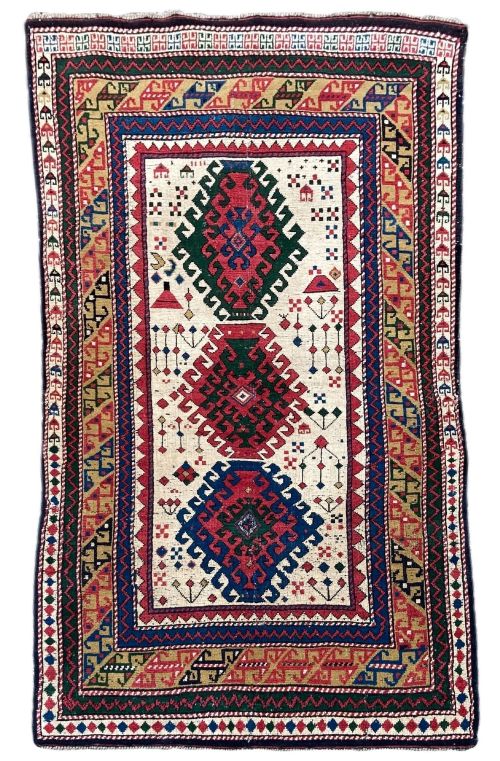
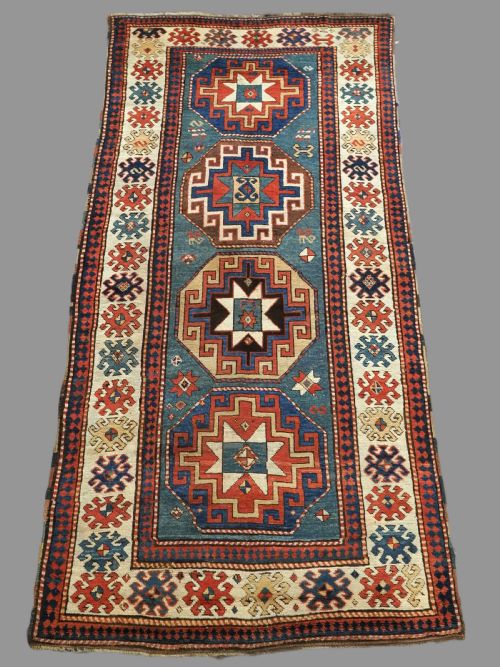
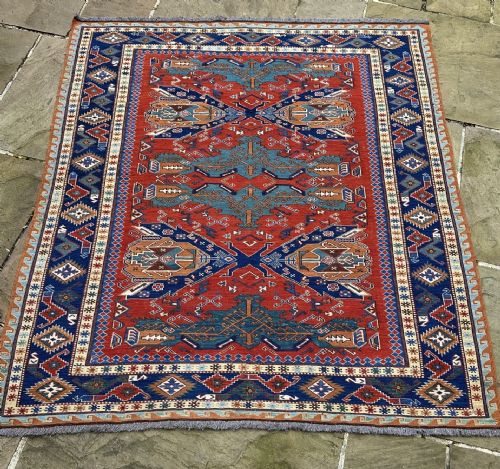
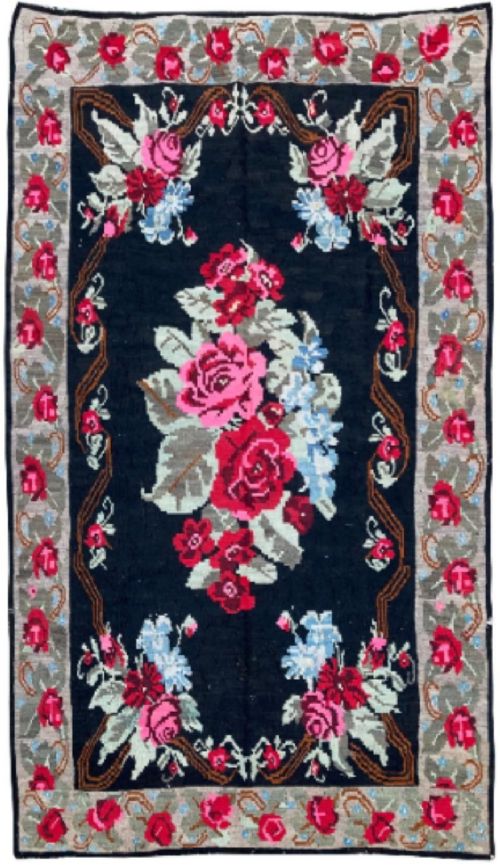
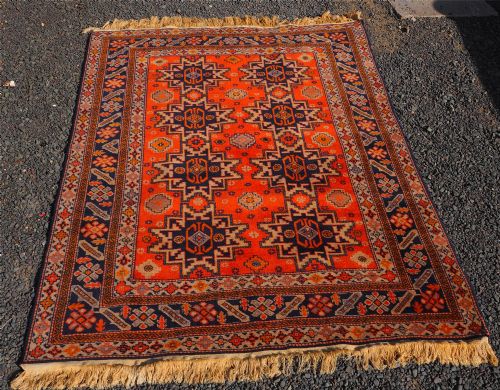
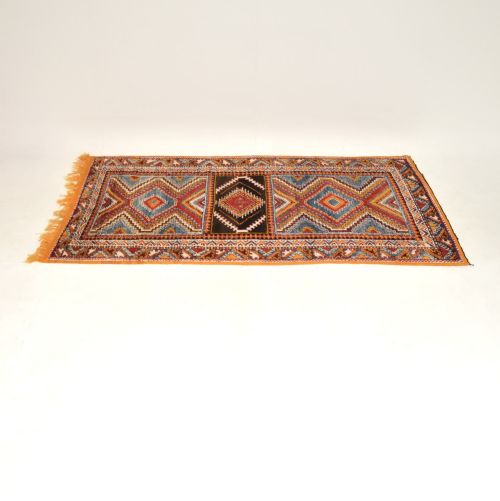
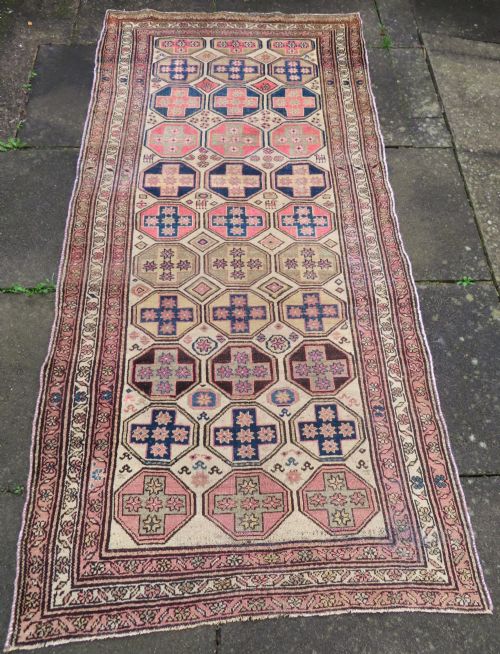
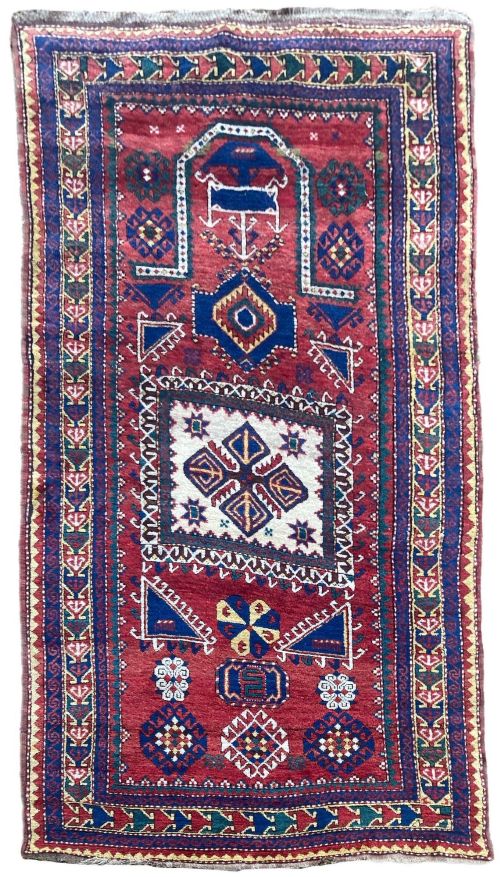
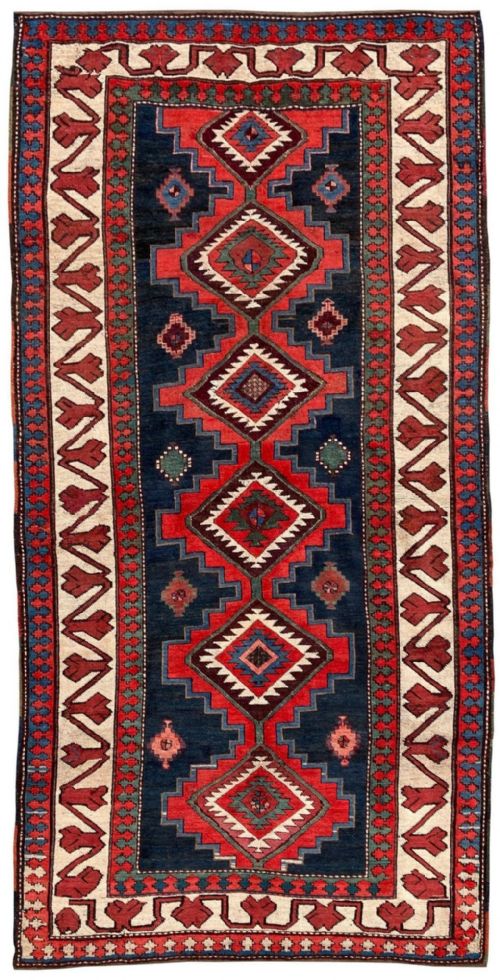
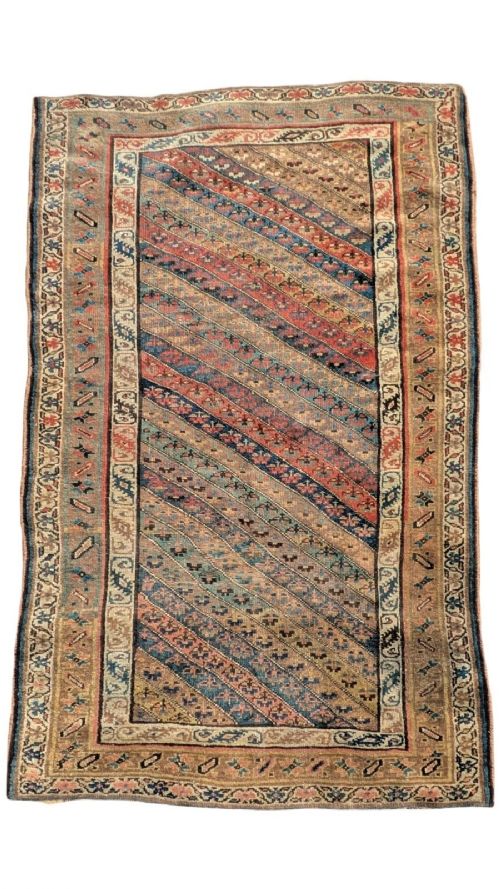
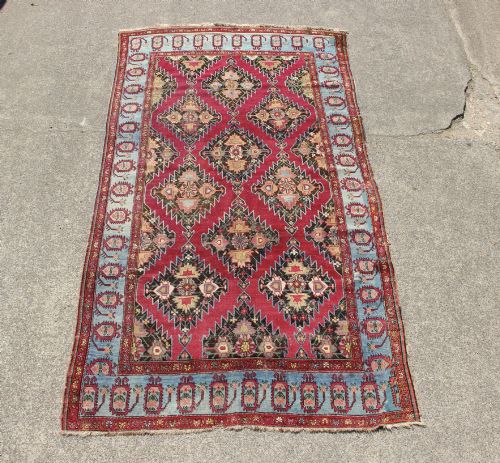
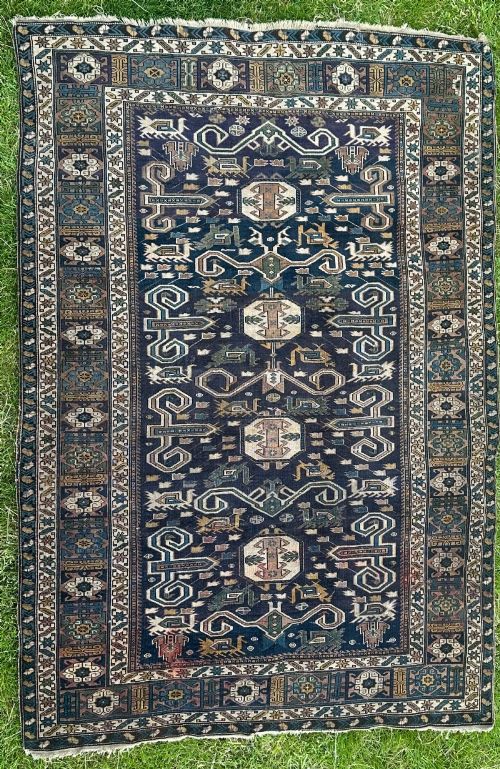
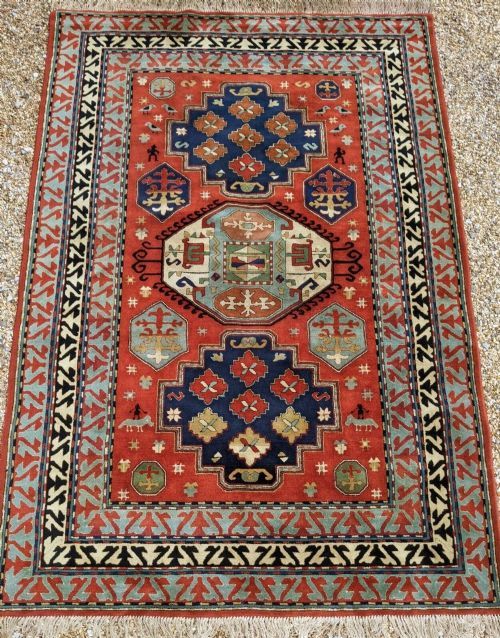
A caucasian weave encompasses regional rug and carpet formats originating from the Caucasus, including Kazak, Gendje, Shirvan, and Karabagh types. These pieces typically display structured geometric medallions, stylized animal motifs, and sharp, angular borders derived from tribal symbolism.
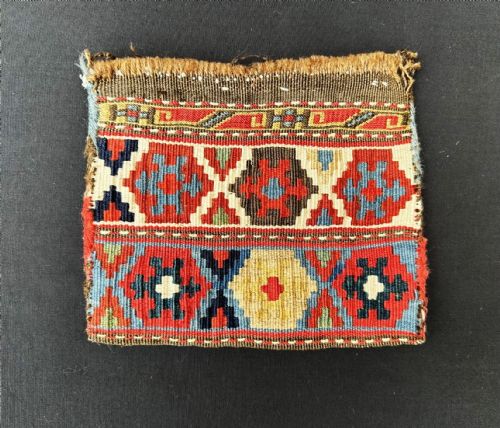
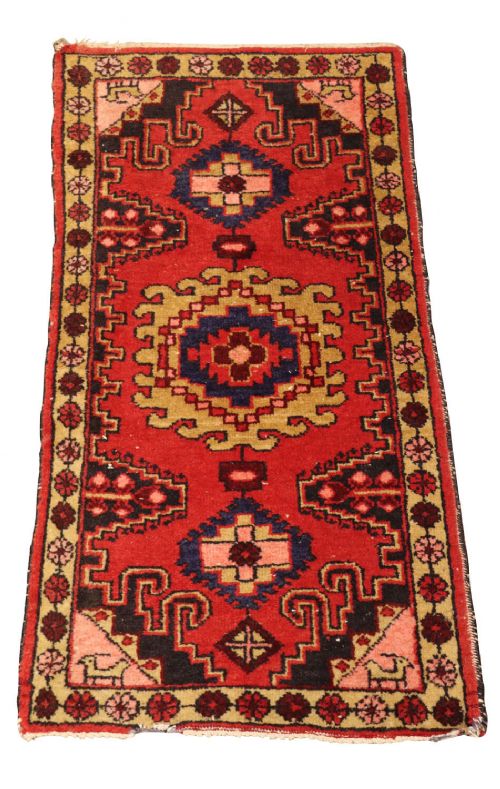
The most common formats met on this page are room-sized area carpets, smaller scatter rugs, prayer mats, and utilitarian flat-weave kilims or saddle-bags. Dating predominantly from the later nineteenth and early twentieth centuries, they reflect the weaving practices of Kurdish, Shahsevan, and local village workshops.
Makers ranged from sedentary village weavers to nomadic tribal groups operating across Azerbaijan, Armenia, and Daghestan. Their output combined utility with robust artistic expression, utilising regional wool resources to produce durable floor coverings and domestic textiles.
Variations in Quality
Quality rests upon the fineness of the knotting, the integrity of the hand-spun wool, and the stability of the foundation structure. Superior examples maintain crisp linearity in their geometric motifs and even pile density across the entire field.
The complexity and depth of the natural dye palette also determine distinction, with well-preserved pigment saturation setting finer tribal and village works apart from simpler commercial productions.
Caucasian Weave Retail Price Guide 2026
Typical asking prices for caucasian weave among the pieces listed under this phrase on Sellingantiques today, from the lower quarter to the upper quarter. They describe what is for sale here now, not the wider market.
Nomadic weavers frequently tucked tiny animal motifs and stray human figures into unexpected corners of strict geometric fields.
The Caucasian Weave Glossary
- Kazak
- A designated style of rug originating from the western region of the Caucasus. These pieces are celebrated for their bold, primary-coloured geometric medallions and heavy wool pile.
- Kilim
- A flat-woven carpet or textile produced without a raised pile. This technique creates a lightweight, reversible fabric with sharp, slit-weave pattern transitions.
- Sumac
- A supplementary weft-wrapping technique that produces a textured, durable surface. It often appears on Shahsevan bags and panels with intricate brocade-like designs.
- Prayer Rug
- A specialised format featuring a distinct architectural mihrab or niche design. Historically used for daily devotion, these rugs directed the weaver or user toward Mecca.
Caucasian Weave: Frequently Asked Questions
What defines a caucasian weave?
A caucasian weave refers to hand-knotted and flat-woven textiles produced in the Caucasus region. They are distinguished by geometric motifs, tribal iconography, and saturated wool construction.
These pieces range from small village scatter rugs to large corridor runners, spanning various tribal groups such as the Kazak, Shirvan, and Karabagh.
How do I identify a Kazak rug?
Kazak rugs are generally recognised by their robust proportions, heavy wool pile, and striking primary colour palettes. Their designs feature large geometric medallions, hooked polygons, and stylized animal or human figures.
Originating from western regions of the Caucasus, they stand apart from finer, more curvilinear Persian workshops through their bold, direct aesthetic.
What is a flat-weave kilim?
A flat-weave kilim is a textile constructed by tightly interweaving warp and weft strands without creating a raised pile. This method produces a thin, durable fabric that is reversible and well-suited for summer flooring or wall hanging.
Regional examples often display banded designs with soft, muted colour transitions achieved through traditional dye methods.
How should I care for antique wool rugs?
Antique wool rugs require gentle maintenance, including regular vacuuming without a rotating power brush to protect the vintage pile. Keeping them out of direct, harsh sunlight preserves the integrity of the natural dyes.
Professional specialist cleaning should be utilised periodically to remove deep-seated grit without damaging the hand-spun wool foundation.