





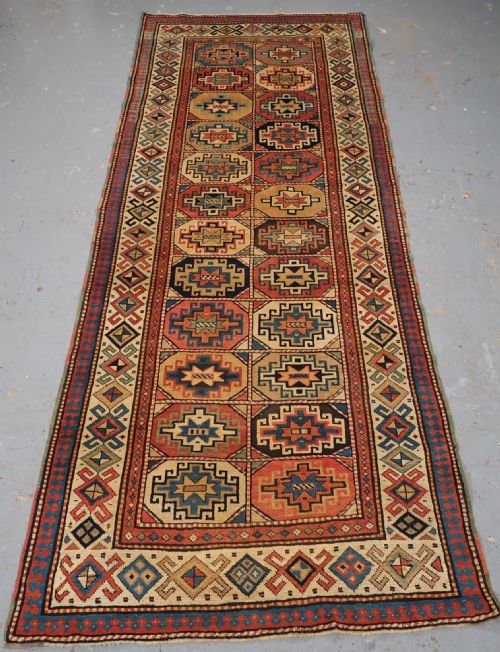

Caucasian Kazak Long Rug
These caucasian kazak long rug pieces offer striking geometric designs and rich natural colour, bringing genuine nineteenth-century tribal character to a floor.
Caucasian Kazak Long Rug
A caucasian kazak long rug represents handwoven tribal weaving originating from the Caucasus region during the latter half of the nineteenth century and the opening years of the twentieth. These elongated floor coverings serve as practical runners and long carpets, featuring narrow proportions suited to corridors and hallways.
The most typical examples encountered in this selection span the decades from eighteen sixty to nineteen hundred. They display distinct regional sub-types including Gendje, Moghan, and Fachralo variations.
Makers utilised traditional formats, resulting in pieces defined by bold tribal motifs rather than courtly refinements. Buyers searching for this phrase seek authentic nineteenth-century weave work with strong regional identity.
How they were made
Every caucasian kazak long rug relies entirely on wool for its construction, forming both the durable pile and the structural foundation. Weavers knotted the wool by hand onto a wool warp and weft, creating a dense and resilient textile designed for daily wear.
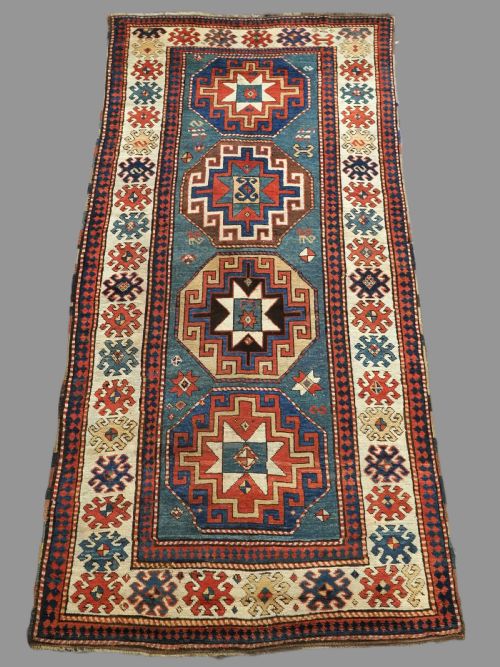
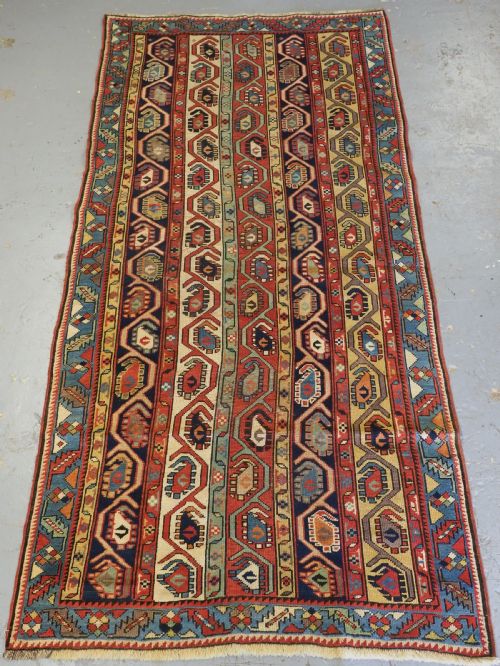
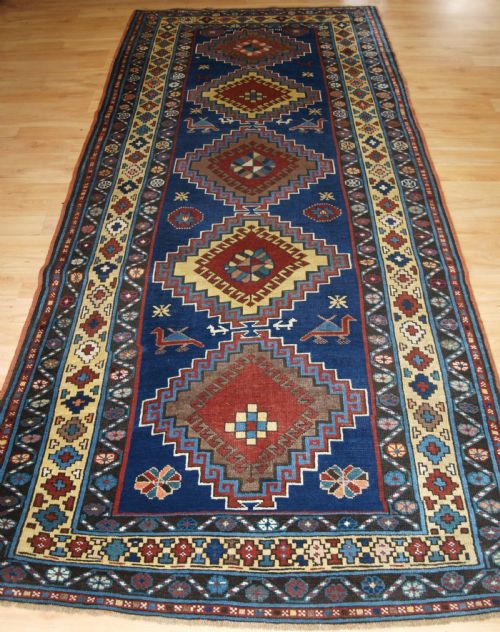
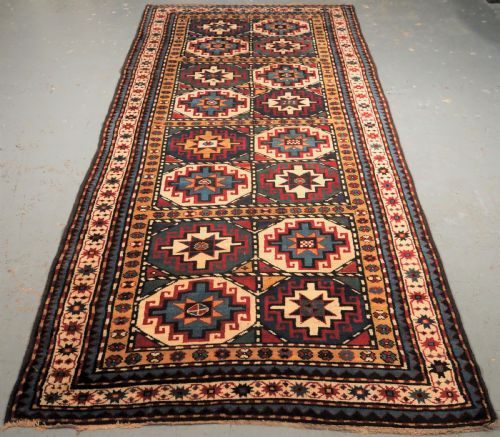
The aesthetic impact stems from varied wool dyes that produce rich green grounds, soft tones, and contrasting patterns such as memling guls, boteh designs, hooked medallions, and floral lattices.
Caucasian Kazak Long Rug Retail Price Guide 2026
Typical asking prices for caucasian kazak long rug among the pieces listed under this phrase on Sellingantiques today, from the lower quarter to the upper quarter. They describe what is for sale here now, not the wider market.
Several rugs managed to survive a century and a half of footsteps while stubbornly holding onto their bright green grounds.
What varies in quality
The distinction between tiers of a caucasian kazak long rug lies in the visual strength of the palette and the preservation of the wool pile. Examples exhibiting outstanding soft colours or deep green grounds command attention for their visual impact.
Structural integrity also separates the output, with superior survivals maintaining excellent condition across the elongated format despite decades of foot traffic.
The Caucasian Kazak Long Rug Glossary
- Kazak
- A style of rug originating from the Caucasus region, known for bold geometric patterns and vibrant wool colouring. These pieces were produced by various tribal groups.
- Long rug
- An elongated carpet format suited to narrow spaces like hallways, often categorised alongside runners. The proportions emphasise repeated central medallions or diagonal stripes.
- Memling gul
- A traditional octagonal or stepped medallion motif frequently found in tribal carpets. It is named after the fifteenth-century painter who depicted similar rugs in his artwork.
- Boteh
- A Paisley-like almond or pine-cone motif representing a floral shoot or cypress tree. This ancient symbol appears repeatedly in regional textile designs.
- Gendje
- A specific Caucasian weaving sub-type associated with distinctive diagonal stripes or floral lattices. These rugs share structural traits with broader Kazak production.
Caucasian Kazak Long Rug: Frequently Asked Questions
Where should I place a caucasian kazak long rug?
These elongated wool rugs suit hallways, corridors, and long gallery spaces where their narrow proportions fit naturally. They provide a strong visual anchor while enduring daily passage.
Keep them away from damp environments and direct sustained sunlight to protect the historic wool fibres and natural dyes.
How do I date a caucasian kazak long rug?
Dating relies on stylistic indicators, structural characteristics, and material analysis pointing toward the nineteenth and early twentieth centuries. Specific design elements like hooked medallions and natural green grounds typically place these items between eighteen sixty and nineteen hundred.
Consulting the specific stylistic sub-type, such as Fachralo or Moghan variations, helps narrow the period of origin.
Are these rugs made from pure wool?
Every listed piece in this category is constructed from wool, utilising the material for both the soft surface pile and the underlying foundation. This traditional method ensures resilience and warmth.
Weavers in the Caucasus relied on local sheep's wool, which accepts natural dyes deeply and ages with a characteristic patina.
What designs appear on these rugs?
The patterns consist predominantly of geometric motifs, including hooked medallions, repeat medallions, diagonal stripes, and niche designs. Specific regional styles introduce memling guls, boteh patterns, and floral lattices.
These bold graphic choices distinguish tribal Caucasian weaving from contemporaneous urban workshop carpets.