




Caucasian Corridor Rug
A caucasian corridor rug brings geometric discipline and rich wool texture to hallways and long spaces, built to last generations.
Caucasian Corridor Rug
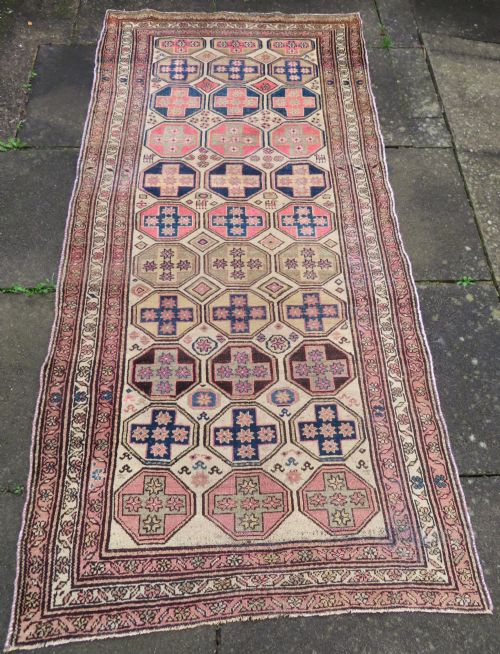
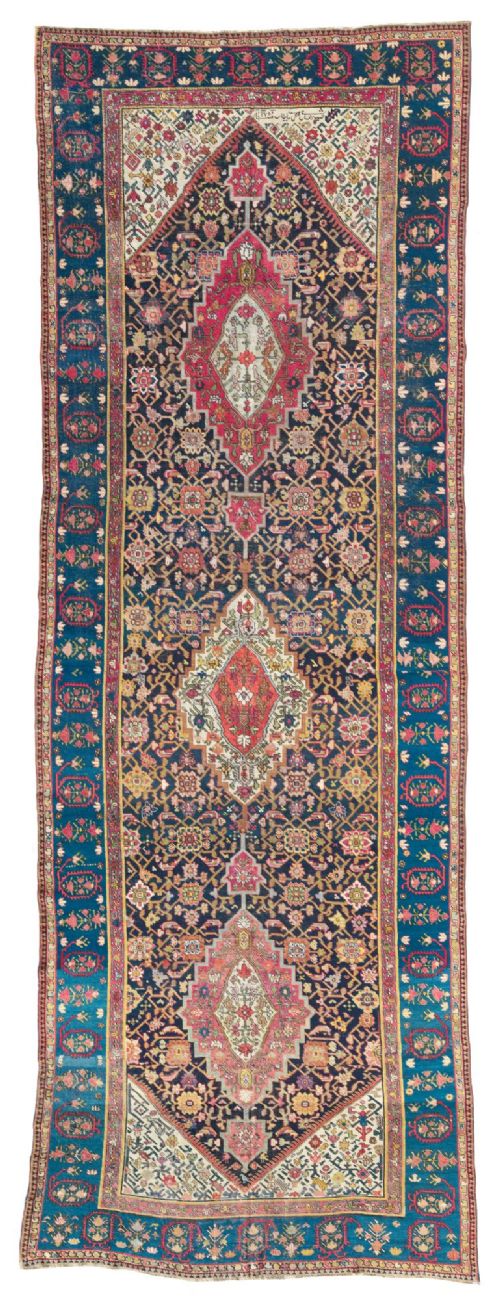
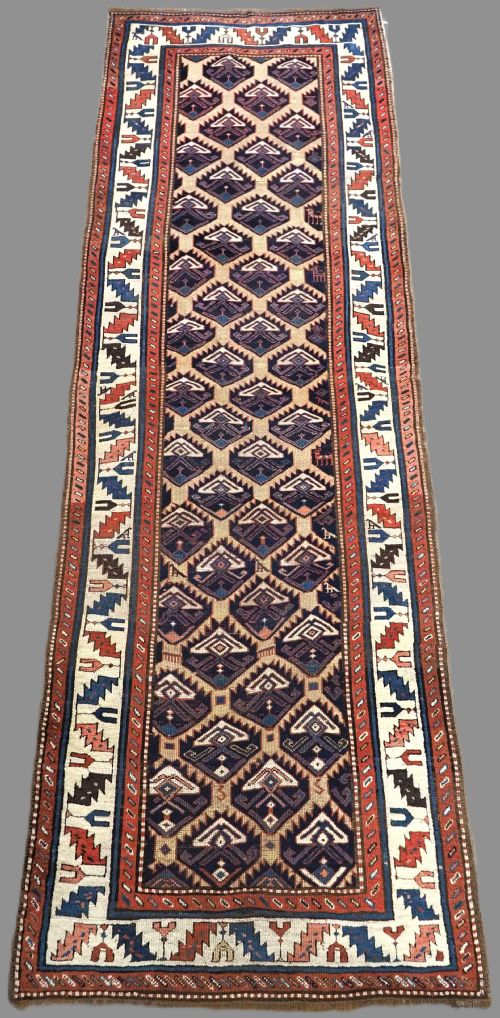
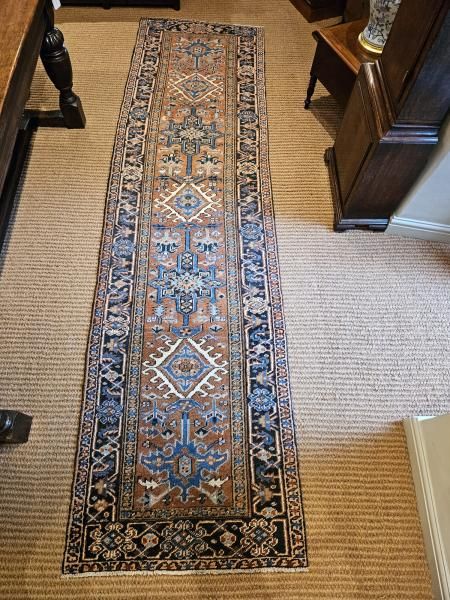
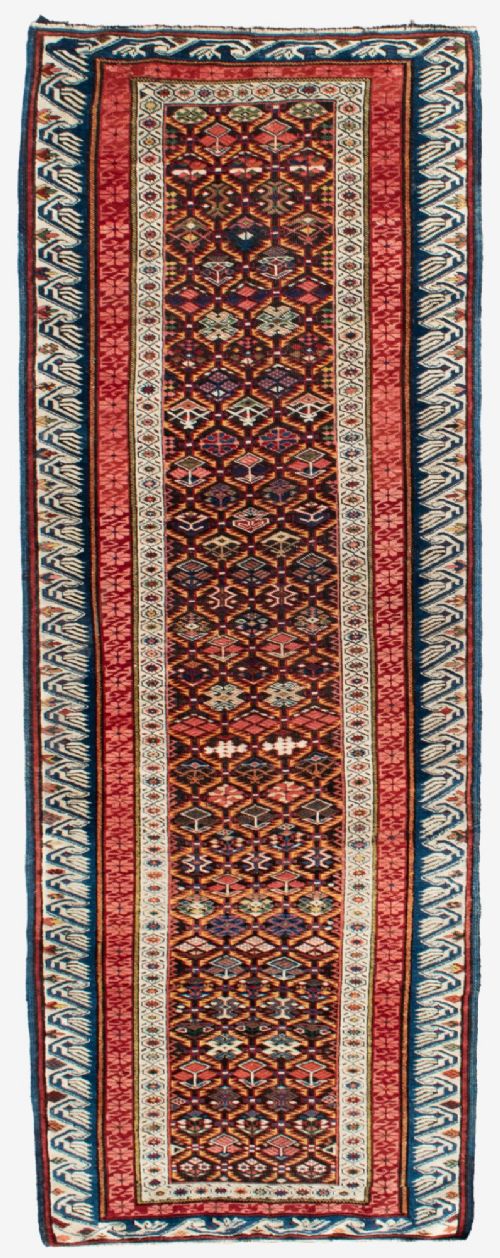
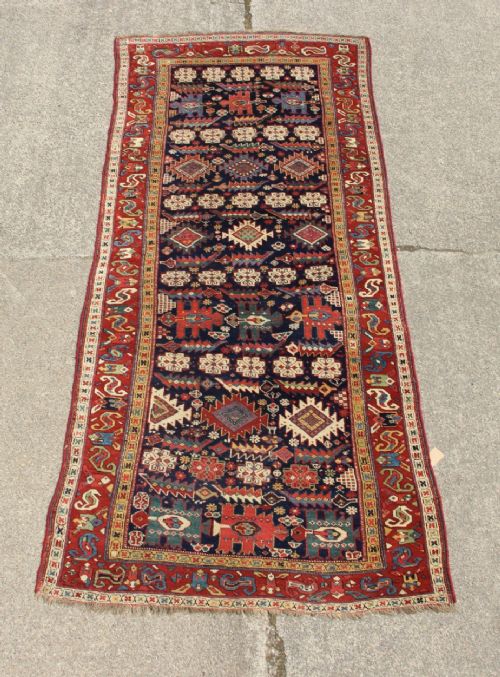
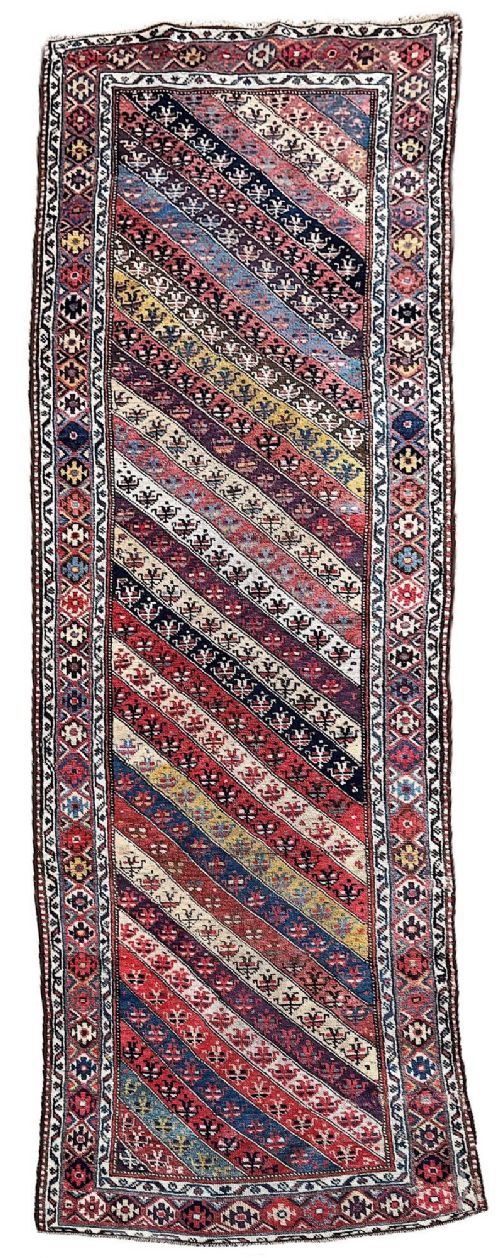
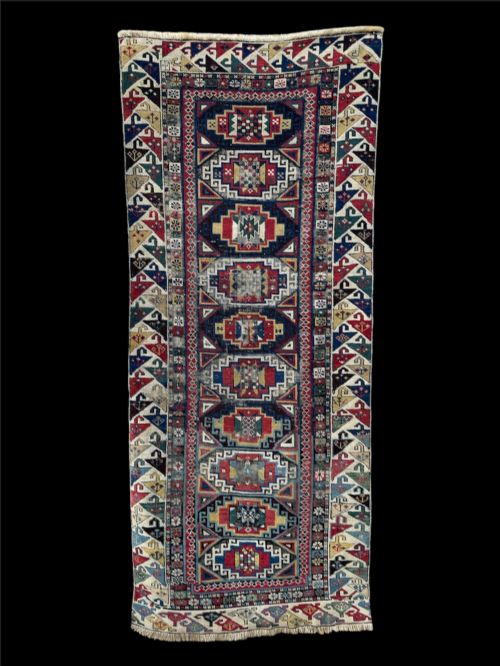
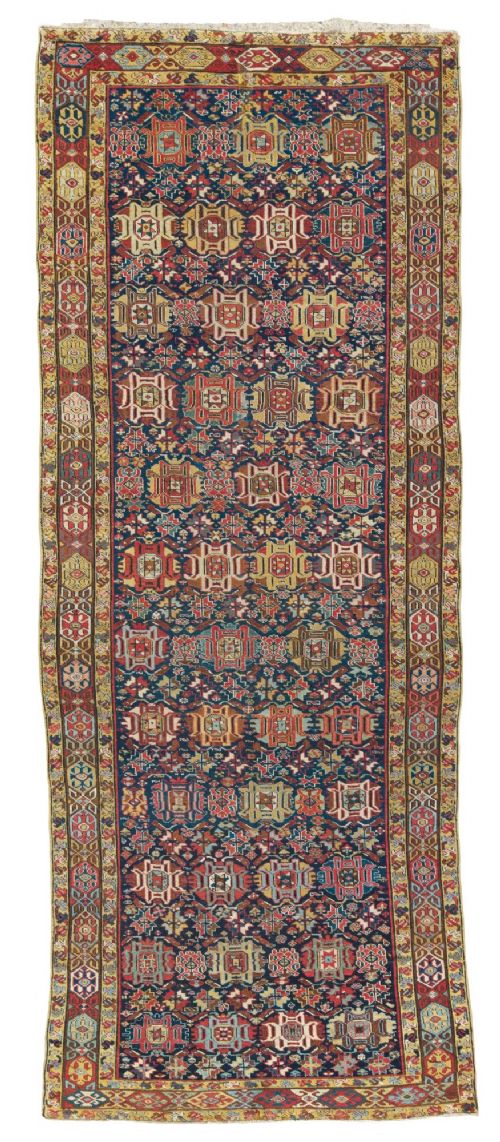
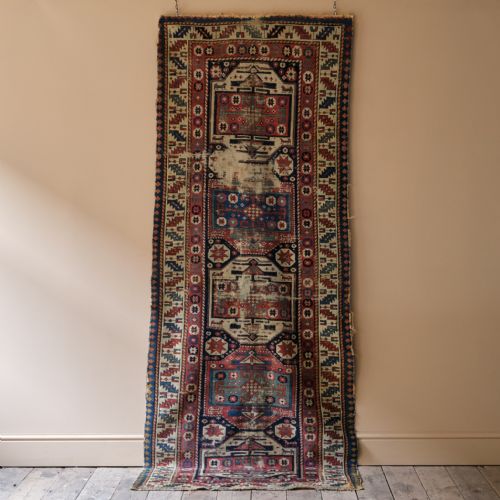
A caucasian corridor rug is a long, narrow floor covering originating from the Caucasus region during the nineteenth and early twentieth centuries. These pieces were woven as runners, kellehs, and long rugs designed to fit narrow spaces like hallways and galleries.
The specimens seen here date primarily from the period between 1850 and 1920, reflecting distinct regional weaving traditions such as Gendje, Shirvan, Kuba, Talysh, and Karabagh. Buyers searching for a caucasian corridor rug will encounter geometric medallion patterns, boteh motifs, and lattice designs executed in saturated hues.
Materials and construction
These textiles rely on hand-spun wool for both the pile and the foundation structure, providing resilience under foot traffic. Cotton and occasionally camel hair appear in the foundations and secondary elements, supporting the dense knotting characteristic of the region.
Weavers utilised natural dyestuffs to create deep blues, reds, and contrasting accents that hold their intensity over decades. The construction involves hand-knotted pile techniques passed down through generations of tribal and village weavers.
Some runners betray the weaver's human hand with a charming, visible crookedness along their long straight paths.
Factors of quality
Knot density and the precision of the geometric drawing distinguish finer examples from simpler village work. Crispness in the rendering of motifs like the Memling gul or floral lattice indicates a higher level of control by the weaver.
The purity and depth of the wool pile, alongside the survival of original borders and ends, determine the integrity of a piece. Evenness in the weave along long corridors reflects the skill applied during production.
The Caucasian Corridor Rug Glossary
- Kelleh
- A large format carpet that is longer than it is wide, often used in reception rooms or wide corridors. They share the same geometric vocabulary as runner formats.
- Boteh
- A stylised almond or pear-shaped motif representing a floral spray or cypress tree. This symbol appears frequently in regional pile weaving.
- Gul
- A medallion or repeating octagonal design element used across tribal carpets. These motifs often identify the specific weaving group or district.
- Talysh
- A specific town and weaving tradition in the south-east Caucasus known for open fields and narrow formats. These pieces often feature simplified medallion layouts.
Caucasian Corridor Rug: Frequently Asked Questions
Where should I place a runner?
These long formats suit narrow hallways, landings, and gallery spaces where linear geometry defines the room.
They protect high-traffic wooden floors while adding pattern and warmth to transitional areas.
How do I clean my rug?
Regular gentle vacuuming without a beater bar removes surface grit from the wool pile.
Professional specialist cleaning is necessary for deep washing to preserve the natural dyed wool fibres.
Are these pieces durable?
Hand-spun wool combined with dense knotting creates a durable surface built for everyday domestic use.
Proper underlay provides extra cushioning and prevents slipping along wooden corridors.
How do I identify regional designs?
Specific motifs, border arrangements, and colour palettes point to distinct weaving centres like Shirvan or Gendje.
Structural details such as selvedges and end finishes help confirm the geographical origin.