



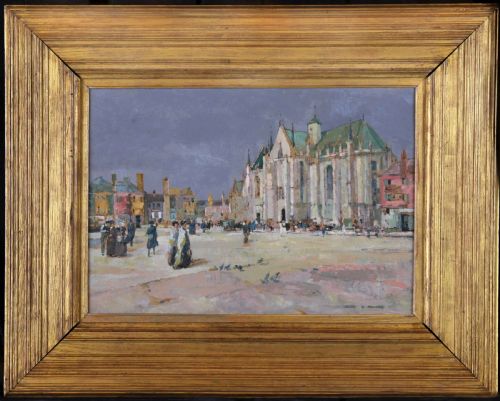

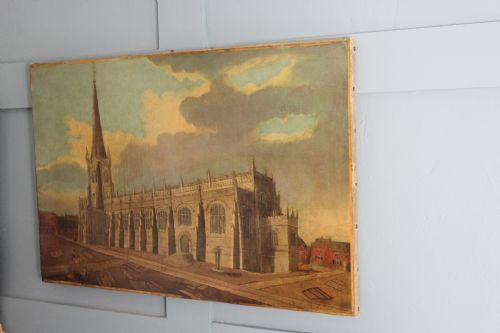

Cathedral Landscape Oil Painting
A cathedral landscape oil painting captures soaring architecture and historic civic centres through layered pigments on canvas or board.
Cathedral Landscape Oil Painting
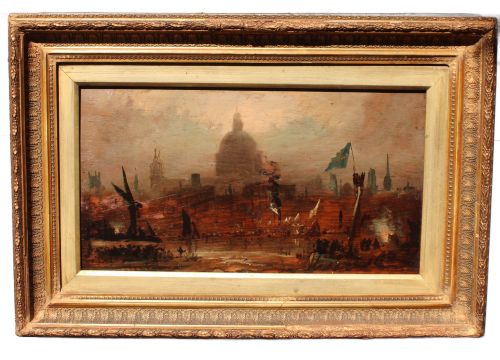
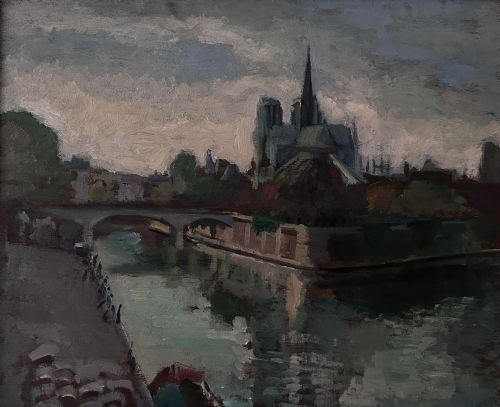
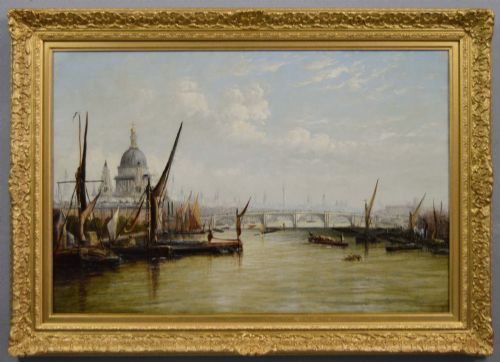
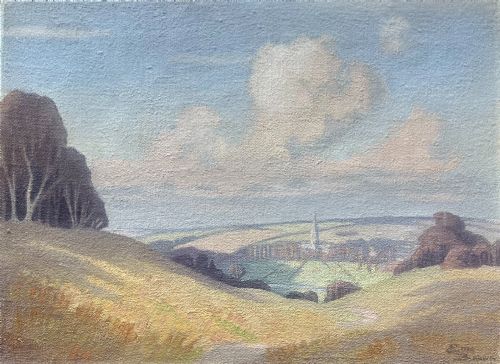
A cathedral landscape oil painting presents monumental ecclesiastical buildings set within bustling townscapes, quiet riversides, or dramatic rural hills. The selection spans the nineteenth and twentieth centuries, capturing urban vistas and historic monuments across Britain and France.
Makers recorded in the inventory include Francis Moltino, Lewis J Wood, Robert Lesley Howey, William Sidney Cooper, Edward Fletcher, Allan Douglass Mainds, and Henry Schafer, alongside works attributed to John Cawthorn or created in the manner of J. M. W. Turner.
Most works render historic religious sites such as St Paul's, Notre Dame, Salisbury, Durham, Wakefield, and Southwark using oil paint applied to canvas, board, or wood.
How they were made
Artists built these compositions utilising oil paint on prepared canvas or wood panels, sometimes incorporating gesso grounds for texture and stability.
Finished works frequently display elaborate frames finished with gold leaf, enhancing the architectural depth and period character of the scene.
Cathedral Landscape Oil Painting Retail Price Guide 2026
Typical asking prices for cathedral landscape oil painting among the pieces listed under this phrase on Sellingantiques today, from the lower quarter to the upper quarter. They describe what is for sale here now, not the wider market.
Materials documented across the inventory include canvas, oil, gesso, wood, and gold leaf.
What varies in quality
Quality rests in the precision of the architectural draughtsmanship and the artist's ability to balance intricate stonework with atmospheric light and river reflections.
The sophistication of the brushwork distinguishes ambitious compositions from simpler studies, particularly in the rendering of figures, shipping, and natural surroundings.
Francis Moltino·Lewis J Wood·Robert Lesley Howey·William Sidney Cooper·Edward Fletcher·Allan Douglass Mainds·Henry Schafer
The Cathedral Landscape Oil Painting Glossary
- Oil paint
- A slow-drying medium composed of pigments suspended in a drying oil, typically linseed. This allowed artists to achieve rich colour depth and subtle tonal shifts.
- Gesso
- A paint mixture consisting of a neutral binder mixed with chalk, gypsum, or pigment. It prepared wooden panels and canvases to receive oil layers.
- Post-Impressionism
- An art movement extending beyond Impressionism while rejecting its limitations, focusing on expressive forms and symbolic content.
- Romanticism
- An artistic movement emphasising inspiration, subjectivity, and the primacy of individual emotion, frequently depicting dramatic architectural settings and nature.
- Townscape
- A painting or drawing depicting a built urban environment, frequently incorporating streets, bridges, rivers, and prominent public structures like cathedrals.
Cathedral Landscape Oil Painting: Frequently Asked Questions
What periods do these paintings date from?
The works span the early nineteenth century through to the mid-twentieth century, encompassing Victorian and twentieth-century British modernism.
Specific dates recorded include the 1800s, 1860, 1900, 1920, 1930, 1940, and 1960.
Which cathedrals appear in the artwork?
Featured buildings include major religious structures such as Notre Dame, St Paul's, Salisbury, Durham, Wakefield, and Southwark Cathedral.
Many compositions also place these monuments alongside local rivers like the Thames, the Wear, or French waterways.
What materials support these oil paintings?
Artists painted primarily on canvas or wood panels, utilising oil paint combined with gesso preparations.
Many surviving pieces retain period framing finished with gold leaf.
How do I identify different painting styles?
Styles range from the atmospheric landscapes of Romanticism and the nineteenth-century British tradition to Post-Impressionism and twentieth-century modernism.
Brushwork and colour application vary according to the period and the individual artist's approach to the urban landscape.