

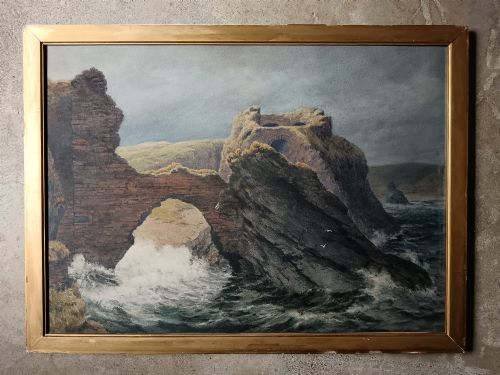


Castle Landscape Wall Art
Castle landscape wall art brings historic fortresses into domestic rooms through the eyes of Victorian and twentieth-century painters.
Castle Landscape Wall Art
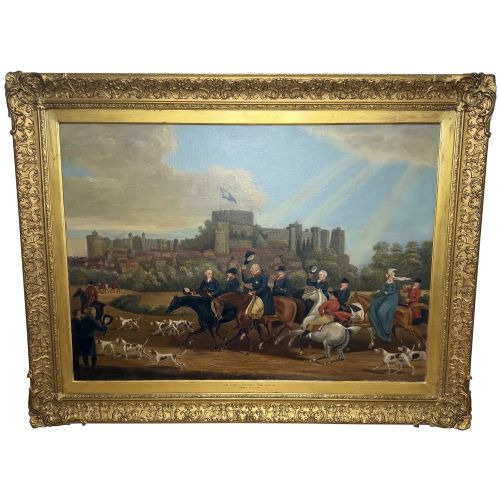
Castle landscape wall art captures historic fortifications set within riverscapes, coastal views, and rugged terrain. These works span centuries of British and European painting, recording sites from Windsor to foreign gothic strongholds.
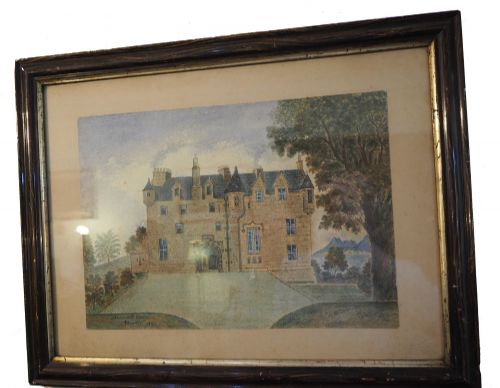
Watercolours and oil paintings dominate the selection, rendered on canvas, paper, or board. Landscapes range from intimate watercolours dated around eighteen-ninety to large nineteenth-century oil compositions.
The material record includes framed canvas, slate hearth pieces, lithographs, and prints. Many pieces tie specific fortresses to local topography, including Bamburgh, Warwick, and Bolton.
How they were made
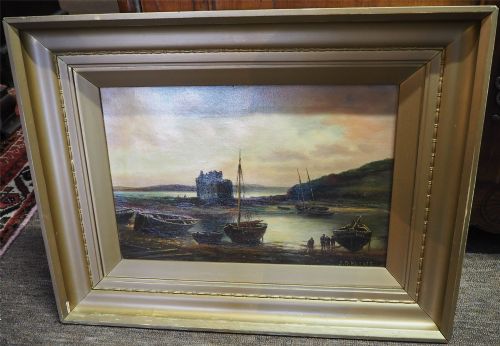
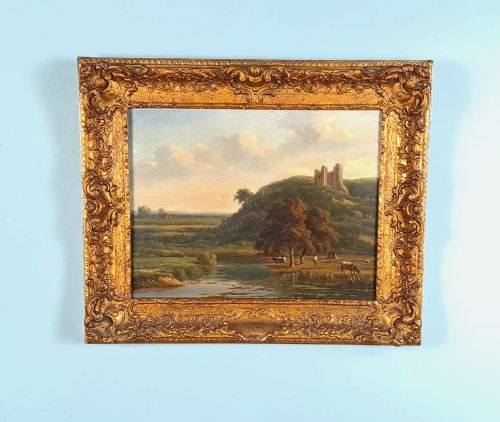
Painters applied oil paint to canvas or board, building rich textures for architectural stonework and moody skies. Watercolours utilise transparent washes on paper to capture atmospheric light over rivers and coastal ruins.
Frames often employ giltwood and gesso to house the paintings, while alternative formats include folk art carved from Welsh slate. Lithographs and early prints utilise inked plates on paper to distribute architectural prospects.
Listings feature paper, wood, oil on canvas, glass, watercolour, gesso, giltwood, and oil paint across eighteenth to twentieth-century periods.
What varies in quality
Handling of light and atmospheric depth distinguishes accomplished landscape art from routine topographical recording. Skilled brushwork or precise watercolour washes render stone textures and water reflections with convincing weight.
The integration of human figures, such as fisherfolk or cows near the castle walls, adds compositional balance. Provenance and attribution to named artists elevate the standing of individual works.
Alfred Young Nutt·T C Hofland·John Moxon·George Graham·David Cox Jnr·William Mellor·George Gregory·Claude Thomas Stanfield Moore·Frank Wood·James Bell Anderson·Karl Herrle·William Wyld·Alfred Robert Quinton·James L Brooke·Samuel Sidley·James Canter·Frederick Tully Lott·Sonia Lawson·William Edward Webb·Peter Toft·Rowland Henry Hill·Carleton Grant·George Willis Pryce·Charles Walter Radclyffe·Victor Haddrell
The Castle Landscape Wall Art Glossary
- Oil on canvas
- Pigments bound in drying oil applied to stretched woven fabric. This medium allows for deep colour saturation and reworking.
- Watercolour
- Pigments suspended in a water-soluble binder applied to paper. It relies on the white of the paper to shine through translucent washes.
- Giltwood
- Wood carved and coated with gold leaf or gold paint. It frequently frames nineteenth-century oil paintings.
- Lithograph
- A print made from a design drawn on limestone or metal plate. It permits multiple impressions of detailed architectural views.
- Gesso
- A paint mixture consisting of a binder mixed with chalk or plaster. It prepares wooden frames for gilding.
Castle Landscape Wall Art: Frequently Asked Questions
What periods do these castle paintings date from?
The works span from the eighteenth century through to the mid-twentieth century. Most examples date from the Victorian and Edwardian eras.
Key periods represented include nineteenth-century romanticism, British impressionism, and mid-century impressionism.
Which castles appear in these artworks?
Artists depicted numerous historical British and European sites, including Windsor, Bamburgh, Warwick, Bolton, and Edinburgh.
Welsh and Scottish strongholds such as Caernarfon, Dolwyddelan, and Urquhart also feature prominently across the collection.
How should I care for vintage watercolours?
Watercolour paintings on paper require protection from direct sunlight to prevent fading of the pigments. Displaying them away from moisture sources preserves both the paper and the mount.
Glass-fronted frames help shield the delicate washes from dust and atmospheric pollutants.