






Cast Stone Garden Planters
Cast stone garden planters bring enduring architectural weight to paths and terraces, offering robust planting vessels shaped by classicism.
Cast Stone Garden Planters
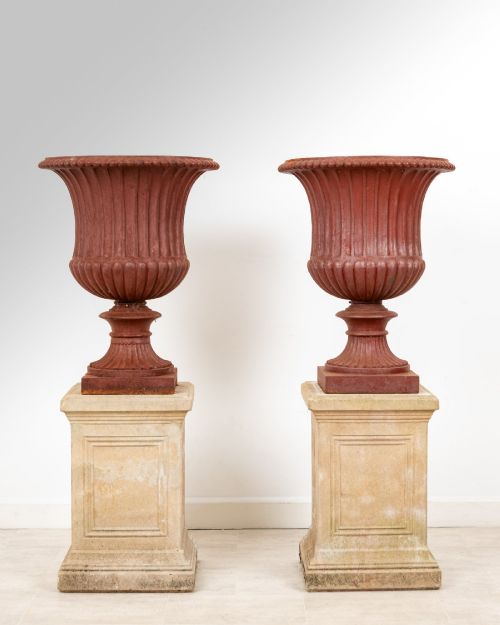
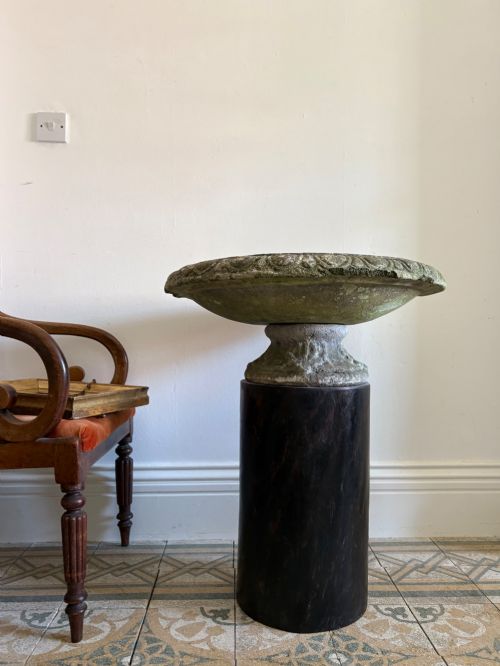
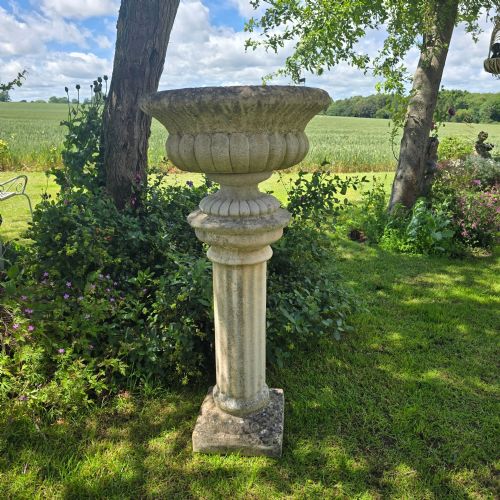
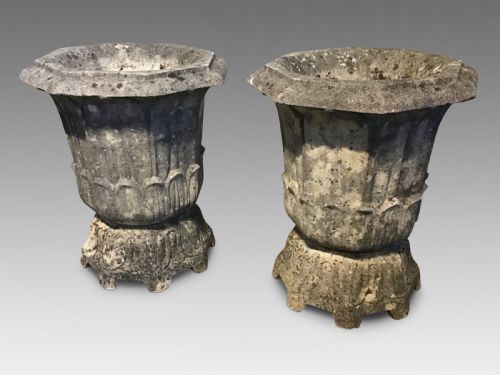
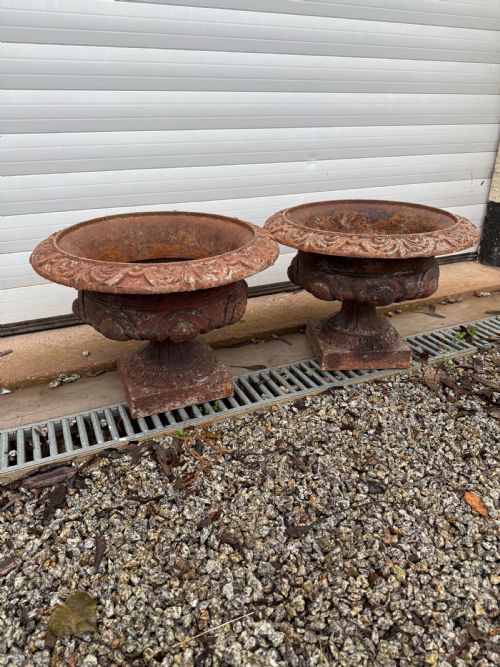
Cast stone garden planters encompass heavy structural vessels designed to anchor outdoor spaces, appearing in forms such as campana urns, pedestals, and specialised birdbath planters. These garden ornaments draw upon classical design vocabularies like Neoclassical and Gothic Revival, echoing ancient architecture through sturdy proportions.
The pieces on this page span the nineteenth and twentieth centuries, taking in Victorian, Edwardian, and later twentieth-century periods. Buyers will frequently encounter weathered surfaces and classical ornamentation such as acanthus leaves, lending an established look to contemporary or traditional gardens.
How they were made
Makers shaped these garden planters by working with reconstituted stone, cast stone, and composite concrete mixtures poured into moulds to capture sharp architectural detail. Alongside concrete and stone, foundries utilised cast iron for certain campana urns and plinths, combining metal durability with classical casting techniques.
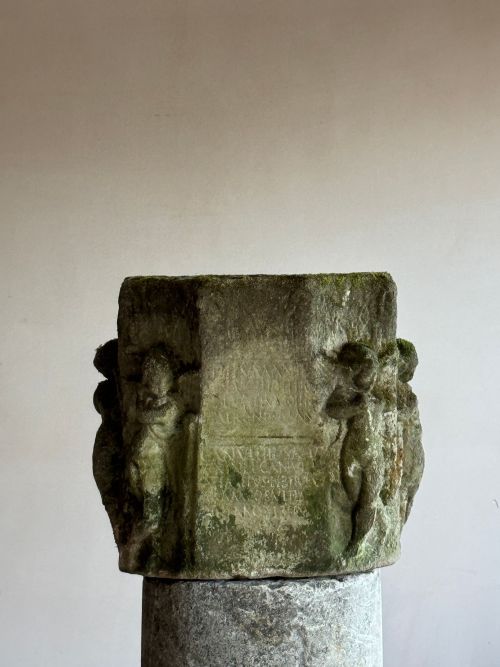
Moulds allowed workshops to replicate intricate motifs like acanthus leaves and multi-sided geometric profiles with consistent precision. Surface finishes often incorporated paint or relied upon natural weathering over decades to develop patinas across the aggregate materials.
Cast Stone Garden Planters Retail Price Guide 2026
Typical asking prices for cast stone garden planters among the pieces listed under this phrase on Sellingantiques today, from the lower quarter to the upper quarter. They describe what is for sale here now, not the wider market.
Listings span periods from the nineteenth century through the 1950s, featuring materials such as reconstituted stone, cast iron, and concrete.
What varies in quality
Quality in these planters rests upon the crispness of the moulded detail and the proportional harmony between the vessel and its pedestal base. Superior examples display sharply defined relief work on acanthus leaves and clean architectural mouldings that remain legible despite heavy weathering.
The character of the aggregate and the depth of the natural weathering process dictate visual appeal, with older pieces showing an integrated, organic surface texture. Heavier, more substantial compositions provide better stability and architectural presence in a garden setting.
Andrew Handyside
The Cast Stone Garden Planters Glossary
- Campana urn
- A bell-shaped garden vessel with an everted rim, often mounted on a pedestal base. This classic form originates from antiquity and remains a staple of formal garden design.
- Reconstituted stone
- A manufactured material made from crushed stone aggregate mixed with a binder such as cement, moulded to resemble natural carved stone. It offers robust durability for outdoor statuary.
- Neoclassical
- A style drawing inspiration from the classical art and architecture of ancient Greece and Rome. Pieces in this idiom feature restrained symmetry, urn shapes, and leaf motifs.
- Plinth
- A heavy base or pedestal that elevates a garden urn or planter. It provides architectural separation from the ground and balances the proportions of large vessels.
Cast Stone Garden Planters: Frequently Asked Questions
How do I clean a cast stone planter?
Gentle brushing with water helps remove loose dirt without harming the aged surface. Avoid harsh chemical cleaners that strip away the natural weathering.
Allow the stone to dry naturally after washing to preserve its characteristic outdoor patina and texture.
Can these planters stay outside in winter?
Most cast stone and cast iron vessels withstand winter weather well due to their dense material composition. Ensuring proper drainage prevents trapped water from expanding during freezing temperatures.
Elevating planters slightly off the ground on small feet helps protect them from continuous ground moisture.
What is the difference between cast stone and cast iron?
Cast stone utilises aggregate and binding agents moulded into rigid architectural forms with a stony finish. Cast iron involves molten metal poured into moulds, producing thin-walled vessels with high tensile strength.
Both materials weather distinctively outdoors, with iron developing traditional oxidation patinas and stone acquiring organic moss and lichens.
How do I match a planter with a pedestal?
Proportion guides the pairing of urns with their matching or replacement bases. Classical designs typically require symmetrical weights and matching stylistic motifs like acanthus details.
Checking the footprint of the planter against the top surface of the plinth ensures a secure and stable alignment.