


Cast Iron Fireplace Back
A cast iron fireplace back anchors a hearth, radiating steady heat into the room while protecting the masonry behind.
Cast Iron Fireplace Back
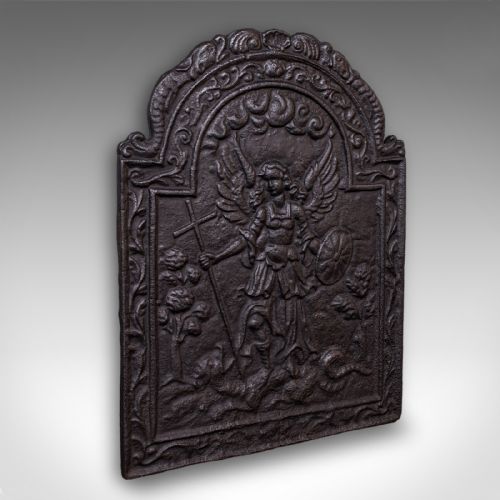
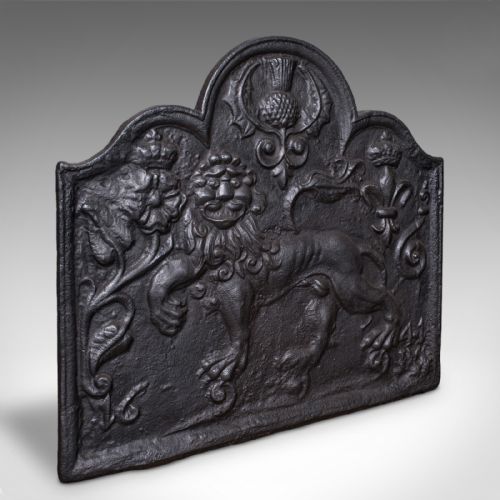
A cast iron fireplace back forms the heavy rear plate of an open hearth, designed to reflect warmth forward into the room. When you search for a cast iron fireplace back, you encounter robust heavy plates and complete hearth assemblies spanning Victorian, Georgian, and nineteenth century periods.
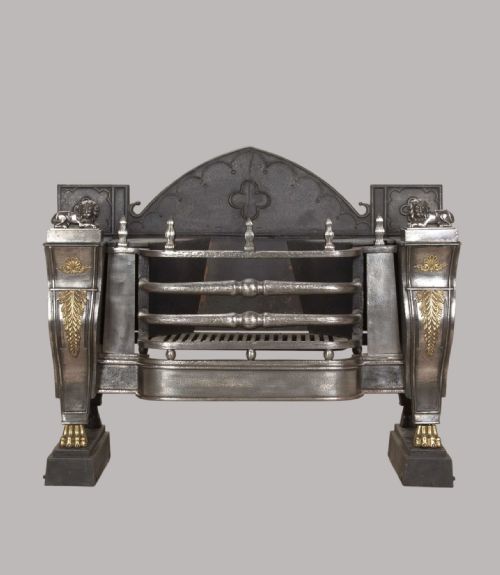
The selection ranges from simple English reflectors to substantial French arch top designs featuring armorial motifs. Pieces frequently incorporate related elements such as fire baskets, grates, and andirons alongside the main iron plate.
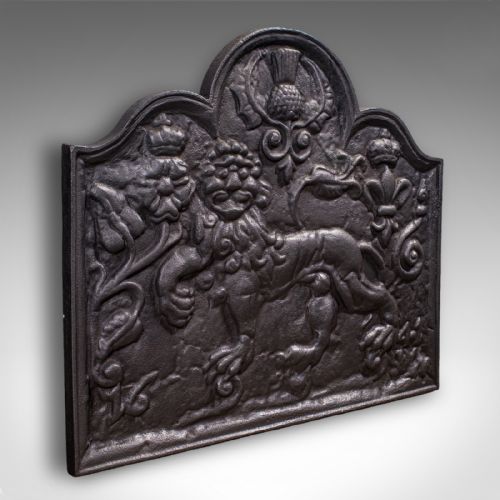
Victorian examples dominate the selection, often carrying decorative relief work in styles from Neoclassical and Carolean revival to Gothic and Heraldic. Earlier Georgian pieces and occasional twentieth century items appear alongside these nineteenth century works.
How they were made
These items rely primarily on cast iron, poured into sand moulds to capture deep relief patterns, coats of arms, and pictorial scenes. Wrought iron and brass appear in auxiliary components such as grates, fenders, and andirons.
Moulders utilised heavy iron casting techniques to ensure the metal could withstand intense hearth temperatures without cracking over decades of use.
Armour and eagles occasionally keep watch over the hearth from French arch tops.
What varies in quality
Quality rests in the crispness of the cast relief work and the thickness of the iron plate. Finer castings show sharp architectural details, heraldic crests, and clean lettering without the blurring common in secondary production runs.
The integrity of the metal structure and the completeness of accompanying grates or andirons also divide standard hearth plates from exceptional installations.
The Cast Iron Fireplace Back Glossary
- Fireback
- A heavy metal plate placed at the back of an open hearth to reflect heat and protect the brickwork. It serves as the primary canvas for decorative iron casting.
- Andirons
- Horizontal metal supports placed in a fireplace to hold logs above the hearth floor. They often accompany a heavy fire plate or basket.
- Fire Basket
- An iron grate designed to contain coal or wood within the fireplace opening. This form combines the back plate with a built-in fuel basket.
- Reflector
- An alternative term for a fireback, emphasising its functional role in throwing radiant heat back into the room. English reflectors frequently display Victorian relief ornamentation.
Cast Iron Fireplace Back: Frequently Asked Questions
How do I install a fireback?
A cast iron fireplace back stands upright against the rear brickwork of the hearth, often supported by the base of the grate or specialised feet. It requires no permanent fixings because its own heavy mass keeps it stable.
Adequate clearance around the plate ensures proper airflow and prevents undue stress against the masonry during high heat cycles.
Can I burn wood against an old fireback?
These pieces were built specifically to receive direct flames and glowing embers from solid fuel fires. The heavy metal absorbs thermal energy and radiates it outward long after the fire dies down.
Regular use requires seasoned wood to minimise soot accumulation and maintain the clarity of the cast relief surface.
How do I identify a Victorian fireback?
Victorian examples typically display distinct revival styles such as Neoclassical, Gothic, or Carolean motifs cast in heavy iron. Dates cluster around the late nineteenth century, frequently accompanied by English registry marks or characteristic foundry textures.
Earlier Georgian plates tend toward simpler architectural lines or heavier armorial plaques without Victorian ornamentation.
What is the difference between a fireback and a fire grate?
A fireback is a flat or arched vertical plate that stands at the back of the hearth. A fire grate includes a basket or floor for holding fuel directly in front of or attached to that back plate.
Many listings combine both elements into a single integrated hearth assembly.