
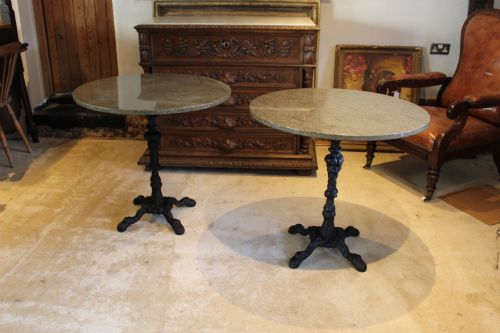
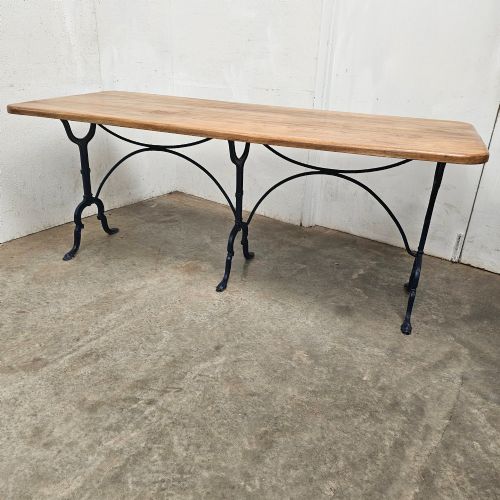
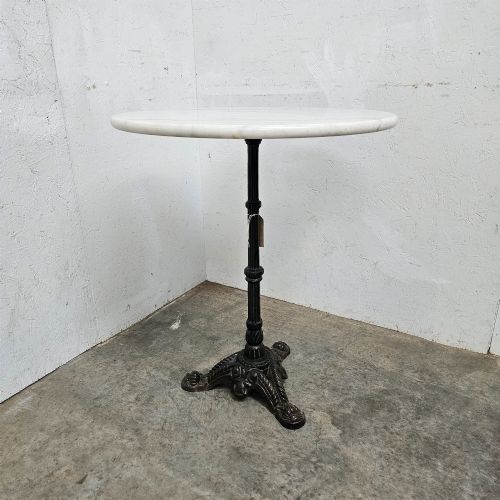
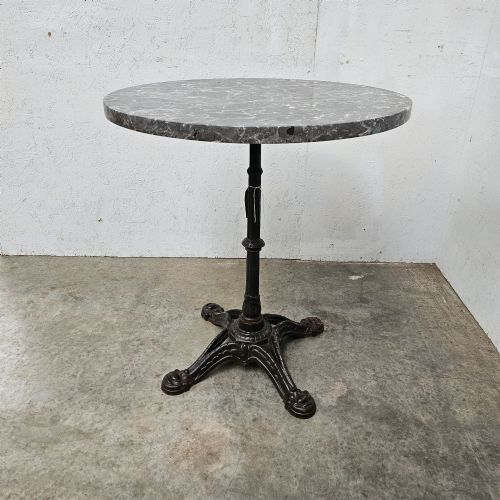

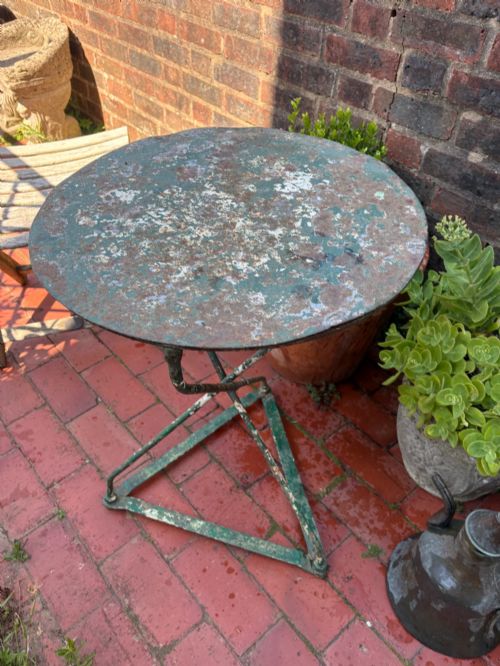


Cast Iron Cafe Table
These cast iron cafe table pieces bring robust utility and timeless Continental style to any terrace or kitchen.
What a cast iron cafe table is
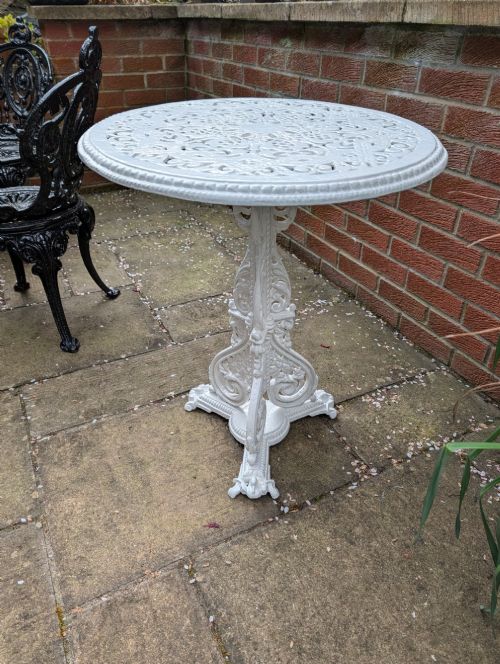
A cast iron cafe table combines a heavy metal base with a durable surface, designed for commercial hospitality and domestic use alike. These pieces frequently emerge in French bistro, Victorian, and garden styles, spanning from the nineteenth century into the early twentieth century.
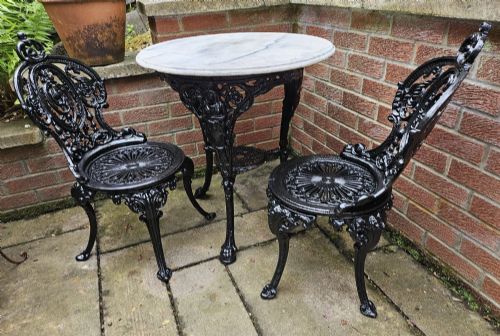
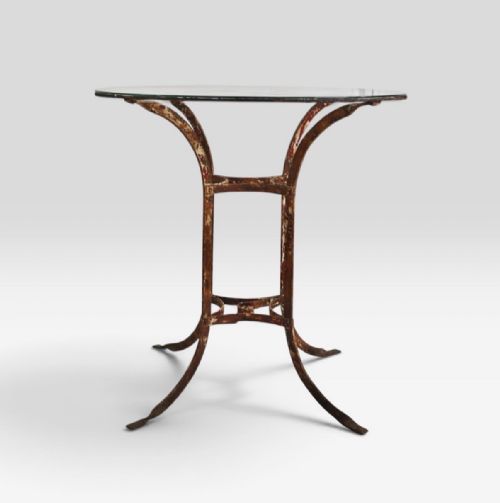
The format typically involves a tripod or pedestal cast iron base supporting a compact top. You will most commonly encounter French bistro and Victorian garden tables featuring round tops suited for intimate seating.
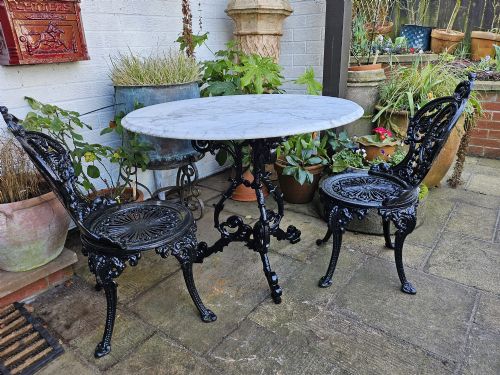
Materials vary across the inventory, with bases consistently cast in iron and tops rendered in marble, white marble, green marble, oak, granite, pine, or mahogany. Certain examples incorporate brass and painted finishes to complete the design.
How they were made
Foundries produced the heavy structural bases by pouring molten iron into sand moulds, creating intricate patterns and stable tripod or pedestal supports. These iron components often receive a coat of paint to protect the metal from corrosion.
Wood tops utilise solid timbers like oak, pine, and mahogany, shaped and fitted directly to the iron framing. Stone tops utilise white marble, green marble, or polished granite, cut and smoothed to provide a resilient surface for daily dining.
Retail Price Guide 2026
Typical UK retail prices for cast iron cafe table, calculated from the Sellingantiques database of over a million retail prices indexed since 2003. This retail price guide relies exclusively on Sellingantiques data; no external sources or auction records are used, so the figures do not describe the wider market.
What varies in quality
The refinement of the casting work dictates the visual pedigree of the base, distinguishing utilitarian foundry output from sophisticated designer pieces such as those attributed to Christopher Dresser. Crisper detail in the ironwork and heavier, more balanced proportions elevate certain specimens above standard commercial grade.
The choice of top material similarly influences the character of the piece, with polished granites and decorative marbles representing a more substantive investment than standard timber planks. The integrity of the union between the heavy iron base and the fitted top determines the enduring stability of the table.
The Cast Iron Cafe Table Glossary
- Cast Iron
- An iron-carbon alloy poured into a mould while molten to create complex and heavy structural forms. This material provides the substantial weight necessary to keep bistro tables stable on uneven floors.
- Bistro Table
- A small dining table traditionally used in Parisian cafes and small eateries. These compact tables save floor space while offering a sturdy surface for drinks and light meals.
- Pedestal Base
- A central support column rising from a weighted foot rather than traditional corner legs. This configuration maximises legroom for diners seated around small round surfaces.
- French Bistro
- A design aesthetic characterised by utilitarian elegance, combining durable metal bases with classic marble or timber tops. This style evokes the lively atmosphere of nineteenth-century French pavement cafes.
- Polished Granite
- A hard igneous rock ground down to a smooth, reflective finish. This dense stone creates an exceptionally durable and cool-to-the-touch table surface.
Frequently Asked Questions
How do I clean a marble top?
Wipe the surface regularly with a soft cloth dampened in warm water and mild, neutral soap. Avoid abrasive scouring pads and acidic cleaners that can etch the polished stone.
Dry the marble thoroughly after washing to prevent water spots. Promptly blot up spills from wine, citrus, or vinegar to maintain the finish.
Are these tables suitable for outdoor use?
Many historical examples originate as garden or patio furniture and withstand outdoor environments well. Cast iron bases handle weather reliably, particularly when painted.
Timber tops require more protection from prolonged rain and frost. Consider storing wooden or marble-topped variants under cover during harsh winter months.
How do I identify a Victorian piece?
Victorian examples often display specific nineteenth-century design motifs, registered foundry marks, or documented stylistic influences such as Christopher Dresser patterns. The casting techniques and decorative flourishes align with British manufacturing standards of that era.
Compare the proportion and weight of the ironwork against known period pieces. Documentation from the nineteenth century aids in confirming precise origins.
Can I seat four people comfortably?
Most cafe tables feature compact round tops designed primarily for two diners. Larger variants can occasionally accommodate three or four people for drinks or light refreshments.
Check the diameter of the top before purchasing to ensure it meets your seating requirements. Pedestal bases help maximise knee clearance for extra guests.