


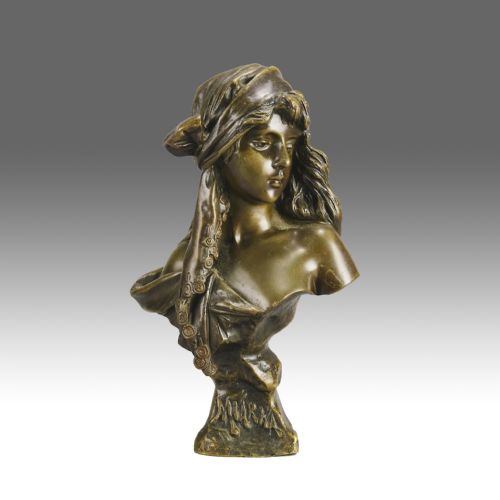


Cast Bronze Maiden Sculpture
A cast bronze maiden sculpture brings expressive figures into a room, capturing classical grace and fluid organic lines.
Cast Bronze Maiden Sculpture
When you search for a cast bronze maiden sculpture, you encounter figural works spanning the late nineteenth century into the twentieth century. These pieces primarily take the form of busts and full statues depicting young women, dancers, and literary heroines. French foundries dominate the available selection, ranging from academic studies to flowing organic forms.
The aesthetic shifts visibly across the decades represented on this page. Earlier nineteenth-century examples often lean toward classical Neoclassical traditions, while works from the turn of the century embrace curving Art Nouveau motifs. Later pieces step into the geometric stylisation of Art Deco, reflecting the changing tastes of European makers.
How they were made
Foundries produced these figural works using traditional metal casting methods, shaping molten alloy into detailed forms. Sculptors modelled the original subjects in clay or wax before workers poured the metal into moulds. Artisans then applied surface treatments to achieve rich patinas or gilt finishes.
Makers frequently combined materials to enhance the visual impact of the figures. Sculptures often rest upon carved marble or wooden bases, introducing contrasting textures and weight to the display. Alternative pieces utilise spelter as a more accessible metal medium while retaining similar figural detailing.
Cast Bronze Maiden Sculpture Retail Price Guide 2026
Typical asking prices for cast bronze maiden sculpture among the pieces listed under this phrase on Sellingantiques today, from the lower quarter to the upper quarter. They describe what is for sale here now, not the wider market.
Several young maidens on display share their names with nineteenth-century operas and poems.
What varies in quality
The depth and nuance of the patina or gilding further separate standard productions from exceptional works. Master founders achieved subtle tonal gradations across the metal surface, whereas lesser versions display flat, uniform colouration without tonal variation.
Moreau Family·Emmanuel Villanis·C J R Colinet·Jean Jacques Pradier·Victor Paillard·A Gaudez
The Cast Bronze Maiden Sculpture Glossary
- Patina
- The chemical or natural surface coloration developed on bronze over time or applied by the founder. This finish enhances the visual depth of the sculpture.
- Spelter
- A zinc-based alloy commonly utilised as a substitute for bronze. It offers a similar metallic appearance at a different weight and cost.
- Gilt bronze
- Metalwork coated with a thin layer of gold or gold leaf. This technique creates a radiant surface finish often seen on French decorative pieces.
- Bust
- A sculpted representation of a person from the chest up. This format focuses attention on facial expression and upper garment styling.
- Foundry
- A workshop or factory where metal is melted and poured into moulds. These establishments turned artists' models into finished metallic sculptures.
Cast Bronze Maiden Sculpture: Frequently Asked Questions
How do I identify Art Nouveau sculpture?
Art Nouveau pieces display flowing organic lines, natural motifs, and stylised hair or drapery reflecting turn-of-the-century design. The forms avoid rigid geometry in favour of dynamic, curving silhouettes.
Makers working in this style often incorporated literary titles or poetic names into the base or title of the sculpture.
What is the difference between bronze and spelter?
Bronze is a durable copper alloy valued for its weight, strength, and capacity to hold fine surface detail during casting. Spelter is a softer zinc alloy that feels lighter and requires careful handling.
Examining the underside or areas of wear helps distinguish the heavier copper-based metal from the lighter alternative.
Where should I display a bust?
Busts require stable surfaces such as sideboards, pedestals, or mantelpieces where viewers can appreciate them from multiple angles. Ensuring adequate surrounding space allows the silhouette to stand out clearly.
Placing the piece away from direct heat sources protects any integrated marble or wooden bases from potential drying and cracking.
How should I clean a bronze sculpture?
Maintenance requires only gentle dusting with a soft, dry cloth to prevent the accumulation of particles on the surface. Avoid using chemical cleaners, polishes, or water, as these can strip away the original patina.
Preserving the aged finish maintains the historical integrity and visual character of the metalwork.