
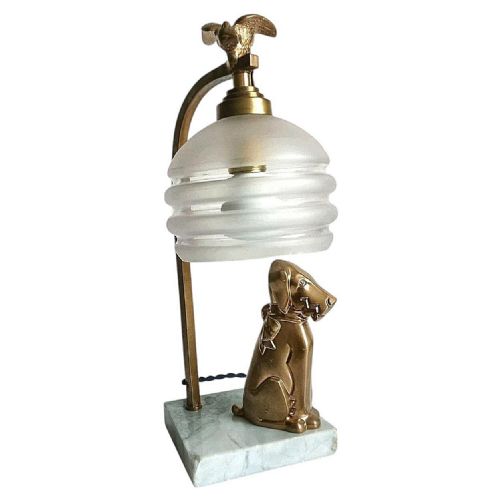

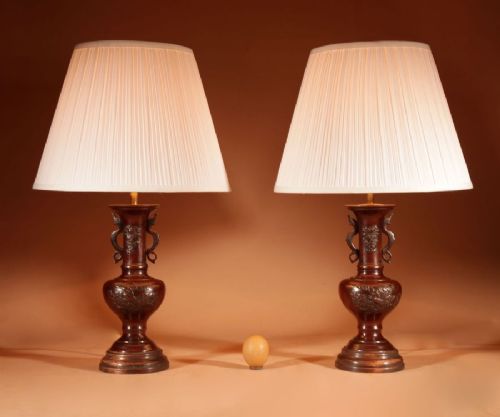

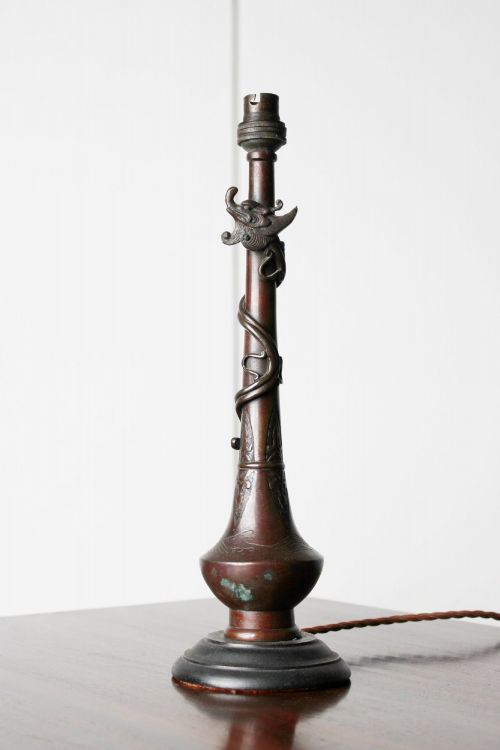


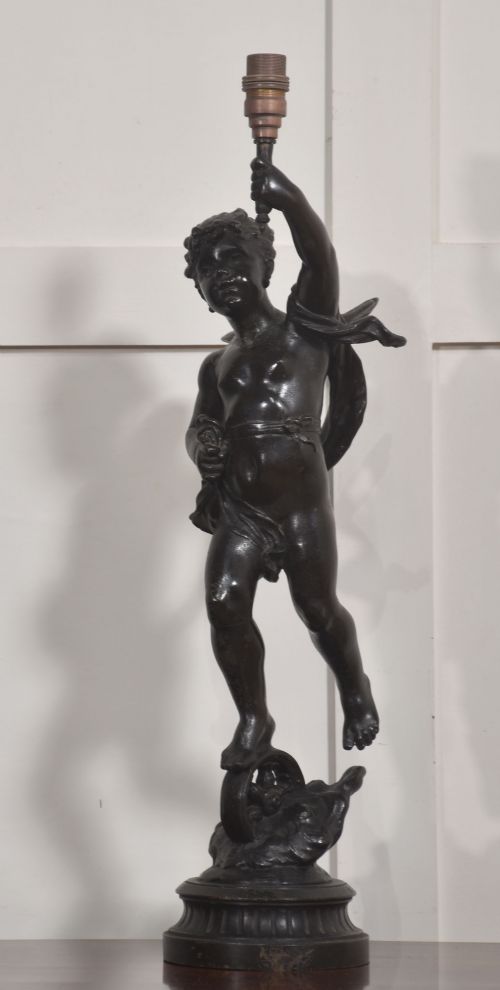
Cast Bronze Lamp
These cast bronze lamp designs bring heavy metalwork into domestic rooms, offering sculptural forms that hold light through the centuries.
Cast Bronze Lamp
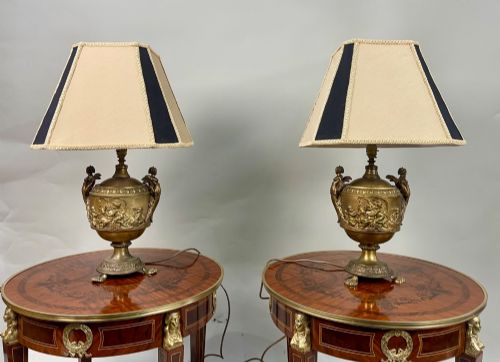
A cast bronze lamp uses durable metal casting methods to shape weighted bases and structural columns for domestic illumination. Buyers find these lighting pieces across multiple eras, stretching from the Victorian period through the Edwardian years and into the 1920 and 1930 decades.
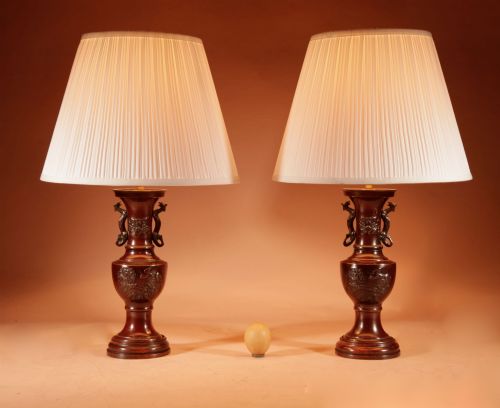
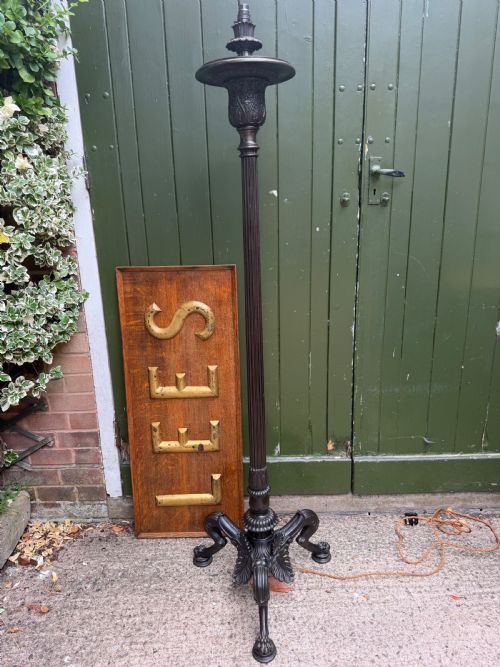
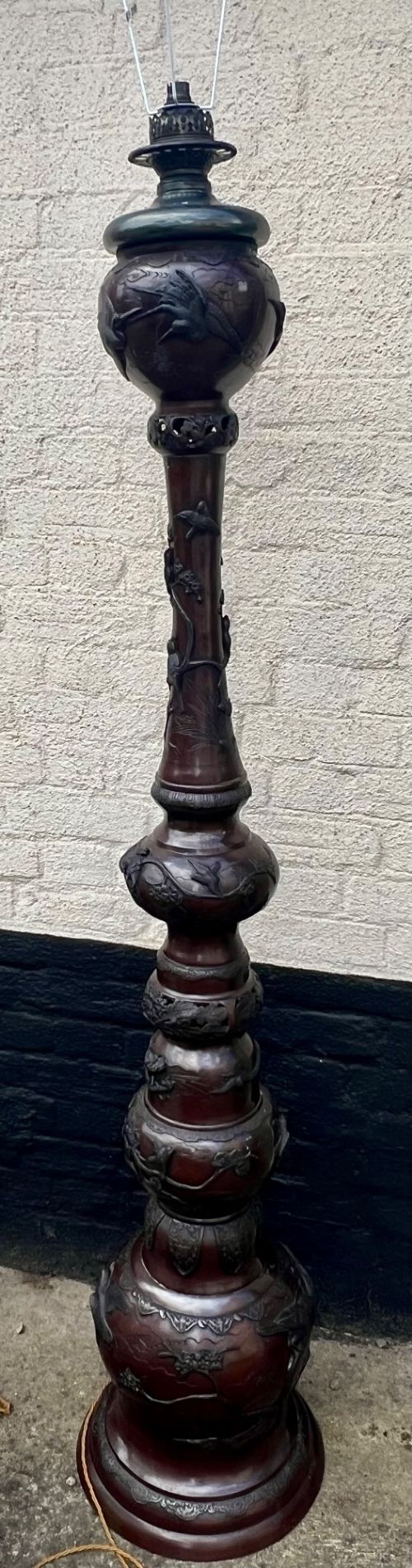
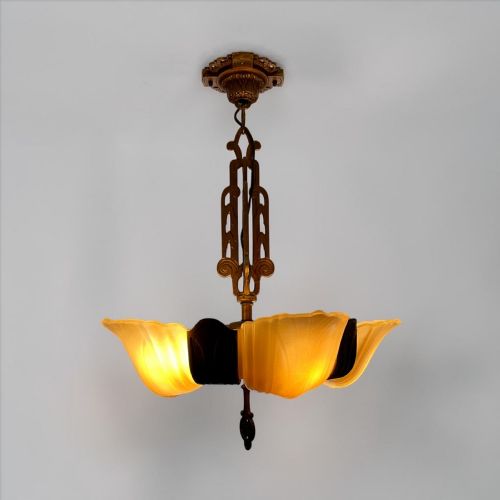
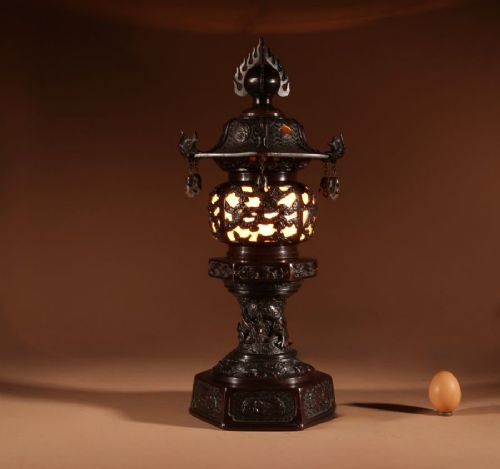
The selections span table lamps, floor standards, desk lamps, and ceiling lanterns. Japanese Meiji period examples and French styles dominate the offerings alongside standard domestic lighting.
Makers incorporate brass, marble, fabric, glass, and wood alongside the core metal. The resulting objects function as both utilitarian light sources and decorative centrepieces.
Materials and Casting
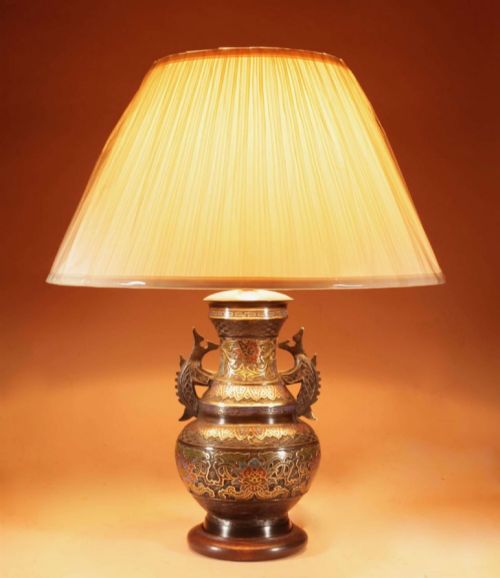
Foundries produced these items using traditional metal casting techniques, pouring molten bronze or brass into moulds to achieve complex sculptural detail. Artisans then finished the cast components by hand, adding patination, gilding, or champlevé enamel work.
Makers combined the heavy metal bodies with contrasting elements such as white metal, spelter, opaline glass, and carved marble bases. Many items also integrated fabric shades or glass shades to diffuse the light.
Materials recorded across the inventory include bronze, brass, spelter, marble, glass, fabric, and wood.
Quality and Execution
The fineness of the metal chiselling and the depth of the original patination determine the distinction between standard production and superior work. Sculptural figures on French and Japanese pieces show greater hand-finishing in higher-tier examples.
The integrity of the structural joints and the weight of the cast components dictate the stability of the lamp. Superior specimens retain matching original parts, such as cast bases, columns, and burners, without later replacement elements.
L & F Moreau·F&C Osler·Joseph Hinks·The Charles Parker Company·Aug. Moreau
The Cast Bronze Lamp Glossary
- Patination
- The surface finish and coloration developed naturally over time or applied chemically by the maker. This skin protects the metal and gives depth to the bronze.
- Champlevé
- An enamelling technique where troughs are dug into the metal surface and filled with vitreous enamel before firing. It appears frequently on Japanese export pieces.
- Spelter
- A zinc-based alloy used as a cheaper alternative to bronze for figural bases. It takes patination well but possesses a lighter weight and softer structure.
- Lucerna
- An antique oil lamp type modelled on ancient Roman designs with multiple spouts. Italian examples often use cast brass and bronze.
- Chandelier
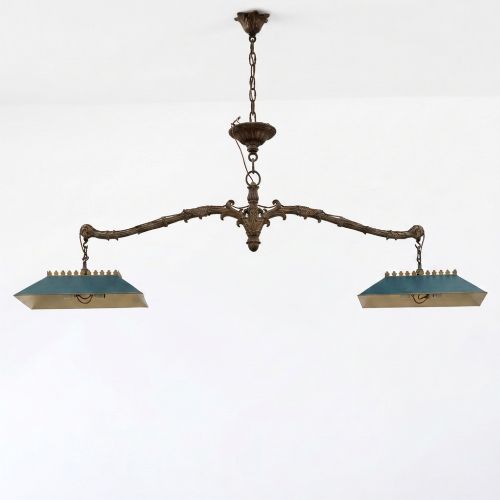
- A branched ceiling light fixture designed to hold multiple bulbs or candles. These large forms utilise reinforced cast bronze arms to support the weight.
Cast Bronze Lamp: Frequently Asked Questions
How do I date a cast bronze lamp?
Dating relies on stylistic clues, manufacturing techniques, and wiring components. Pieces from the Victorian and Edwardian eras often display heavy classical or floral motifs, while 1920 and 1930 examples favour geometric Art Deco lines.
Examining the construction methods underneath the base reveals whether the piece uses older threaded rods or modern fixings. Maker signatures or foundry marks stamped into the metal also help anchor the production period.
Can I use modern bulbs in these lamps?
Most antique lamps accommodate modern low-wattage LED bulbs once any historic wiring has been safely updated by a qualified professional. The original lamp holders can often be retained while upgrading the internal flex for safety.
Consulting a specialist electrician ensures the heavy metal body remains properly earthed. This preserves the vintage wiring setup while meeting current domestic standards.
Are Japanese Meiji lamps authentic antiques?
Meiji period items date from the late nineteenth and early twentieth centuries, created during a prolific era of Japanese metalwork export. These pieces frequently feature dragons, elephants, and intricate bronze casting.
Many were originally designed as vases or incense burners and later converted into table lamps for European and American markets. The quality of the casting and the distinct export patination confirm their origins.