

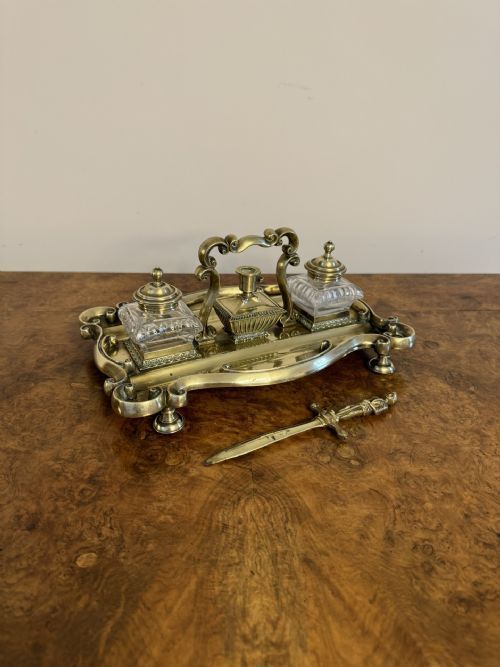


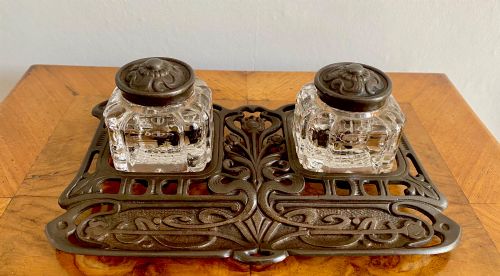


Cast Brass Inkstand
A cast brass inkstand is a heavy desk accessory designed to hold ink and pens, bringing period character to any writing table.
Cast Brass Inkstand
A cast brass inkstand is a desk accessory designed to hold one or more ink bottles alongside pens, serving as the central writing implement of the nineteenth and early twentieth centuries. These pieces range from simple trays with a single well to elaborate sets incorporating letter holders, stationery caddies, and pen rests.
The versions most commonly met on this page date from the Victorian and Edwardian eras, spanning periods such as 1880, 1890, and 1900. They appear in styles including Victorian Gothic, French Rococo Revival, and Art Nouveau, reflecting the changing tastes of writing rooms over the decades.
Figural and novelty designs form a prominent strand within these listings, featuring animals such as owls, lizards, ostriches, bulldogs, parrots, and foxes with glass eyes. Alongside these sculptural pieces, buyers find ornate desk sets that utilise matching glass inserts and cast metal mounts.
How they were made
The primary material in these pieces is cast brass, poured into moulds to create heavy, durable frames and figural subjects. This casting process allowed makers to achieve high levels of detail, from flowing foliate scrolls to realistic animal feathers and fur.
Many examples combine cast brass with glass ink inserts, silver plate, horn, wood, or bronze accents to create functional desk sets. Removable glass bottles fitted snugly into cast collars, while pen rests were integrated directly into the tray designs or formed by separate bronze and brass supports.
Cast Brass Inkstand Retail Price Guide 2026
Typical asking prices for cast brass inkstand among the pieces listed under this phrase on Sellingantiques today, from the lower quarter to the upper quarter. They describe what is for sale here now, not the wider market.
Listings for cast brass inkstands frequently span the Victorian and Edwardian eras, incorporating materials such as glass, bronze, wood, and horn.
What varies in quality
The presence of original fittings, such as matching cut glass ink bottles with matching lids, elevates a desk set. Weight and substantial construction also separate standard utility stands from grander, heavier desk sets designed for prominent studies.
The Cast Brass Inkstand Glossary
- Inkstand
- A desk stand holding one or more inkwells and usually incorporating pen rests or a tray for nibs. It forms the complete writing station on a desk top.
- Novelty inkwell
- An inkwell modelled to represent an animal, human figure, or object rather than a standard geometric container. These whimsical designs were popular in the late nineteenth century.
- Ormolu
- Gilded bronze or brass mounts applied to decorative objects. The term describes the bright, gold-coloured finish achieved through mercury gilding or modern plating techniques.
- Foliate design
- Ornamentation using stylized leaves, vines, and floral motifs. This style appears frequently on French and English cast brass trays.
- Stationery caddy
- A desk accessory featuring upright compartments for holding envelopes and writing paper. It often forms part of a larger matched inkstand set.
Cast Brass Inkstand: Frequently Asked Questions
What is a cast brass inkstand?
A cast brass inkstand is a heavy desktop tray designed to hold ink bottles and writing implements securely in one place. They served as both practical writing tools and decorative desk ornaments in homes and offices.
These pieces were cast from brass and often decorated with period motifs ranging from foliate scrolls to figural animals. They remain popular for adding period character to traditional or modern workspaces.
How do I date a brass inkstand?
Dating relies on stylistic clues, registration numbers, and prevailing design movements visible in the casting. Victorian pieces often feature gothic or heavily ornamented floral details, while later examples show flowing Art Nouveau lines.
Makers frequently incorporated registration numbers on English pieces during the 1880s, which provide exact years for design patents. Examining the type of glass inserts and the style of the mounting hardware also helps narrow the period.
Are the ink bottles usually original?
Many surviving desk sets retain their original cut glass or moulded glass ink bottles, often fitted with brass or silver-plated lids. Because bottles were easily broken or separated over time, replacements are sometimes found in older stands.
Original bottles generally fit the collar precisely and match the wear and age of the surrounding brass tray. Listings usually specify whether the glass bottles accompanying a stand are original to the piece.
How should I clean a brass inkstand?
Cleaning should be minimal to preserve the historic patina that accumulates on nineteenth-century brass surfaces. Dusting with a soft dry cloth is usually sufficient for regular maintenance.
Harsh metal polishes should be avoided because they strip away the aged darker tones that collectors value. If cleaning is necessary, a gentle wipe with a damp cloth and mild soap is safer than abrasive chemical cleaners.
What are novelty inkwells?
Novelty inkwells are desk accessories shaped like animals, birds, or humorous figures with hinged lids concealing the ink reservoir. Popular Victorian subjects include owls, dogs, parrots, and foxes, often fitted with glass eyes.
These pieces combined utility with Victorian humour and curiosity, making them sought-after collector items today. They were cast in brass, bronze, or cast metal and finished by hand.