


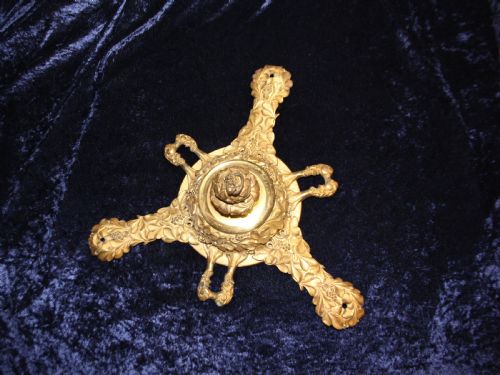


Cast Brass Hooks
Cast brass hooks are sturdy wall and door fixtures designed for hanging garments, hats, and drapery, offering practical service alongside period character.
Cast Brass Hooks
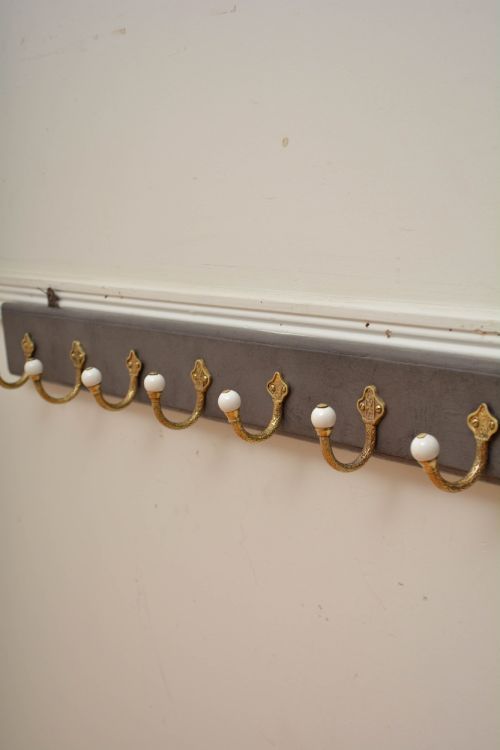
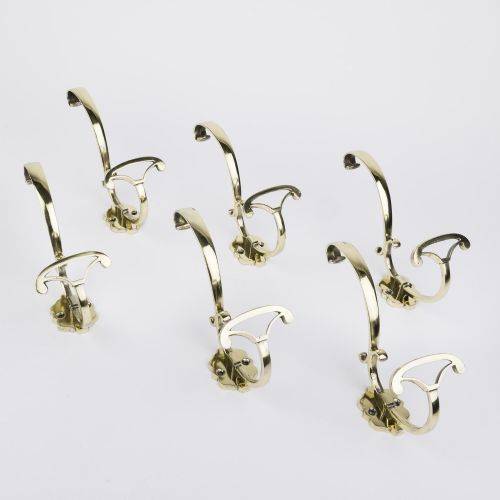
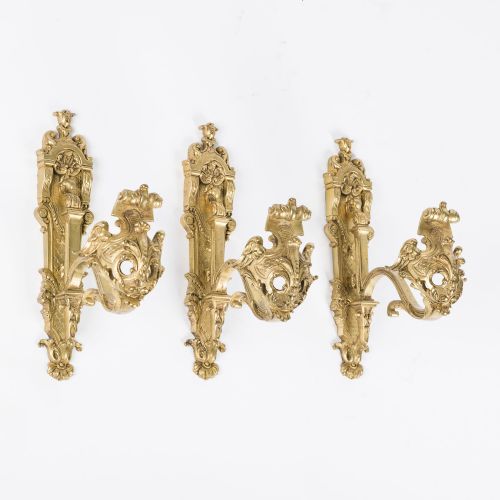
When buyers search for cast brass hooks, they find robust hardware spanning the Georgian, Victorian, and Edwardian eras. These pieces include single hat and coat hooks, multi-hook wall racks, and decorative ceiling roses or curtain tiebacks.
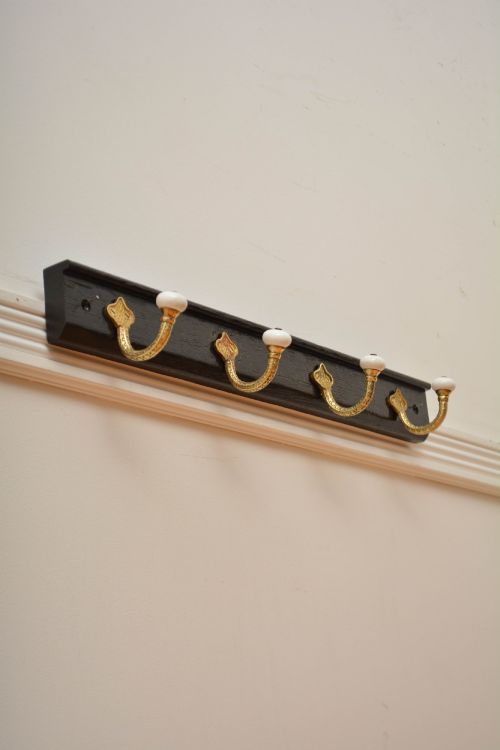
The most common examples on this page date from the Victorian period, frequently mounted on wooden boards such as ebonised oak or mahogany. Many items also incorporate ceramic elements or display French revival styles like Rococo, Baroque, and Art Nouveau.
Beyond standard wall hooks, the selection includes specialist items like equestrian crop hooks shaped as horse heads and gilt brass ceiling roses. Each variant serves a distinct functional purpose while showcasing the heavy casting techniques of its respective period.
How they were made
These pieces rely primarily on traditional metal-casting techniques using brass, bronze, and gilt brass. Molten metal was poured into moulds to create thick, durable mounting plates and robust hook arms capable of bearing significant weight.
Many items combine cast metal with other traditional materials, fixing brass hooks to backing boards of solid oak and mahogany. Certain Victorian and Edwardian examples integrate contrasting ceramic components into the design.
Surface finishing varied according to style and period, ranging from polished brass and fire-gilded ormolu to ebonised wood treatments. The resulting hardware combined structural strength with decorative detailing such as animal motifs and floral scrolls.
Some Victorian horses had to share their tack rooms with solid brass equestrian crop hooks shaped entirely as startled horse heads.
What varies in quality
Quality in these items is determined by the crispness of the casting and the depth of the decorative detail on the mounting plates. Finer pieces exhibit sharp definition in floral, animal, or scroll motifs, whereas lesser examples appear soft and blurred.
The choice of supporting materials also sets pieces apart, with solid hardwoods like mahogany and ebonised oak providing superior structural integrity compared to simpler single-hook mounts. Furthermore, heavier gauge metal casting indicates a higher grade of manufacture intended to withstand daily use.
The Cast Brass Hooks Glossary
- Cast Brass
- Metal shaped by pouring molten alloy into a mould. This process creates solid, heavy items with intricate surface relief.
- Ebonised Oak
- Timber treated with a dark finish to resemble ebony. It serves as a contrasting dark backing board for bright metal hooks.
- Ceiling Rose
- A decorative circular moulding fixed to the ceiling around a light fitting. In metalwork, these items often match the finish of nearby hardware.
- Ormolu
- Finely ground high-carat gold applied to a bronze base metal. This French technique produces a rich, durable golden surface.
- Curtain Tie Back
- A wall-mounted fixture used to hold drapery open. These often match the style and material of concurrent coat hardware.
Cast Brass Hooks: Frequently Asked Questions
How do I mount antique coat racks?
These racks usually feature pre-drilled screw holes in the wooden backplate or cast metal mounting plates. Ensure you fix them securely into wall studs or use appropriate wall anchors to support the weight of heavy garments.
Check the spacing of the fixing points before installation to ensure a level fit. Using matching brass screws maintains the period appearance of the hardware.
Can I use these hooks in a bathroom?
Brass and bronze naturally resist corrosion well, making them suitable for damp environments like bathrooms. However, prolonged exposure to moisture can alter the surface finish over time.
Regular light cleaning helps preserve the metal. Avoid harsh chemical cleaners that might strip away original patination or damage integrated ceramic parts.
How do I date an antique hook?
Dating relies on examining the casting style, mounting board materials, and fastening types used. Victorian examples often feature heavy cast brass combined with ceramic or ebonised oak, while Georgian pieces display distinct classical styling.
Comparing the specific design motifs to known period styles helps narrow down the decade of manufacture. Screw types and manufacturing marks on the reverse can also provide additional clues.
What is the difference between brass and bronze?
Brass is an alloy primarily composed of copper and zinc, yielding a bright yellow or gold-like appearance. Bronze is an alloy of copper and tin, which typically produces a darker, warmer tone with greater tensile strength.
Both metals were used historically for durable hardware. Over time, each develops a natural patina that reflects its age and environment.