




Cased Silver Fork
A cased silver fork offers protected presentation and utility, spanning Victorian christening sets to Art Deco pastry services.
Cased Silver Fork
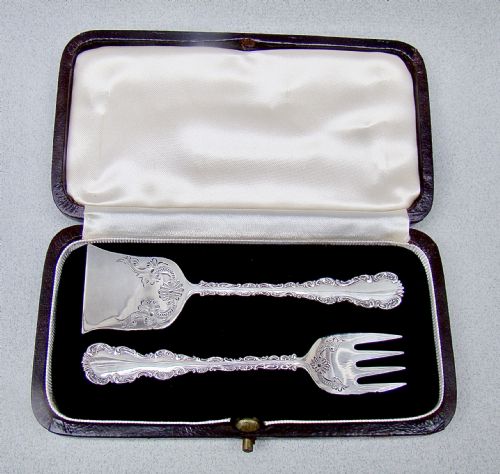
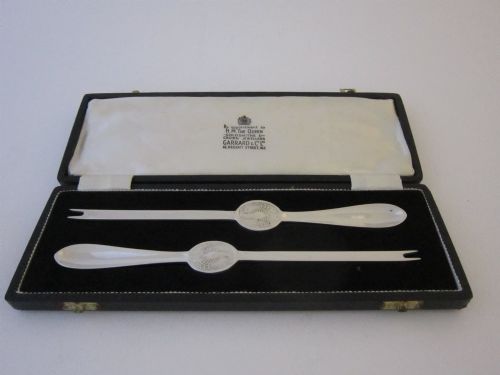
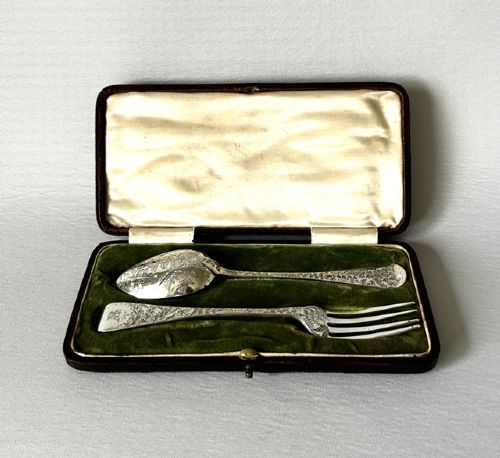
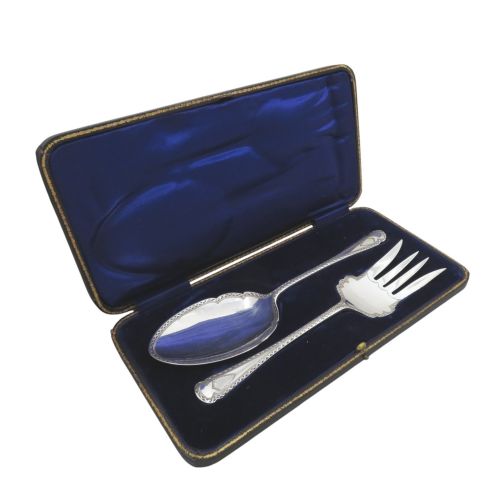
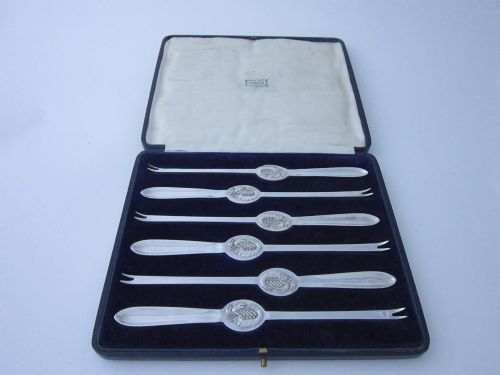
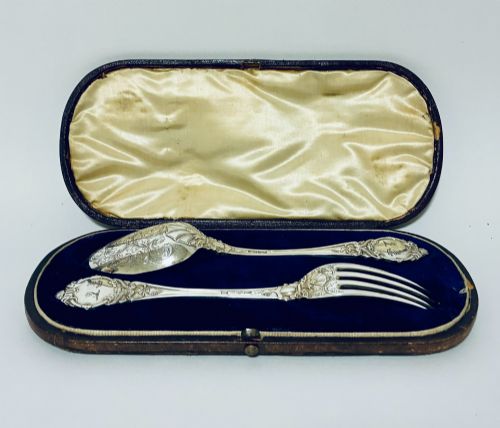
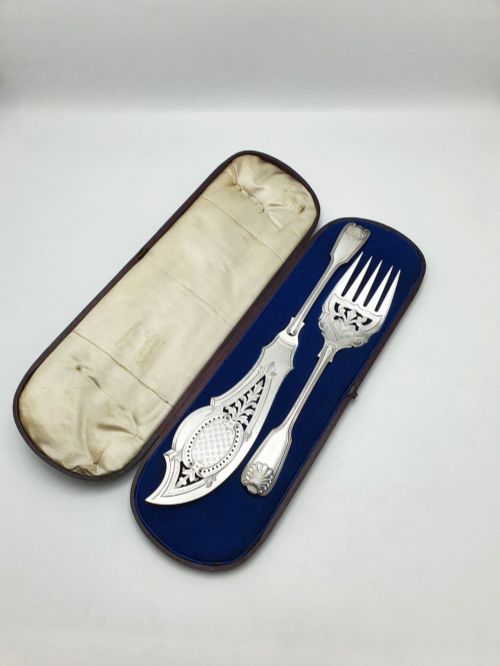
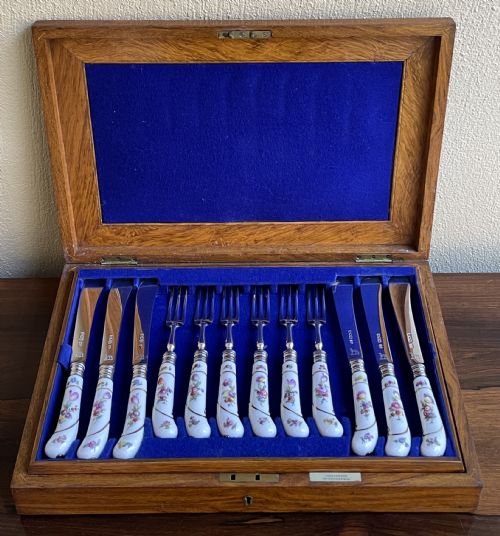
A cased silver fork encompasses fitted presentation boxes housing single eating utensils, matching sets, or multi-piece dining services. Buyers encounter variations ranging from single Victorian fruit forks and Christening sets to Edwardian bread forks and mid-century pastry sets.
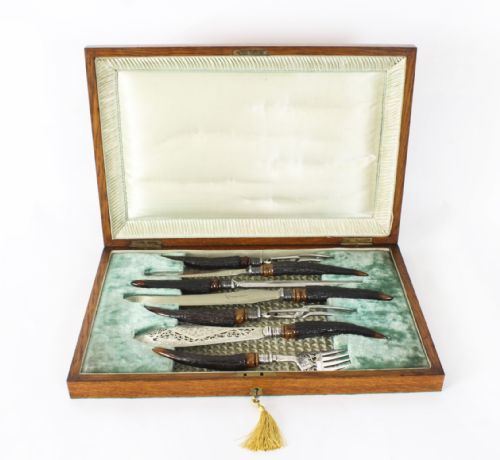
The selections span functional categories including seafood and lobster picks, dessert services, carving sets, and cake forks. The accompanying fitted cases typically organise the contents for storage or gifting across generations.
How they were made
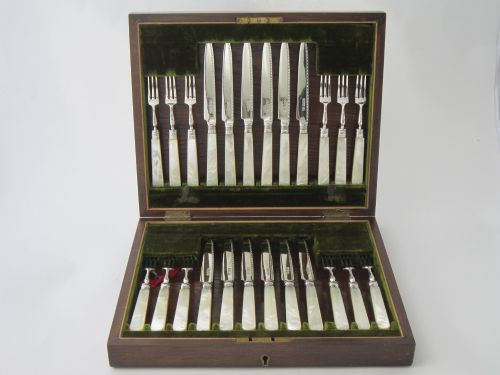
Silversmiths shaped these utensils from sterling silver or applied silver plate over base metals, frequently incorporating natural components like mother-of-pearl, ivory substitutes, antler horn, or porcelain for the handles. Metal components display traditional hallmarks denoting assay offices, standard marks, and dates.
The storage vessels employ robust wooden carcases lined internally with materials such as velvet, silk, or satin, and covered externally in leather or textured leatherette to secure the individual implements.
Listings feature Victorian, Edwardian, and Art Deco periods alongside materials including mother-of-pearl, velvet, and sterling silver.
What varies in quality
The distinction between standard utility items and finer examples rests on the crispness of the handle carving, the weight and gauge of the silver, and the structural integrity of the fitted case. Premium sets often feature detailed engraving, matching maker marks across every component, and superior internal lining materials.
Execution of specialised dining implements, such as intricately pierced fish servers or matched sets by renowned makers, demonstrates higher levels of craftsmanship than mass-produced utilitarian counterparts.
Henry Wilkinson·Garrard·Suckling Ltd·Harrods·William Devenport·Waring & Gillows·Thomas Harwood and Co·John Round·Elkington & Co·Adie & Lovekin·Deakin & Francis·Viners Ltd·Meka·George Adams·Liberty & Co·Mappin & Webb·Cooper Brothers
The Cased Silver Fork Glossary
- Sterling silver
- A silver alloy containing 92.5 percent pure silver by mass and 7.5 percent other metals, usually copper. This standard alloy provides durability while maintaining a bright metallic lustre.
- Silver plate
- A layer of silver applied to a base metal core such as nickel silver or copper. This technique offered an accessible alternative to solid sterling silver utensils.
- Hallmark
- An official stamp applied by an assay office indicating the purity of the metal, the maker, and the year of manufacture. These marks allow precise dating of British silver items.
- Assay office
- An official body charged with testing the purity of precious metal items and stamping them with statutory hallmarks. Principal offices include Sheffield, Birmingham, and London.
- Pastry fork
- A small fork featuring a broadened tines edge designed for cutting and eating cakes or pastries. These pieces frequently appear in matched cased sets from the Art Deco period.
Cased Silver Fork: Frequently Asked Questions
What are cased silver forks used for?
These instruments served specific dining functions such as handling pastry, seafood, fruit, or pickles during formal meals. They also functioned as presentation gifts for significant life events.
The fitted housing protected the soft silver surfaces and delicate handle materials from tarnishing and damage during storage in domestic dining rooms.
How do I date a cased silver fork?
Dating relies upon examining the stamped hallmarks on the metal components, which indicate the specific assay office and year letter. Stylistic indicators such as Art Deco geometric forms or Victorian floral engraving provide secondary verification.
The style of the exterior leatherette or wooden case often mirrors the prevailing interior design trends of the manufacturing era.
Are cased fork sets complete?
Many surviving sets retain their original complement of forks, serving spoons, or knives nestled within fitted velvet or silk slots. Individual pieces occasionally entered boxes assembled later by retailers.
Buyers examine the internal configuration and slots to determine if the implements share identical maker marks and period characteristics.
How should I store cased silver forks?
Storage requires a stable environment away from direct sunlight and excessive humidity to preserve the wooden exterior and delicate fabric lining. Consistent climate control prevents the timber carcase from warping.
Keeping the implements secured inside their original fitted slots minimises contact friction between individual pieces.