
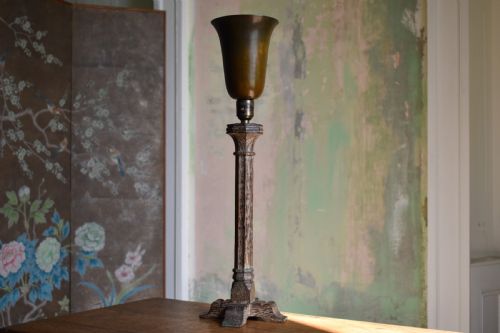
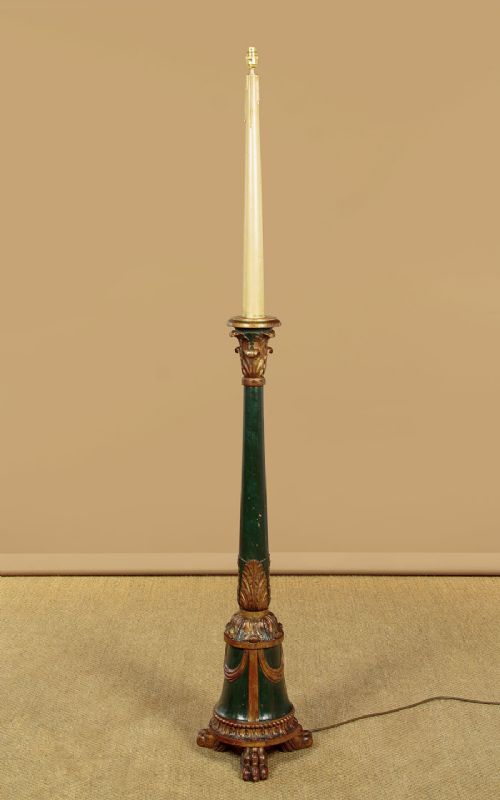
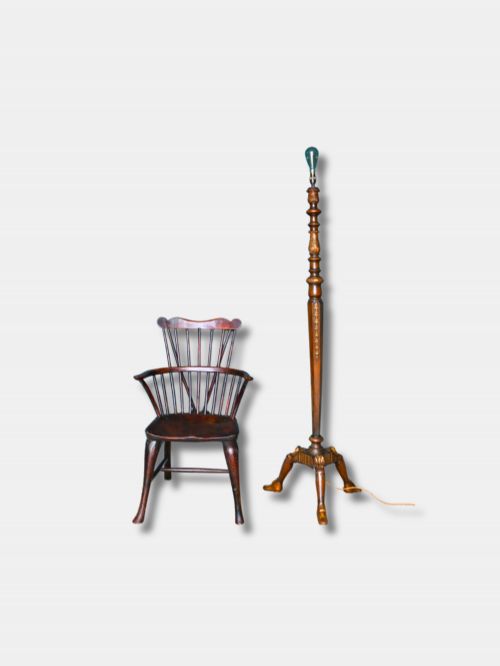
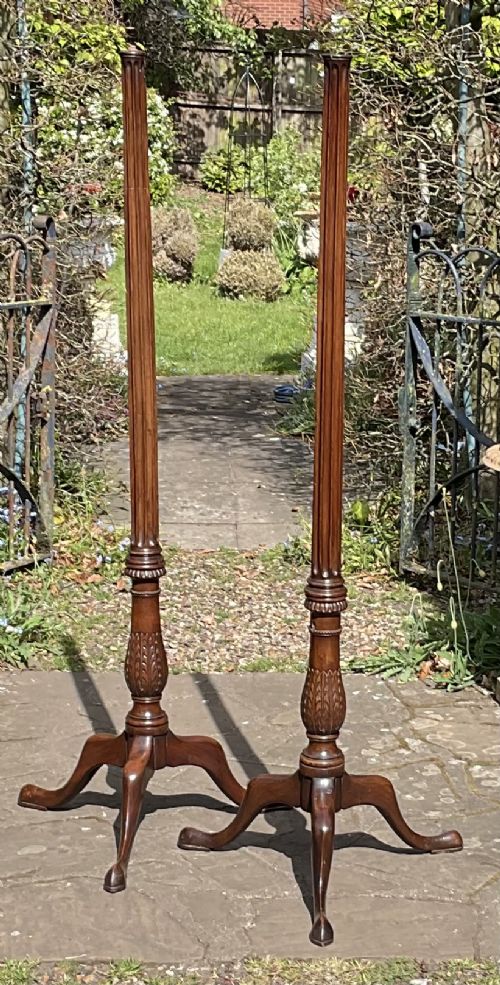


Carved Wooden Standard Lamp
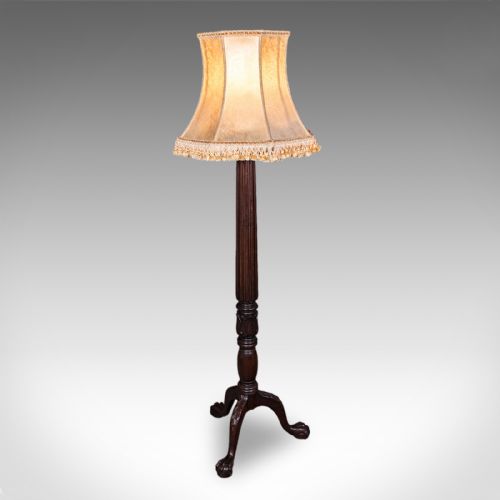
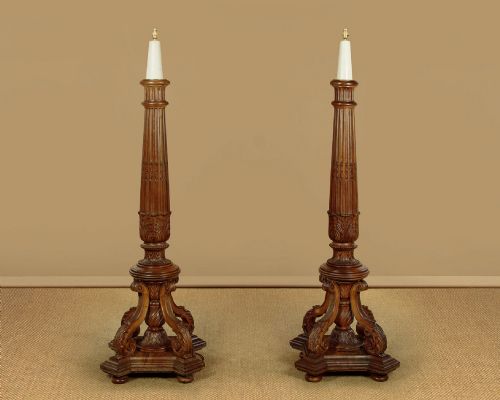
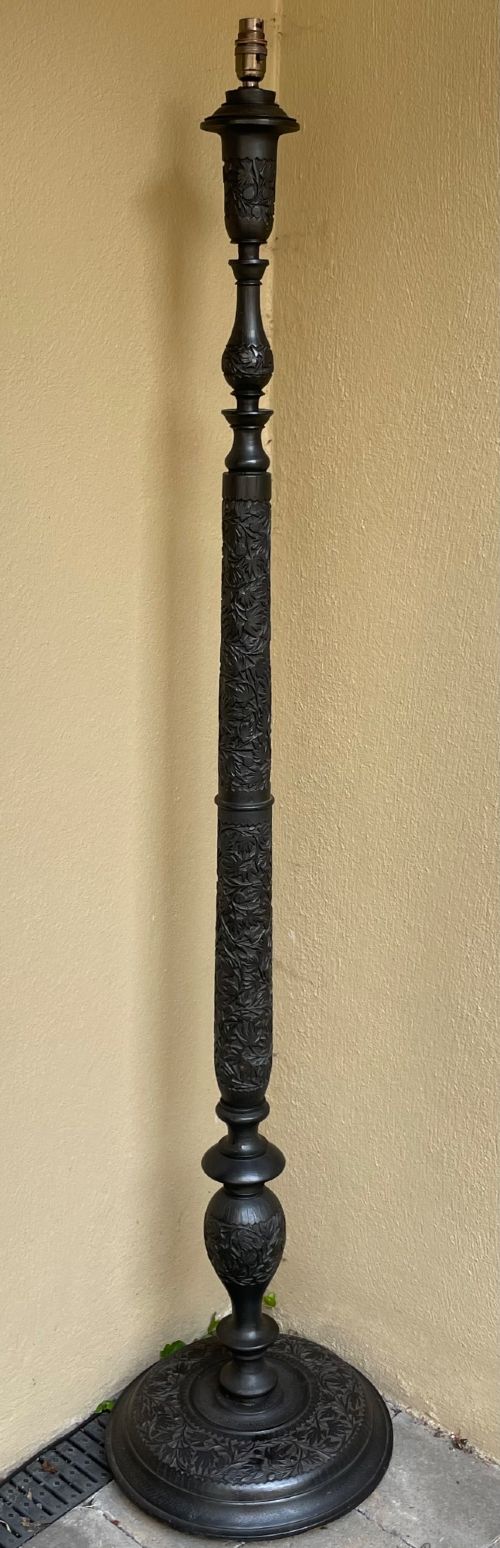
A carved wooden standard lamp brings sculptural height and warm illumination to a room, offering both period character and practical presence.
Defining the carved wooden standard lamp
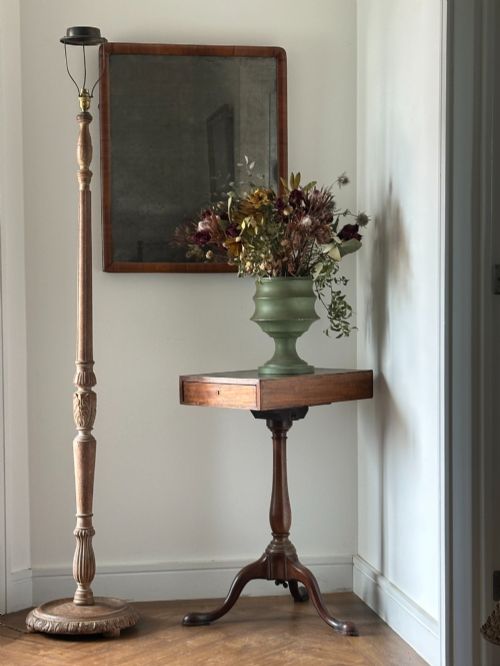
When you search for a carved wooden standard lamp, you are looking at tall floor-standing lighting fixtures designed to anchor a living space. These pieces combine upright wooden shafts with decorative carving, originating across the late nineteenth and twentieth centuries.
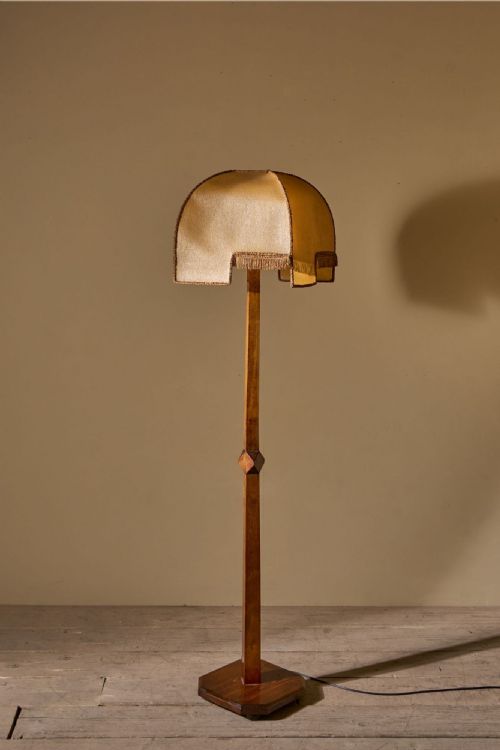
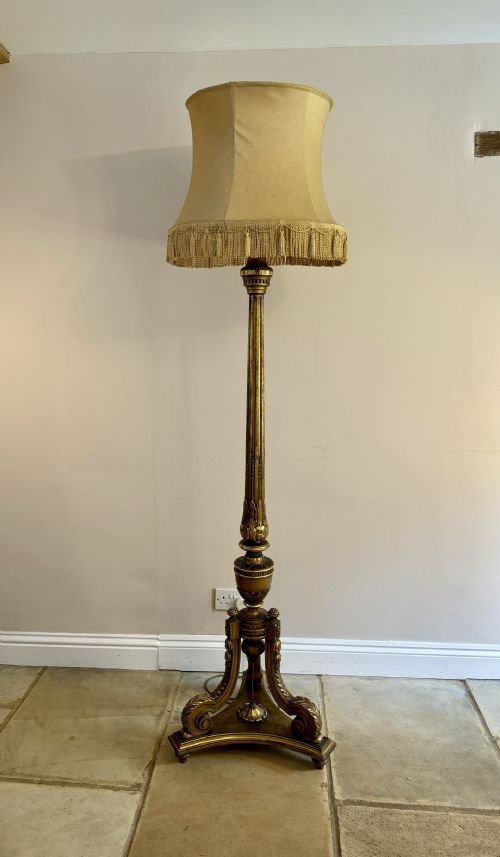
The versions you are most likely to meet on this page span several distinct stylistic revivals and international influences. Examples range from English oak and walnut creations of the interwar period to ornate Italian Florentine giltwood designs.
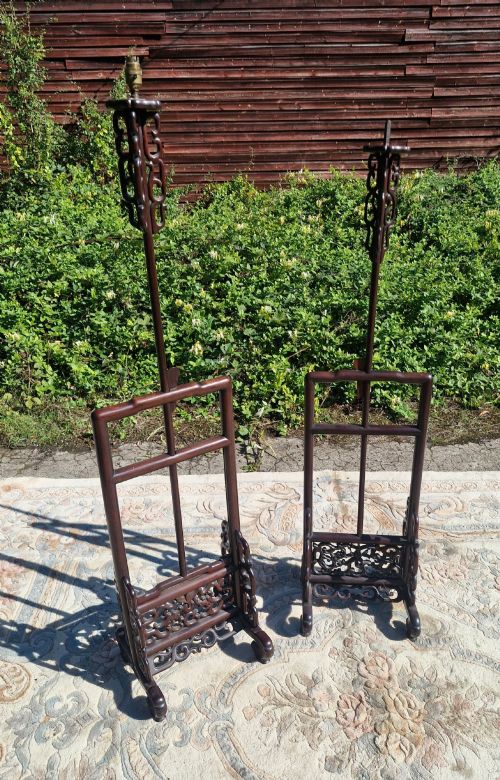
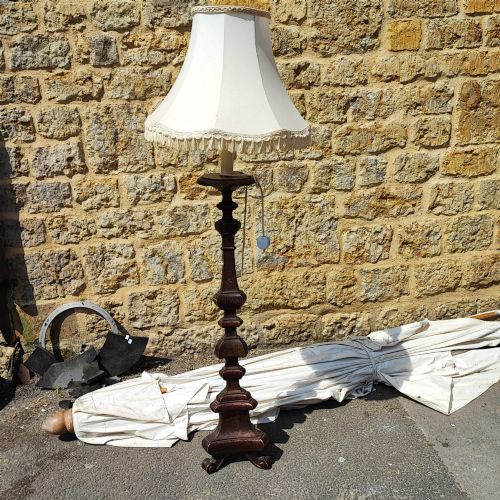
Makers and workshops produced these standard lamps in various forms, including tripod base configurations and parcel gilt finishes. Occasional pieces show stylistic links to Chinese or broader oriental aesthetics alongside classic Georgian and Regency revivals.
Materials and construction methods
Makers utilised solid timbers such as oak, walnut, and general hardwoods for the main structural shafts and bases. Carpenters and turners shaped these woods on lathes before applying hand-carved decorative motifs.
Surface treatments frequently involved gilding techniques, utilising gold leaf and parcel gilt details over gesso and wood. Many pieces also incorporated secondary materials like brass fittings and fabric shades to complete the assembly.
Retail Price Guide 2026
Typical UK retail prices for carved wooden standard lamp, calculated from the Sellingantiques database of over a million retail prices indexed since 2003. This retail price guide relies exclusively on Sellingantiques data; no external sources or auction records are used, so the figures do not describe the wider market.
One unexpected listing includes an oriental coffee table sharing space with standard lamps, proving that early twentieth-century living rooms embraced eclectic global styling.
Distinguishing quality across the range
The distinction between standard examples and superior pieces rests largely on the depth and crispness of the hand-carved ornamentation. Finer items exhibit sharply defined foliage, scrollwork, or figurative elements rather than soft, moulded resin substitutes.
Finish application also dictates value, with genuine gold leaf and skilled limed oak treatments outlasting simpler painted or modern gilt effects. The structural stability of the underlying timber and the integrity of the tripod or weighted base determine long-term durability.
The Carved Wooden Standard Lamp Glossary
- Standard lamp
- A tall floor-standing lamp designed to illuminate a room from a standing position. These fixtures typically feature a vertical wooden shaft rising from a stable base.
- Giltwood
- Timber that has been coated with gold leaf or a gold-coloured metallic finish. This technique adds reflective brilliance and formal elegance to the carved surfaces.
- Parcel gilt
- A decorative treatment where only specific portions of an object are gilded, leaving the underlying wood grain visible elsewhere. This creates a contrasting two-tone visual effect.
- Tripod base
- A three-legged support system providing stability for the tall upright shaft. This configuration is common in neoclassical and revival floor lighting.
- Limed oak
- Timber treated with a special finish that highlights the open grain with a whitish pigment. This method softens the natural dark tones of the oak.
Frequently Asked Questions
What periods do these lamps come from?
The available pieces originate primarily from the late nineteenth century through to the interwar decades of the twentieth century. Specific examples date from the eighteen-nineties up to nineteen-thirty.
Revival styles from these eras often draw inspiration from earlier Georgian and Regency designs. Makers also produced pieces reflecting mid-century modern and Chinese aesthetic influences during the same timeframe.
How were these lamps used originally?
These tall fixtures served to provide ambient illumination in principal reception rooms and living spaces. Positioned beside seating areas, they cast light downward for reading and social gatherings.
Their substantial height allowed them to function as decorative furniture objects as well as practical light sources. They were frequently paired with matching living room furniture sets.
How do I identify Italian giltwood lamps?
Italian giltwood examples, particularly those associated with Florentine traditions, display exuberant carved foliage and intricate scrollwork. The application of gold leaf over these carved wooden forms creates a bright, ornate surface.
These pieces often date to the nineteen-thirties and reflect distinct regional craftsmanship compared to contemporaneous English oak or walnut productions.
What woods were used for standard lamps?
Makers constructed these floor lamps using traditional hardwoods including oak, walnut, and general timber stocks. Oak examples often feature specialised surface treatments such as limed finishes.
Walnut was frequently paired with gilt details to enhance the visual contrast of the carved grain. The underlying wood quality directly influences the weight and stability of the finished piece.