




Carved Wooden Stag Head
A carved wooden stag head brings the character of the nineteenth century forest directly into a room.
Carved Wooden Stag Head
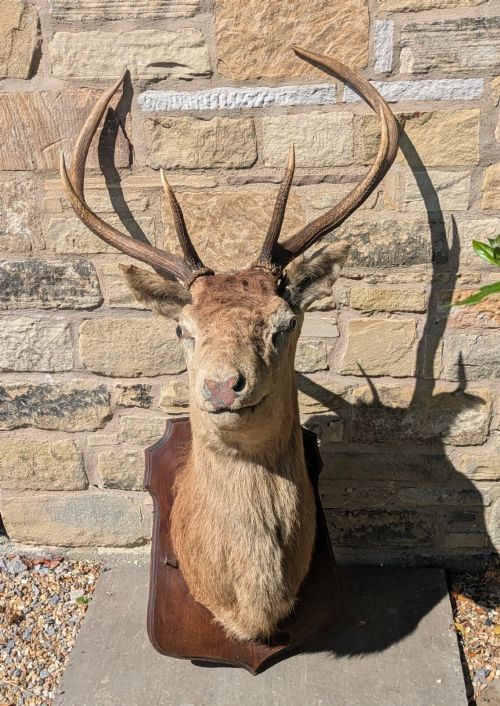
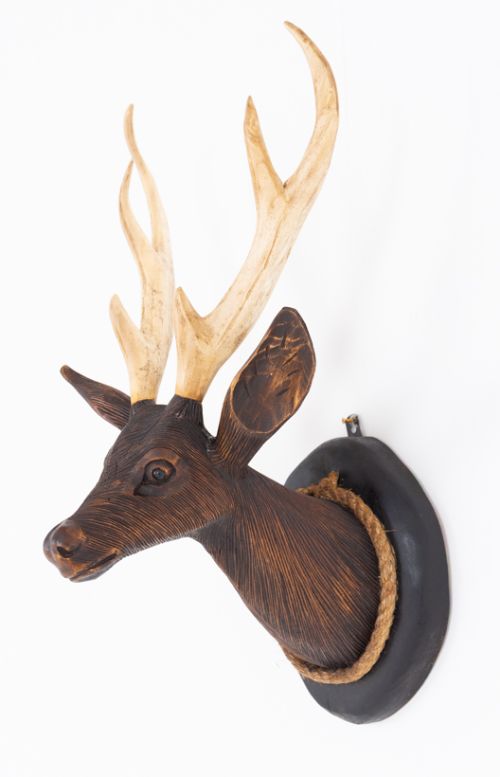
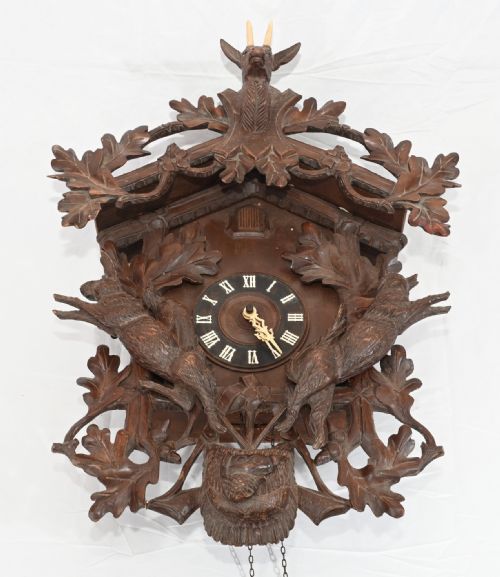
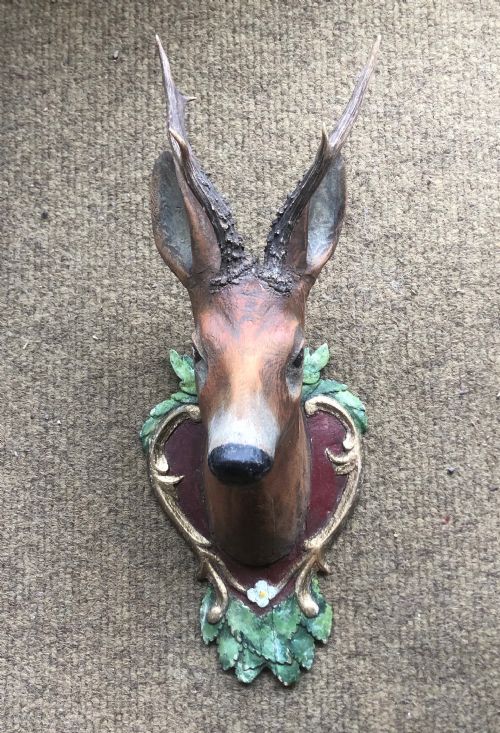
A carved wooden stag head is a sculptural piece often mounted on a wooden shield or integrated into functional objects such as inkstands and cuckoo clocks. These items capture the rustic aesthetic of nineteenth-century hunting culture and European folk traditions.
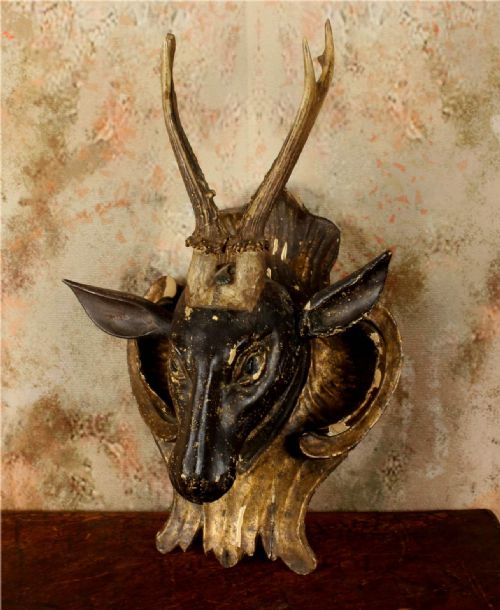
The versions most commonly met on this page originate from the Victorian era and the Black Forest region, utilising natural antlers alongside carved timber. They range from naturalistic animal representations to highly stylised decorative wall sculptures.
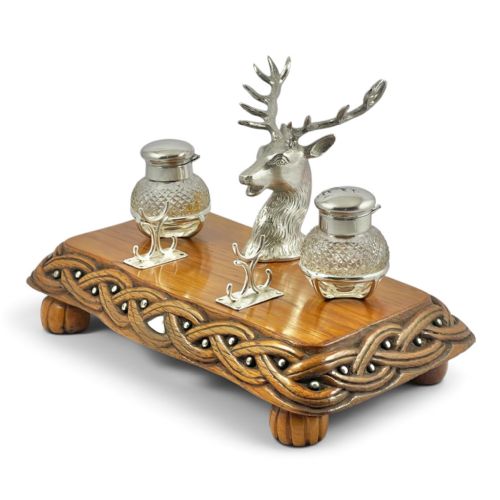
Collectors encounter various interpretations, including Scottish pieces featuring oak and silver alongside continental carvings. Each item serves as a striking wall decor element reflecting historical craftsmanship.
Materials and construction
Carvers shaped these pieces predominantly from solid woods such as oak, walnut, and general carved timber, often applying paint for surface detail. Natural hide and actual animal antlers were frequently combined with the carved wooden elements to create realistic taxidermy mounts and trophies.
At least one nineteenth-century deer decided to moonlight as a clock.
Judging quality and craftsmanship
The distinction between standard examples and superior pieces rests entirely in the anatomical accuracy and depth of the woodcarving. Finer works display meticulous detail in the facial expression and muscle structure, whereas simpler folk art interpretations rely on stylised charm.
Integration of materials also dictates overall standard, particularly how seamlessly real antlers join to the carved wooden head. The sophistication of the surrounding mounting shield or associated housing, such as an inkstand or clock case, further elevates the piece.
The Carved Wooden Stag Head Glossary
- Black Forest
- A style of woodcarving originating from the mountainous region of Germany, known for realistic animal and foliage motifs. This tradition produced many of the detailed wall sculptures and cuckoo clocks found in collections today.
- Folk Art
- Objects created by self-taught or traditional artisans using regional motifs rather than academic design rules. These pieces often exhibit a charming rusticity and simpler geometric forms.
- Taxidermy Mount
- The preservation and mounting of animal remains for display, frequently combined with carved wooden shields in these listings. They serve as historic records of nineteenth-century sporting practices.
- Victorian Celtic Revival
- A nineteenth-century artistic movement incorporating ancient Celtic knotwork and motifs into contemporary decorative arts. It appears on Scottish oak and silver pieces associated with these wall displays.
- Inkstand
- A desk accessory designed to hold writing equipment, occasionally incorporating carved stag heads and silver elements. These functional objects combine utility with ornate nineteenth-century design.
Carved Wooden Stag Head: Frequently Asked Questions
Where were these pieces made?
The evidence shows items originating from European regions, notably the Black Forest in Germany and Scotland. Makers in these areas produced carved wooden stags alongside regional folk art traditions.
Continental workshops focused on highly detailed animal carvings, while British items often incorporated local materials like oak and natural hide.
How do I date a piece?
Dating relies on the recorded periods spanning the nineteenth century through to the mid-twentieth century. Stylistic indicators and material choices help establish the era of production.
Victorian examples often feature specific regional motifs, whereas later twentieth-century items reflect continued adherence to traditional woodworking methods.
What is the difference between folk art and Black Forest styles?
Black Forest carvings tend to prioritise naturalistic representation and deep anatomical detail in the wood. Folk art interpretations lean towards a more stylised and simplified aesthetic.
Both styles utilise carved timber and antlers, but the execution of the animal form distinguishes the continental workshop tradition from regional folk production.
How were these items used originally?
Many served as decorative wall trophies and sculptures to display sporting prowess or an appreciation of nature. Others were integrated into functional household items like clocks and inkstands.
They functioned simultaneously as interior decoration and practical desk accessories within nineteenth-century homes.
Can I mount a wall sculpture easily?
These sculptures are typically built onto wooden shields or panels intended for hanging on interior walls. The mounting hardware supports the combined weight of the carved wood and attached antlers.
Careful placement ensures the security of the heavy timber and natural horn elements.