





Carved Wooden Sailing Boat
These carved wooden sailing boat pieces bring authentic maritime folk art and scale models into the home, prized for their craftsmanship and history.
Carved Wooden Sailing Boat
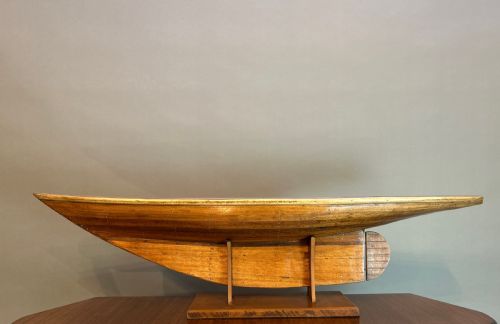
A carved wooden sailing boat represents the enduring appeal of maritime folk art and traditional scale models. These pieces span periods from the nineteenth century through the Edwardian era and the 1920s, showing the dedication of past makers to nautical themes.
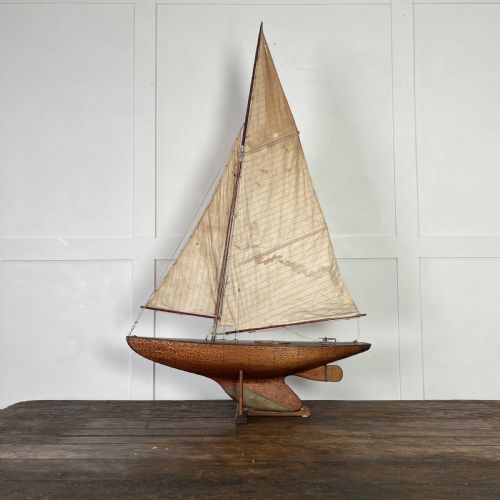
Buyers will encounter various forms on this page, ranging from large pond yachts with stands to detailed dioramas and ship models housed in bottles. The selection also includes hull sections, scratch-built models, and related wall art such as vintage yachting signs.
Origins trace back across Victorian maritime traditions, capturing the scale and presence of historic vessels. Whether an imposing eight-foot pond yacht or a smaller decorative model, each object reflects the distinct craftsmanship of its period.
How these models were constructed
Makers utilised wood as the primary medium for hulls and structural elements, often selecting mahogany or pine for durability and finish. Canvas rigging, metal fittings, glass, and brass components added realistic detail to the vessels.
Paint finishes were applied to hulls and decks to mimic actual watercraft and protect the wood from the elements. Scratch-built construction methods required careful hand-shaping of timber to achieve accurate proportions on a reduced scale.
Carved Wooden Sailing Boat Retail Price Guide 2026
Typical asking prices for carved wooden sailing boat among the pieces listed under this phrase on Sellingantiques today, from the lower quarter to the upper quarter. They describe what is for sale here now, not the wider market.
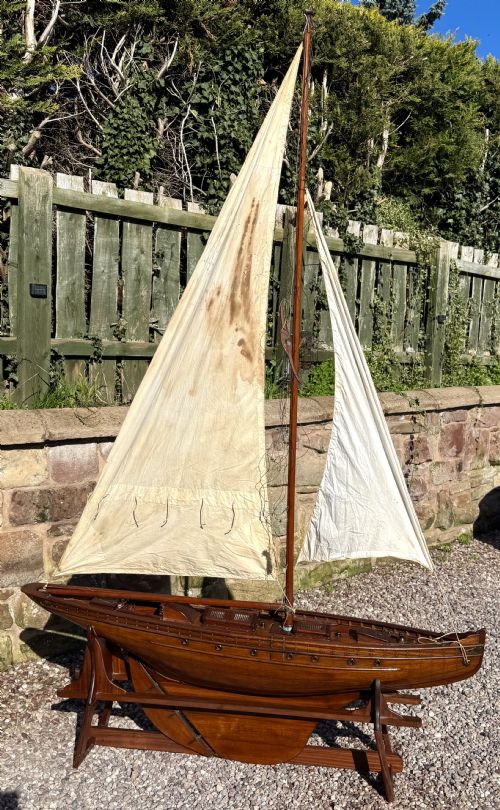
One remarkably ambitious pond yacht stands nearly eight feet high on its display stand.
What separates the finest examples
Quality in a carved wooden sailing boat depends on the precision of the scale work and the complexity of the rigging. Finer pieces demonstrate superior hand-carving skill in the hull lines and greater detail in supplementary elements like deck fittings.
The presence of original materials, such as vintage canvas sails and period brass hardware, elevates a piece. Preservation of the original paint and surface finish also distinguishes exceptional models from simpler decorative objects.
The Carved Wooden Sailing Boat Glossary
- Pond yacht
- A model sailing boat designed to be sailed on a pond or lake, often featuring a weighted keel to keep it upright. These large toys and decorative items date back through the Victorian and Edwardian periods.
- Diorama
- A three-dimensional scene depicting a ship in a specific setting, often enclosed in a glass-fronted case. This form preserves a detailed view of a vessel alongside painted maritime backgrounds.
- Scratch build
- A model constructed from raw materials rather than from a pre-made kit. This method relies entirely on the maker's skill and measurements.
- Scale model
- A physical representation of a ship that maintains accurate proportions relative to the original vessel. These objects serve both decorative and commemorative purposes in maritime collections.
Carved Wooden Sailing Boat: Frequently Asked Questions
How do I date a pond yacht?
Dating relies on construction techniques, materials, and stylistic details typical of periods like the Victorian era or the 1920s. Examining the hull shape and hardware helps narrow down the decade of creation.
Evidence from nineteenth-century and early twentieth-century examples shows shifts in how makers built and rigged these wooden boats.
What is a ship in a bottle?
A ship in a bottle contains a miniature model assembled inside a glass container, often utilising collapsible masts. This intricate form of folk art demonstrates patience and specialised maritime skill.
Examples from the early nineteenth century and later decades showcase the varied techniques used to place complex wooden vessels through narrow bottle necks.
Where were pond yachts displayed?
Large pond yachts often stood on dedicated wooden display stands when not used on the water. Their scale made them striking decorative objects for homes and offices.
Many surviving pieces retain their substantial height and presence, reflecting their dual role as functional sailing toys and interior display items.
Are these models historically accurate?
Scale models and diorama pieces generally aimed to represent actual ships, such as the Glynllifon, with varying degrees of precision. Makers often worked from plans or direct observation of working vessels.
Folk art models might take decorative liberties, whereas scale reproductions focused on capturing the specific rigging and hull design of the named ship.