


Carved Wooden Pocket Box
These carved wooden pocket box pieces are tactile personal containers holding centuries of folk art craftsmanship.
Carved Wooden Pocket Box
When you search for a carved wooden pocket box, you encounter small personal containers fashioned from fruitwood, oak, boxwood and various hardwoods during the nineteenth and early twentieth centuries. These functional items include snuff boxes, card cases and wall organisers shaped by hand.
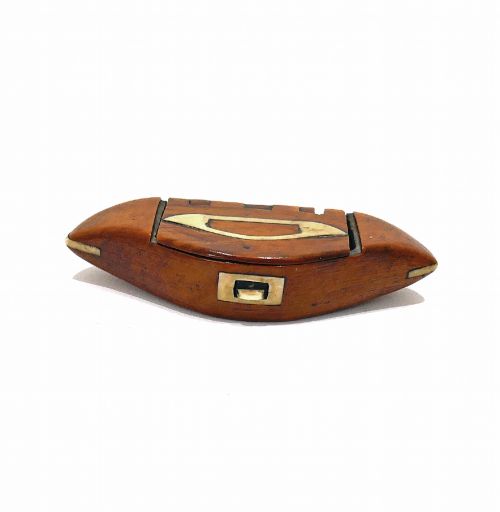
The versions most commonly found here encompass nineteenth century treen and folk art examples, alongside Edwardian miniature items and carved wall mounted boxes. Makers shaped these pieces for daily utility, often incorporating intricate surface decoration such as bone inlay or figural carving.
Originating from English, Chinese and Indian workshops, these objects demonstrate regional decorative traditions ranging from European geometric patterns to deeply carved garden scenes. Collectors appreciate them for their tactile qualities and the intimate scale of their construction.
How they were made
Craftsmen shaped these boxes from dense hardwoods, fruitwoods and oak, utilising natural grain patterns to add visual depth to the carved surfaces. Woodcarvers employed gouges and chisels to achieve deep relief work, as seen on Chinese card cases and English snuff boxes.
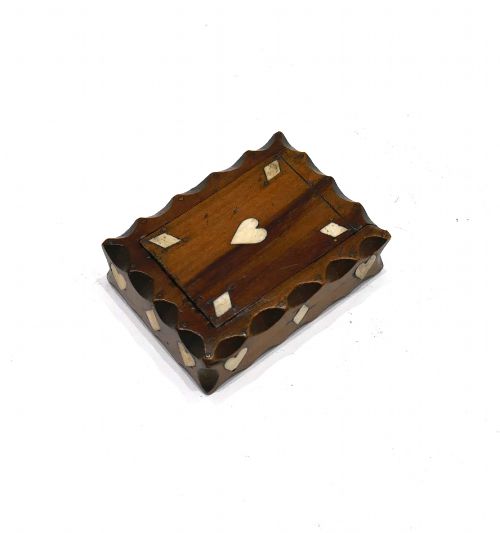
Many nineteenth century examples incorporate contrasting materials, using bone inlays shaped into hearts and diamonds set flush into the wooden lids. Surface finishing involved polishing the wood to develop a warm patina through repeated handling.
One exceptional Edwardian box takes the literal shape of a hand holding a pinch of snuff.
What varies in quality
The distinction between standard examples and superior pieces rests upon the depth and control of the carving. Finely executed items display crisp detail in figural scenes and precise symmetry in geometric folk art motifs.
Condition of the surface and the integrity of inlaid elements dictate the desirability of each piece. Objects retaining their original smooth patina and secure box joints command greater interest than those with heavy surface wear.
The Carved Wooden Pocket Box Glossary
- Treen
- Small wooden domestic objects made before the widespread use of plastics. These items range from utilitarian kitchen implements to decorative pocket containers.
- Snuff box
- A small pocket-sized container designed to hold powdered tobacco. They often feature tightly fitted lids to preserve the contents.
- Card case
- A slim flat container made to protect visiting cards during the nineteenth century. They were constructed from carved wood, tortoiseshell or ivory.
- Patina
- The glossy sheen developed on the surface of wood through age and frequent handling. A desirable patination indicates long use and proper care.
Carved Wooden Pocket Box: Frequently Asked Questions
What is a carved wooden pocket box?
It is a small personal container fashioned from materials like fruitwood or hardwood during the nineteenth century. These objects served practical daily functions such as holding snuff or visiting cards.
Craftsmen often embellished them with geometric folk art patterns, bone inlay or figural relief carving. Their portable nature made them common everyday companions for Victorians and Edwardians.
How were these wooden boxes used?
People carried them in pockets or placed them on tables to store small personal items securely. Snuff boxes kept tobacco dry, whilst card cases protected delicate visiting cards from damage.
Some larger variants were designed for wall mounting to organise household requisites or correspondence. Their dual purpose as functional items and decorative art explains their enduring appeal.
How do I date a carved wooden box?
Dating relies upon examining the timber species, construction methods and stylistic motifs recorded in the piece. Nineteenth century examples frequently display vernacular folk art characteristics or precise bone inlay.
Edwardian pieces often show distinct manufacturing shifts towards miniature games sets or specific wall organisers. Comparing the surface patina and wear patterns provides further clues to age.
How do I care for antique wood?
Keep wooden boxes away from direct sunlight and extreme humidity fluctuations to prevent timber shrinkage or cracking. Gentle dusting with a dry cloth preserves the historic surface finish without stripping the patina.
Avoid using modern liquid polishes or silicone sprays, as these can damage old wood surfaces. Proper environmental control ensures the box remains stable for years to come.