







Carved Wooden Dog
A carved wooden dog brings character to a room through the careful hand of a nineteenth-century or early twentieth-century carver.
Carved Wooden Dog
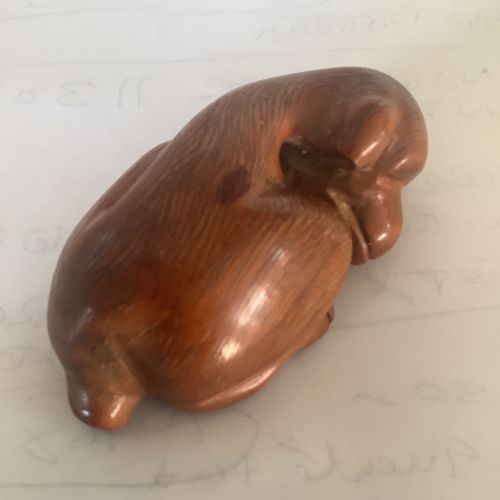
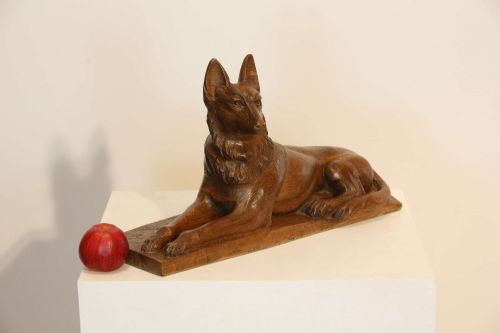
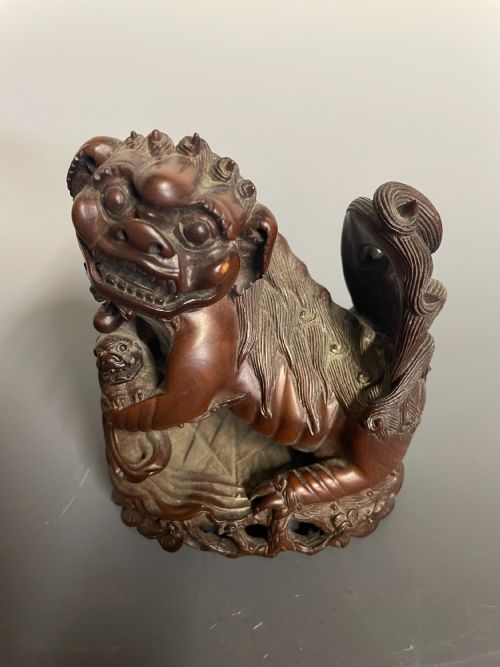
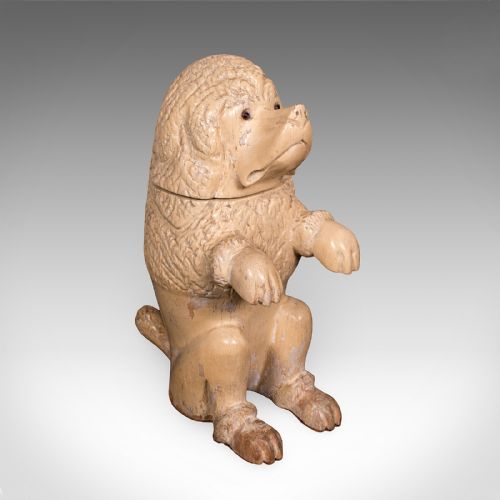
A carved wooden dog encompasses sculptural figures, functional desk accessories and furnishings originating from European and Asian workshops. When you search for a carved wooden dog, you encounter domestic pets, working breeds and mythical guardian lions rendered in timber.
The selection here ranges from Black Forest desk pieces and walking canes to Chinese root wood Foo dogs and Victorian furniture. European examples often depict hounds, poodles and St Bernards, while traditional Chinese items present stylized temple lions.
Nineteenth-century pieces dominate the selection, alongside Victorian and Edwardian works, reaching into the Art Deco period. These objects bridge the gap between fine art sculpture and practical household utility.
How they were made
European workshops, particularly in the Black Forest region, employed deep relief carving and realistic texturing for fur and musculature. Chinese traditional carvers utilised intricate hand-chiselling techniques to define the stylized manes and expressions of Foo dogs.
Carved Wooden Dog Retail Price Guide 2026
Typical asking prices for carved wooden dog among the pieces listed under this phrase on Sellingantiques today, from the lower quarter to the upper quarter. They describe what is for sale here now, not the wider market.
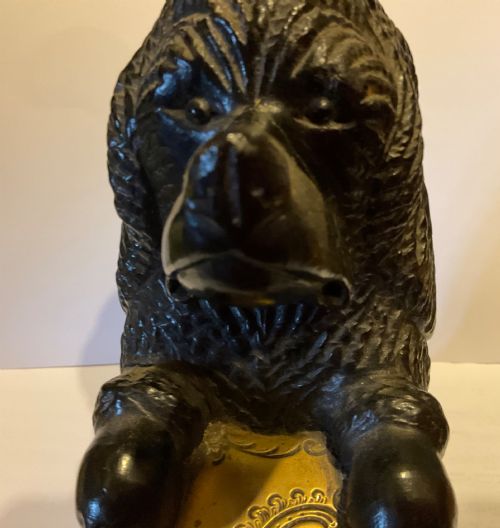
Saint Bernards appear frequently, immortalised in wood as steadfast companions holding ink pots or rescuing travellers.
What varies in quality
Quality rests in the precision of the carving and the vitality captured in the animal's posture. Finer works display anatomical accuracy in the muscle structure and realistic texture in the carved fur, distinguishing them from stiff or generic forms.
Integration of function also defines superior pieces, such as inkwells, match dispensers and bookends where the mechanical elements and compartments blend seamlessly with the sculptural canine subject.
Maison F. Mack
The Carved Wooden Dog Glossary
- Black Forest
- A style of wood carving originating from the mountainous region of central Europe during the nineteenth century. These pieces typically feature realistic animals and foliage rendered in rich walnut.
- Foo Dog
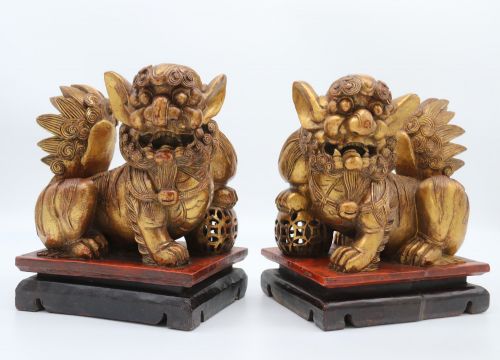
- A traditional Chinese guardian lion depicted in statuary and carvings. They are mythical protectors often carved in pairs from wood or root wood.
- Treen
- Small handmade wooden household objects and utilitarian wares. This category includes boxes, inkwells and small containers.
- Fruitwood
- Timber derived from fruit-bearing trees such as pear or apple. Carvers favoured this wood for its fine grain and smooth finish.
- Root wood
- The underground root mass of a tree shaped by natural growth. Carvers utilised these organic contours to create dynamic sculptures.
Carved Wooden Dog: Frequently Asked Questions
What is a Foo dog?
A Foo dog is a traditional Chinese guardian lion represented in wood carvings and statuary. They symbolise protection and serve as decorative figures.
You often find them depicted in pairs guarding entrances or supporting temple structures.
How do I care for wooden carvings?
Keep carved wooden items away from direct sunlight and dramatic changes in temperature to prevent splitting. Dust gently with a dry cloth.
Applying a light coat of appropriate wax occasionally helps maintain the lustre of the timber.
Are Black Forest carvings European?
Black Forest carvings originate primarily from nineteenth-century Switzerland and Germany. Artisans specialised in realistic depictions of local wildlife and dogs.
These pieces often served practical functions like inkwells, humidors and umbrella stands.
What woods were commonly used?
Carvers utilised local European hardwoods such as walnut, fruitwood and mahogany for detailed animal forms. Asian carvers worked with boxwood, padouk and root wood.
The choice of timber depended on the region of origin and the required level of fine detail.