




Carved Wooden Desk Clock
These carved wooden desk clock examples offer functional timekeeping combined with intricate cabinetry, sought after for bringing rich texture and period character to an interior.
Carved Wooden Desk Clock
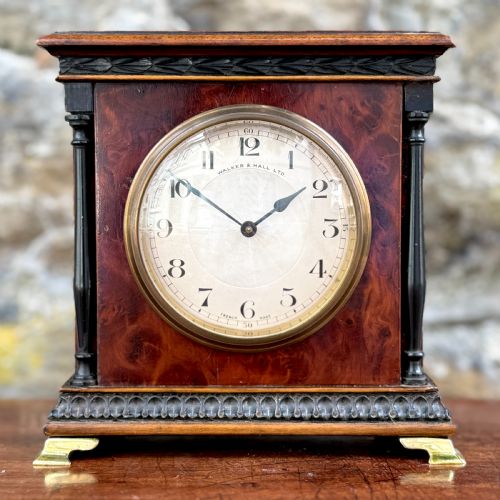
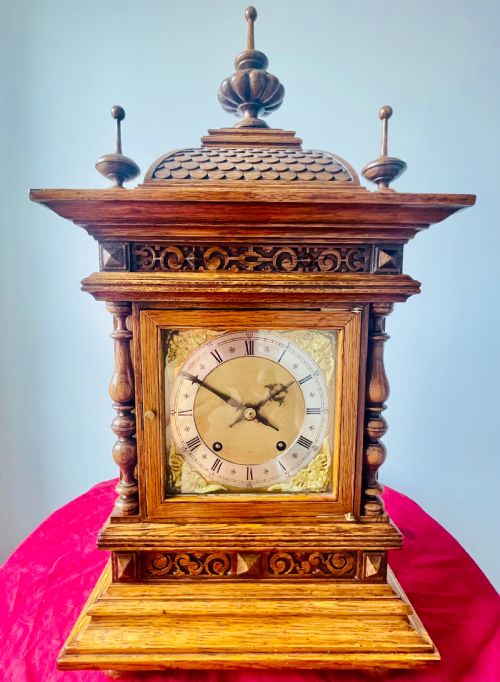
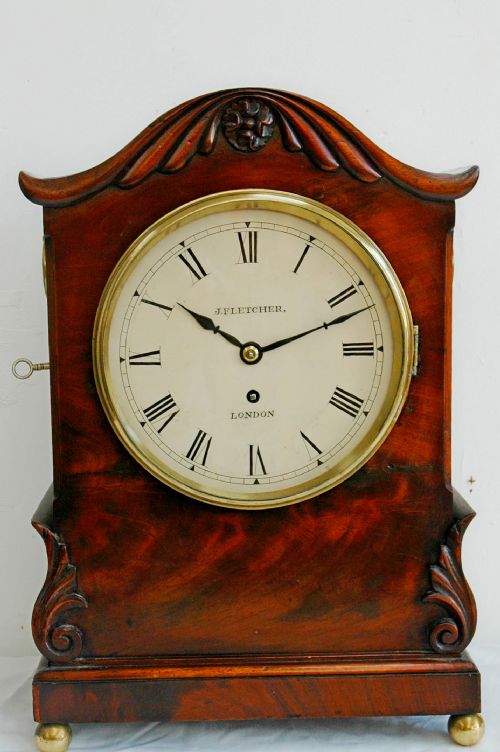
A carved wooden desk clock represents a distinct intersection of horology and decorative woodworking, spanning periods from the Georgian era through to the early twentieth century. When exploring a carved wooden desk clock, buyers encounter formats ranging from substantial bracket clocks to architectural desk pieces and elaborate Black Forest productions.
Materials and construction methods
Cabinetmakers utilised dense timbers including mahogany, walnut, oak and linden wood to construct the housings, allowing for deep hand carving and architectural mouldings. Enamel dials, brass bezels and protective glass plates were integrated alongside mechanical movements driven by fusee or spring mechanisms.
The ornamentation relies heavily on specialist carving techniques, particularly in Black Forest examples where linden wood is shaped into naturalistic foliage and animal forms. In Georgian and Regency pieces, precision cabinetmaking takes precedence, featuring rich timber veneers and polished finishes.
Factors influencing quality and distinction
Quality rests upon the crispness of the hand carving and the selection of the timber, where deeply undercut foliage and well-figured mahogany or walnut elevate the piece. The integration of the dial with the movement, alongside the reputation of the maker inscribed on the face or backplate, also shapes the standing of the clock.
Proportion and structural integrity define the superior examples, ensuring the timber case complements the scale of the dial without distortion. Originality of components, from the brass fittings to the pendulum and movement, dictates the integrity of the surviving object.
Walker and Hall·Bush of London·Winterhalder·Bergen and Co·Piggin Norwich·J Kingerley Manchester·Hampson and Son·Funnell of Brighton·Purvis of London
The Carved Wooden Desk Clock Glossary
- Bracket clock
- A portable spring-driven clock originally designed to sit on a wall bracket. They frequently feature architectural mahogany or oak cases with brass carrying handles.
- Fusee
- A conical pulley used in mechanical clocks to equalise the driving force of the mainspring as it unwinds. This mechanism improves timekeeping accuracy across the power reserve.
- Black Forest
- A geographic region in Germany and Switzerland renowned for woodcarving. Clocks from this origin display distinctive naturalistic motifs carved from linden wood or walnut.
- Dial
- The face of the clock where time is indicated. These commonly feature white enamel with Roman numerals protected beneath a glass bezel.
Carved Wooden Desk Clock: Frequently Asked Questions
How do I wind a mechanical desk clock?
Most spring-driven movements require a key inserted into the dial holes to tension the mainspring gently. Care must be taken not to overwind the mechanism.
Consulting the specific requirements of the fusee or striking train ensures the movement continues to operate smoothly without placing undue stress on the internal gears.
Where should I place a wooden desk clock?
These clocks sit well on stable, level surfaces such as mantelpieces, heavy libraries desks or sideboards. A steady foundation prevents vibrations that might interfere with the pendulum or balance wheel.
Keeping the piece away from direct sunlight and sudden temperature fluctuations protects the polished timber and delicate woodcarvings from drying out or splitting.
How do I identify a Black Forest clock?
Black Forest examples are typically characterised by elaborate hand-carved linden wood or walnut cases featuring naturalistic motifs such as leaves, birds or woodland animals. The dial is often framed by deep relief carving.
Many of these pieces house German or Swiss movements and date from the nineteenth century or around nineteen hundred, combining rustic charm with detailed carpentry.
What maintenance do antique clock movements need?
Routine care involves keeping the exterior timber clean with a soft cloth and ensuring the movement rests in a dust-free environment. Professional servicing every few years keeps the gears lubricated.
Avoid using modern household cleaners on the wooden case or the dial, as abrasive chemicals can damage antique finishes and delicate enamel work.