




Carved Wooden Cradle
These carved wooden cradle examples are nursery pieces shaped from solid timber over the centuries to soothe infants to sleep.
Carved Wooden Cradle
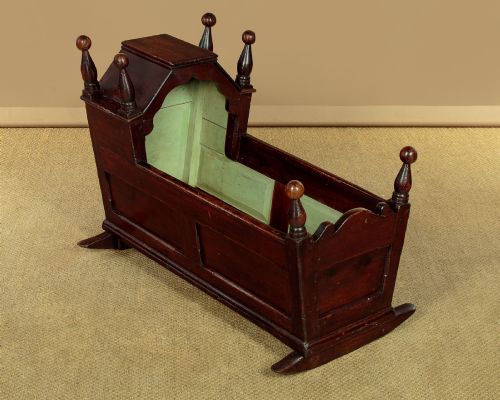
A carved wooden cradle represents a historic form of infant furniture designed with rocking mechanisms to aid sleep. The pieces found here span centuries of craftsmanship, drawing from periods such as the seventeenth century, the Georgian era, and the nineteenth century.
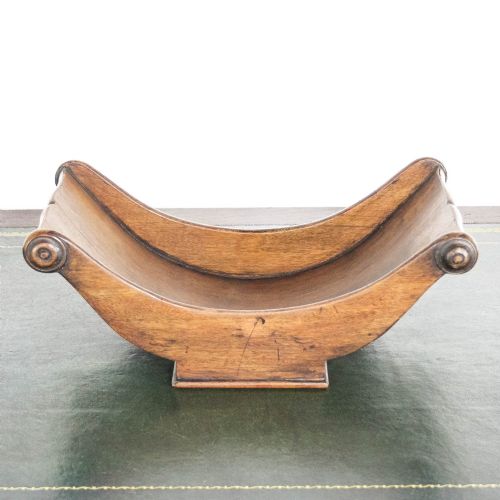
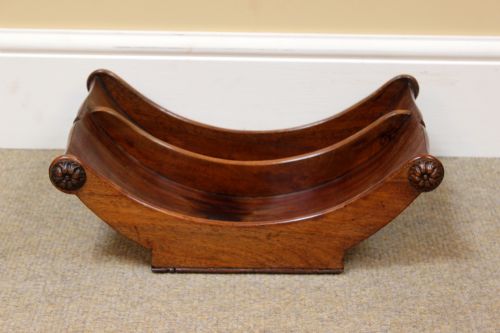
Makers constructed these functional objects using native timbers like oak, pine, mahogany, and fruitwood. Alongside full-sized nursery pieces, the selection also includes related items such as mahogany cheese coasters and miniature cribs which share the same timber construction and period joinery.
How they were made
Joiners and cabinetmakers built these pieces using heavy timbers like oak and mahogany, often employing panelled construction techniques to give structural rigidity to the body. Field panels and carved details were worked directly into the solid wood.
Rocking actions were achieved through curved wooden rockers attached to the base or by pivot mounts. Surface finishes range from natural waxed grain to historic paint and lacquer.
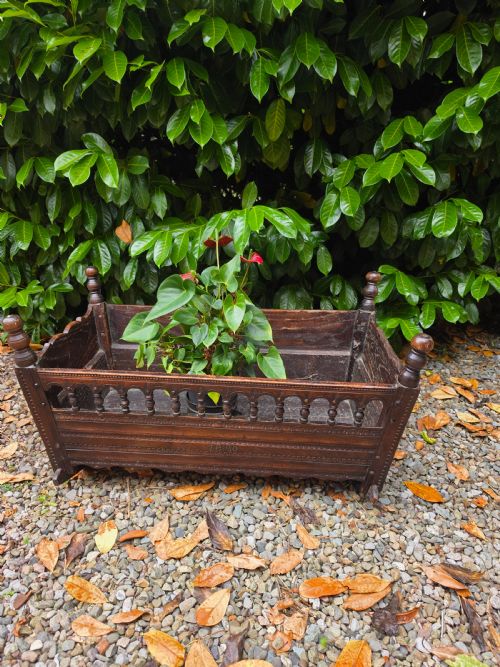
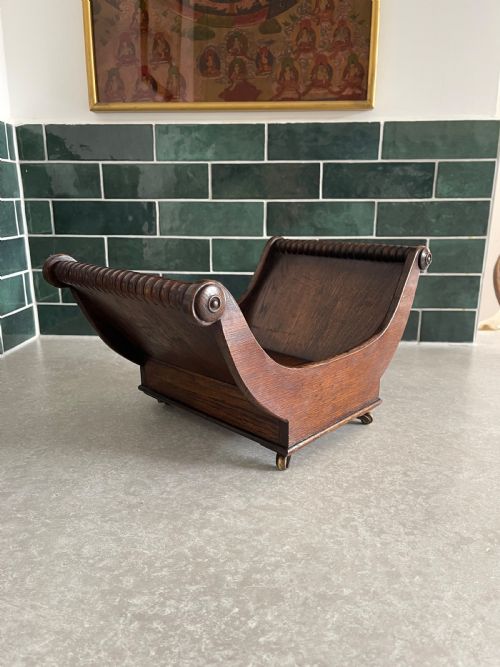
One Victorian oak example suggests a practical second career as a fireside log basket.
What varies in quality
The distinction between ordinary and superior examples lies in the depth and execution of the carving and the choice of primary timber. Oak and mahogany pieces from the seventeenth and Georgian periods display crisper joinery and more substantial proportions.
Original surfaces and unaltered rocking mechanisms elevate an item's standing. Later revivals, such as nineteenth-century pieces made in earlier styles, show different approaches to construction compared to their sixteenth and seventeenth-century predecessors.
The Carved Wooden Cradle Glossary
- Panelled crib
- A bed for an infant constructed with wooden panels fitted into a grooved frame. This technique allowed the timber to expand and contract without splitting.
- Fruitwood
- Timber sourced from fruit-bearing trees such as pear or apple, known for a fine grain and warm tone. Cabinetmakers utilised it for smaller decorative elements and turned components.
- Rocking cradle
- A child's bed mounted on curved wooden rockers to permit gentle movement. The design allows the occupant to induce motion easily.
- Treen
- Small handmade wooden household objects. These items display the utility and decorative turning of early domestic timber work.
Carved Wooden Cradle: Frequently Asked Questions
How do I date a wooden cradle?
Dating relies on examining the timber species, joinery methods, and tool marks left on the wood. Earlier pieces from the sixteenth and seventeenth centuries typically feature hand-riven oak and pegged joints.
Later nineteenth-century examples often incorporate machine-sawn elements and softer pine or mahogany woods. Comparing the structural style to established period characteristics helps narrow down the decade of manufacture.
How should I care for historic wood?
Historic timber requires stable indoor humidity and protection from direct sunlight to prevent the wood from drying out or splitting. Applying a microcrystalline wax periodically helps nourish the surface without building up excessive residue.
Avoid placing wooden furniture near active heat sources or air conditioning vents. Gentle dusting with a dry, soft cloth is sufficient for routine maintenance.
What is field panel construction?
Field panelling involves beveling the edges of a central wooden board so it fits neatly into a surrounding frame. This method was standard in early cabinetmaking to accommodate natural wood movement caused by temperature changes.
It added structural strength to the sides of large pieces while providing a decorative depth to the surface. Spotting this technique often points toward earlier craftsmanship.