


19th Century Crib
A 19th century crib offers nursery history in solid timber, providing a rocking infant bed shaped by regional domestic traditions.
19th Century Crib
A 19th century crib encompasses rocking infant cradles, cots and child beds fashioned from various timbers and finishes. These pieces reflect both domestic utility and regional craftsmanship across Victorian, Georgian and Scandinavian country styles.
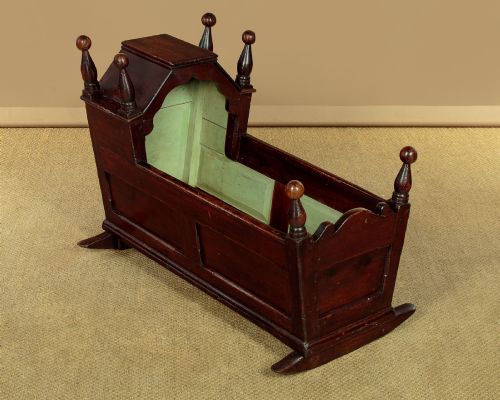
The version most commonly encountered on this page is the wooden rocking cradle, frequently constructed from pine, oak or mahogany. Many examples incorporate rockers for soothing infants, while others feature painted surfaces or panelled construction characteristic of country workshops.
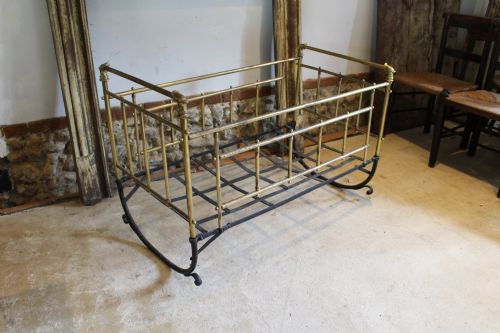
Beyond standard domestic infant beds, the category includes specialised forms such as canopy top models and brass variants. These pieces demonstrate the diverse aesthetic preferences of the period, ranging from rustic country simplicity to more elaborate revival designs.
Evaluating Quality and Execution
Quality rests upon the integrity of the timber selection and the skill of the original joinery. Pieces displaying thoughtful proportions and robust panel construction stand apart from simpler utilitarian builds.
The preservation of original surface finishes, whether polished mahogany, painted pine or decorative lacquer, influences the character of the piece. Subtle details in the carving and the balance of the rocking mechanism further distinguish superior examples from standard workshop output.
The furniture styles represented range from Victorian Country and Scandinavian Country to Jacobean Revival and Georgian.
Marsh Jones And Cribb
The 19th Century Crib Glossary
- Cradle
- A low bed for an infant, typically mounted on rockers to allow lateral movement. These objects form the core of the domestic furniture grouping.
- Rocking cot
- An infant sleeping vessel fitted with curved wooden bases for motion. This form appears across various regional styles in both pine and mahogany.
- Canopy top
- An overhead framework attached to a crib designed to support fabric hangings. This feature provides shelter and visual prominence to the bed.
- Panelled
- A method of construction utilising framed wooden sections inset within a sturdier outer structure. This technique prevents warping in large wooden surfaces.
- Pine
- A softwood commonly employed in regional and country furniture production. It frequently accepts painted or Scandinavian finishes.
19th Century Crib: Frequently Asked Questions
What is a 19th century crib?
A 19th century crib is a wooden infant bed or rocking cradle produced during the eighteen hundreds. These pieces served practical domestic nurseries using local timbers and traditional joinery.
They reflect the diverse regional styles of the period, ranging from painted pine country cradles to mahogany rocking cots.
How were these cribs used?
These pieces functioned primarily as infant sleeping beds within domestic homes. The integrated rockers allowed parents to soothe infants by creating gentle movement.
Many designs prioritized portability or specific room placements, incorporating canopy structures or compact panelled frames.
How do I live with one?
Integrating a nineteenth century crib into a modern interior involves utilising it as a decorative display element or storage container. The historic timbers and painted finishes add rustic or traditional texture to a room.
Placing the piece away from direct heat sources helps preserve the antique wood and original surface coatings.
How do I tell periods apart?
Differentiating periods relies on observing the transition from heavier oak styles to Victorian mahogany and painted pine variants. Structural details and decorative motifs offer clues to the approximate decade of manufacture.
Comparing the joinery methods and regional stylistic markers helps establish whether a piece originates from early or late in the century.