





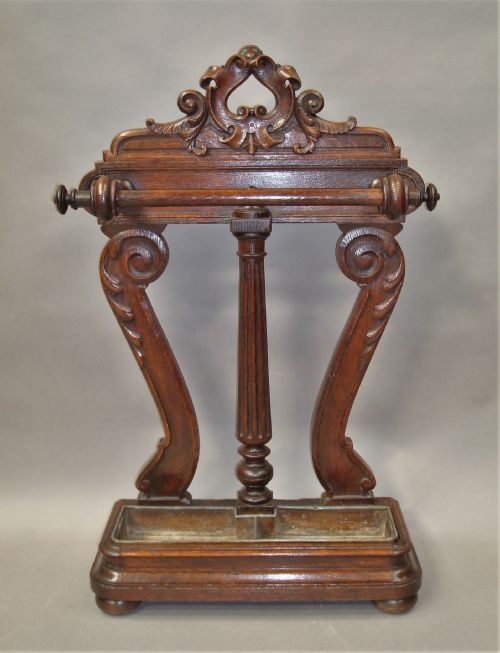


Carved Wooden Cane Rack
A carved wooden cane rack organises hallway clutter with practical utility, offering robust storage for umbrellas and walking sticks.
Carved Wooden Cane Rack
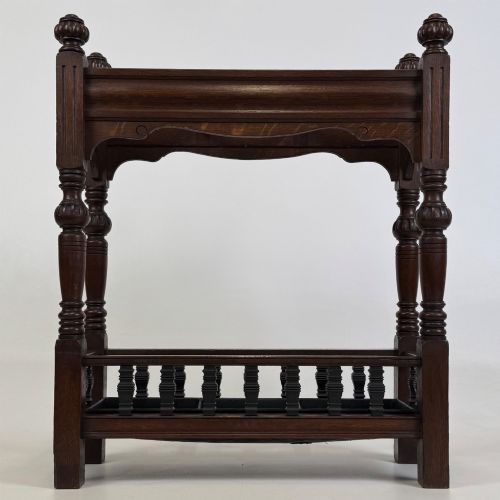
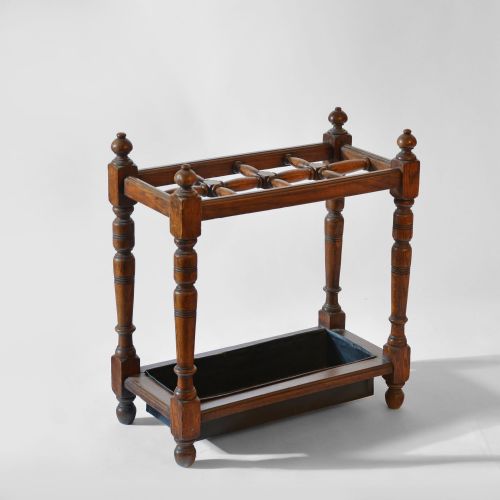
A carved wooden cane rack serves as a functional hallway furnishing designed to hold walking sticks and umbrellas in domestic settings. The pieces seen here encompass various periods including the nineteenth century, Edwardian era, and Victorian period.
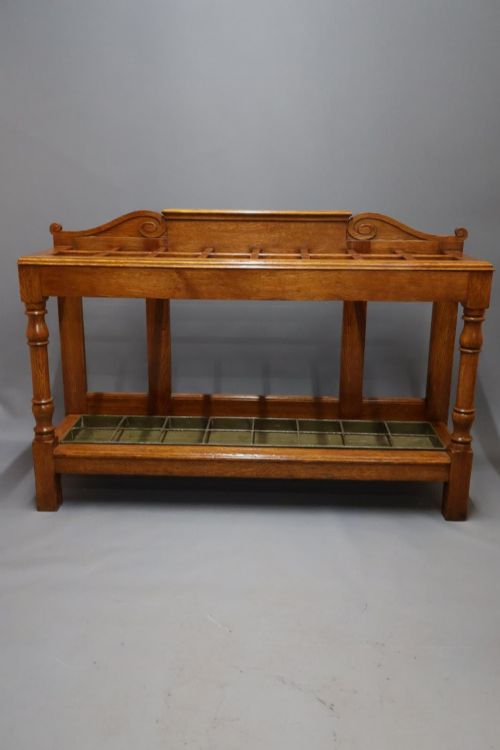
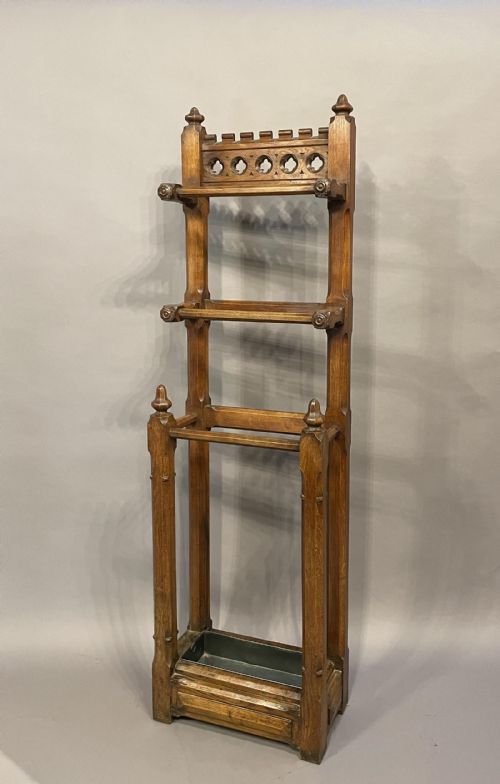
Most examples function as stick stands, umbrella stands, or combined umbrella and stick stands intended for entrance halls. Forms range from simple oak holders to elaborate Black Forest carved bear designs and Gothic hall stands.
Origins span English country house pieces alongside continental examples such as Italian carved walnut stands. Buyers encounter sturdy oak frames, walnut structures, and occasional mahogany items suited to period entryways.
How they were made
Construction relies predominantly on solid oak, walnut, and mahogany timbers joined to withstand heavy daily use in entrance halls. Artisans shaped these woods using traditional cabinet-making techniques suited to structural load-bearing furniture.
Carved Wooden Cane Rack Retail Price Guide 2026
Typical asking prices for carved wooden cane rack among the pieces listed under this phrase on Sellingantiques today, from the lower quarter to the upper quarter. They describe what is for sale here now, not the wider market.
Listings feature oak predominantly, alongside walnut, mahogany, brass fittings, and woven cane panels across nineteenth and early twentieth-century periods.
What varies in quality
The depth and crispness of hand-carved ornamentation distinguish standard utility pieces from more ambitious artistic commissions. Elaborate figurative work, such as Black Forest bear carvings, demonstrates superior sculptural skill compared to basic linear mouldings.
Selection of timber grain and the integrity of structural joinery determine the longevity and visual weight of the hall stand. Superior examples integrate metal drip pans seamlessly into substantial oak or walnut bases without compromising stability.
The Carved Wooden Cane Rack Glossary
- Stick stand
- A compact furniture item designed specifically to hold walking sticks upright in a hallway. These tall holders keep walking aids tidy and accessible near an entrance.
- Black Forest
- A regional style of wood carving originating from central Europe known for naturalistic animal subjects. Bears and foliage dominate this distinct decorative tradition.
- Demi Lune
- A half-moon shape used for furniture designed to sit flat against a wall. This profile saves floor space in narrow entrance halls.
- Arts and Crafts
- A design movement prioritising traditional craftsmanship and visible construction methods over mass production. Pieces from this tradition show honest joinery and simple forms.
- Gothic Revival
- An architectural and decorative style inspired by medieval Gothic forms featuring pointed arches and heavy mouldings. Hall stands in this style echo ecclesiastical joinery.
Carved Wooden Cane Rack: Frequently Asked Questions
Where should a stick stand go?
These pieces belong in an entrance hall or porch where household members deposit outdoor gear upon entering the home.
Positioning the stand near the primary door ensures wet umbrellas and walking sticks are contained immediately upon arrival.
How do I protect the floor?
Most umbrella stands incorporate a metal drip pan or liner positioned at the base to catch moisture from wet items.
Checking for an original metal insert helps protect wooden floors from water damage over time.
Are these stands suitable for daily use?
Solid timber construction and sturdy internal bracing allow these pieces to handle heavy walking sticks and dripping umbrellas.
Regular domestic use matches the original purpose for which nineteenth and early twentieth-century makers designed them.
How do I distinguish Edwardian from Victorian stands?
Victorian stands often display heavier proportions and dense Gothic or Jacobean Revival ornamentation.
Edwardian pieces tend towards lighter frames, cleaner lines, and influences from the Arts and Crafts or Art Nouveau movements.