
Carved Wood Tripod Table
These carved wood tripod table examples range from George III mahogany tilt-tops to intricate Anglo-Indian and Burmese designs, prized for their portability and compact footprint in a room.
Carved Wood Tripod Table
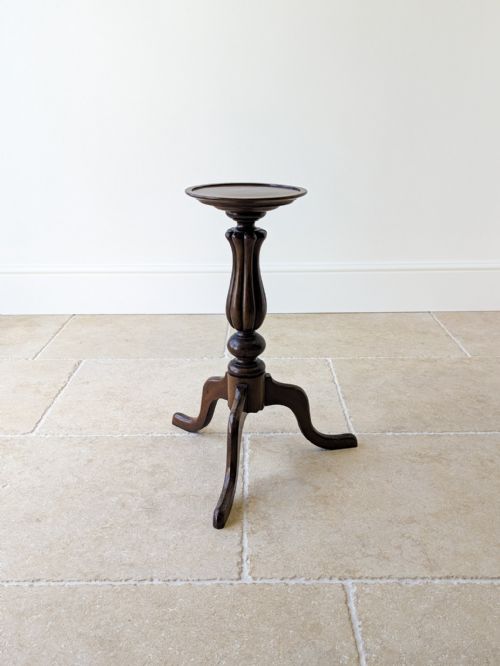
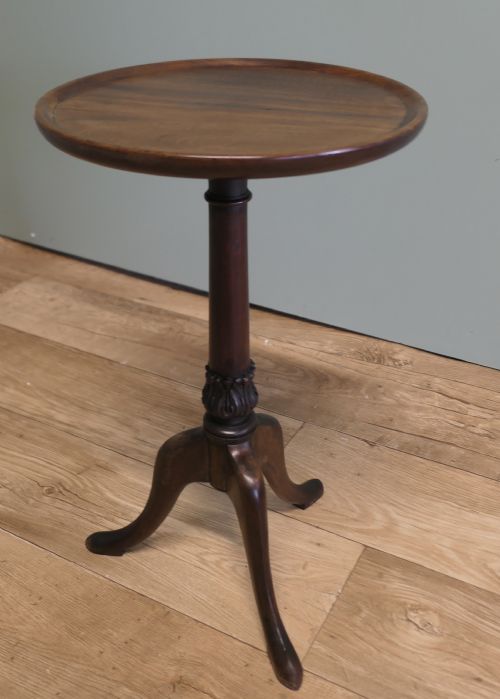
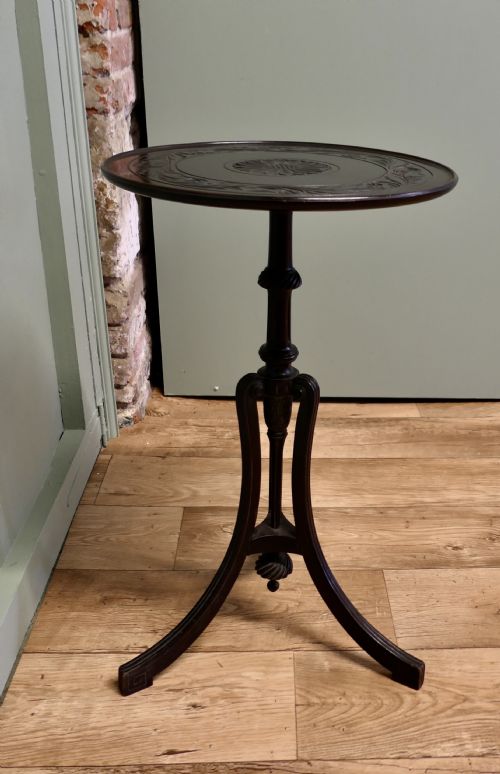
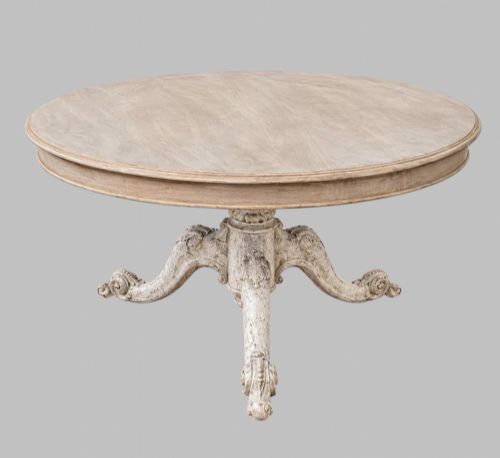
A carved wood tripod table is a compact pedestal support piece designed for occasional use as a wine, lamp, tea, or candle stand. You will most frequently encounter 19th-century Victorian mahogany and rosewood examples alongside distinctive colonial imports from Burma and India.
The form spans centuries, appearing in Georgian and George III iterations with pie crust edges, through Victorian walnut and oak variations, into Edwardian interpretations. Makers adapted the versatile three-legged pedestal format for specific domestic tasks including games, shaving, and supper.
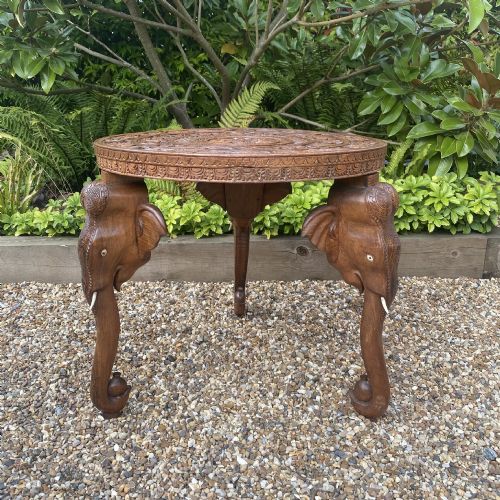
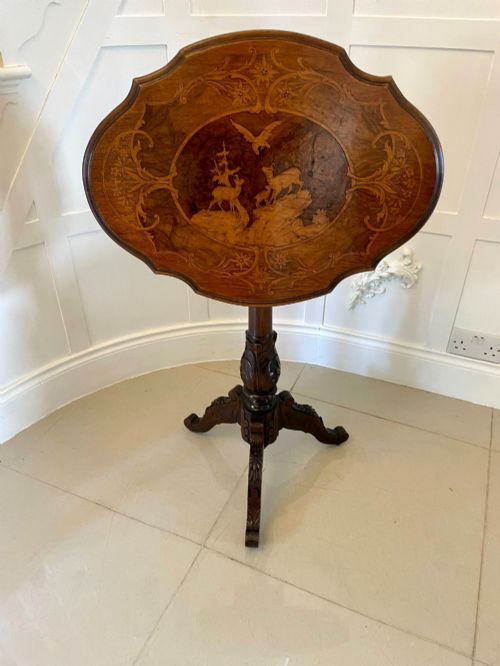
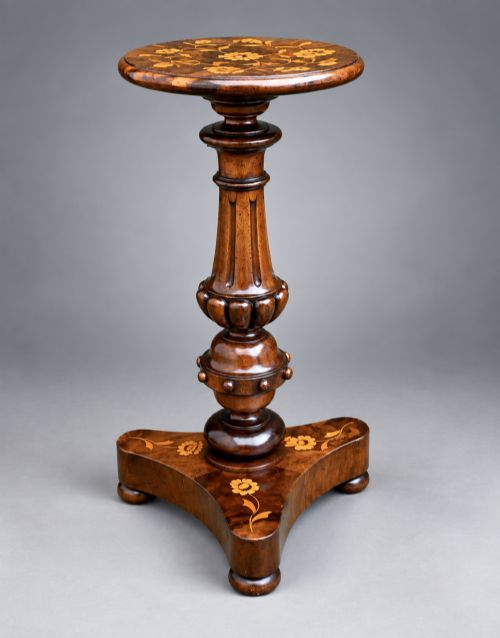
Regional styles introduce unexpected materials and ornamentation, from Swiss Black Forest marquetry to Dutch floral inlays and Ceylonese ebony. These diverse origins mean a buyer might select a simple English lamp table or a heavily carved teak elephant table depending on the desired interior scheme.
Materials and Construction
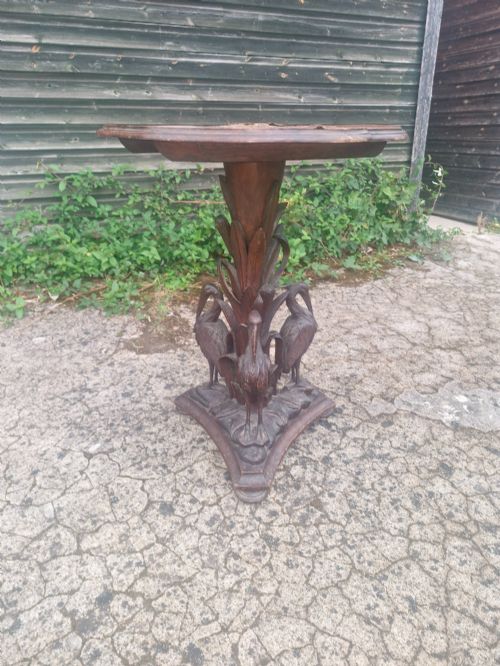
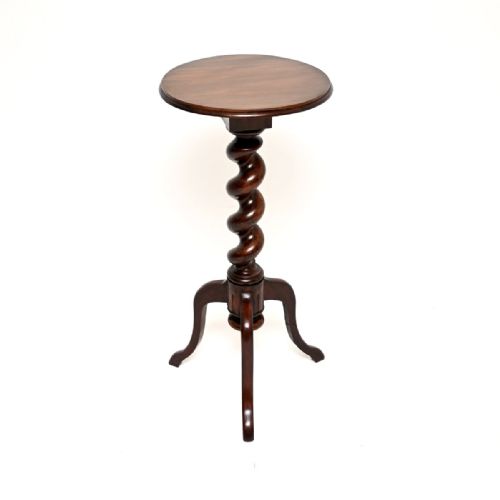
Cabinet makers utilised dense timbers such as mahogany, walnut, rosewood, and teak to withstand the stresses placed upon a single central pillar and three splayed legs. Turnery and hand-carving define the structural elements, often featuring barley twist shafts or animal motifs.
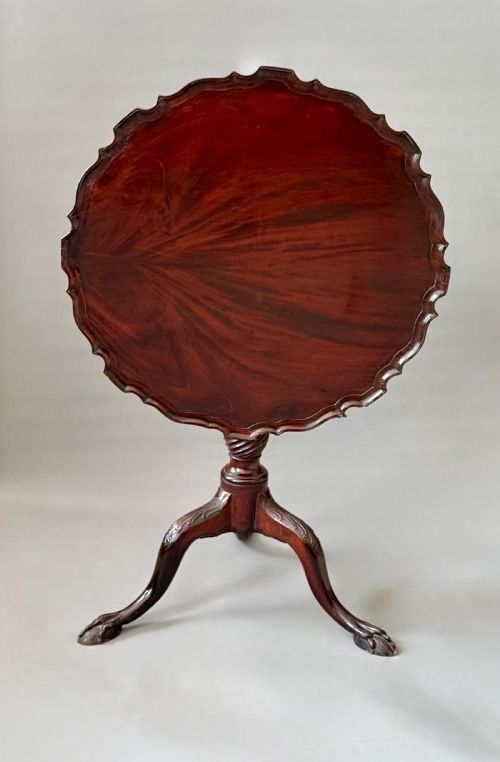
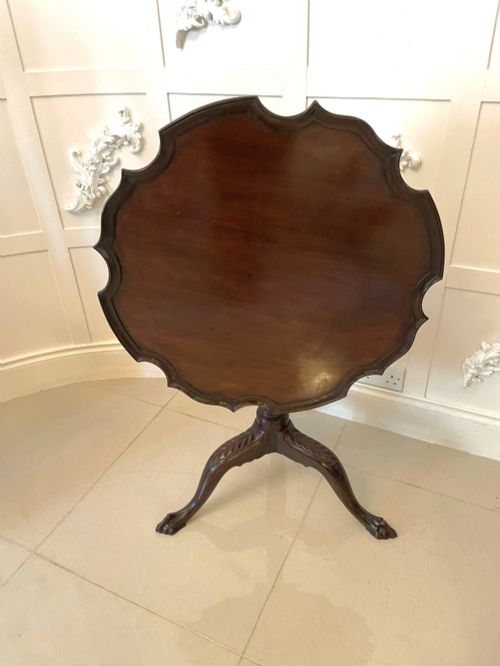
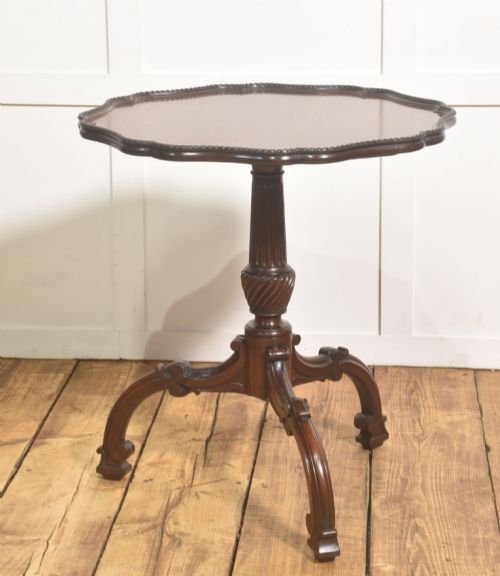
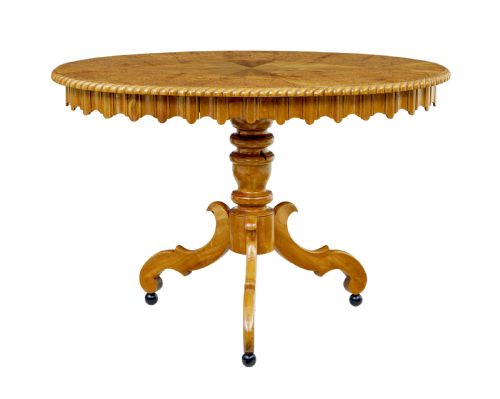
Inlaid surfaces incorporate marquetry and contrasting veneers like burr birch and burr walnut, while specialised edges such as pie crust rims require meticulous shaping from solid wood blocks. Tilt-top mechanisms rely on brass catches and wooden birdcage brackets to allow the tabletop to fold vertically when not in use.
Listings span periods from the 18th century through the Victorian era to Edwardian times, utilising mahogany, walnut, rosewood, teak, oak, and marble.
Evaluating the Craft
The distinction between standard production and exceptional work rests on the crispness of the hand-carving and the selection of figured timbers like burr walnut or flame mahogany. Superior examples display seamless integration between the top, the central column, and the splayed leg joints without structural wobble.
Complexity of detail elevates certain pieces, such as intricate Hoshiarpur geometric inlay or deep relief carving on Burmese teak. The integrity of the tilt mechanism and the retention of original brass fittings further separate ordinary domestic items from finer showroom pieces.
Bulstrode Cambridge·Gillow
The Carved Wood Tripod Table Glossary
- Pie crust edge
- A raised, decoratively carved tabletop rim resembling pastry work. This feature is typically associated with 18th-century George III mahogany tables.
- Tilt-top
- A hinged tabletop mechanism that allows the surface to pivot upright for compact storage against a wall. It relies on a wooden catch or brass latch.
- Tripod base
- A central pedestal supported by three diverging legs. This construction ensures stability on uneven historical flooring.
- Marquetry
- The art of applying pieces of veneer to a structure to form decorative patterns and pictures. It frequently appears on walnut and exotic hardwood surfaces.
- Occasional table
- A small, movable table intended for specific, intermittent tasks such as holding a lamp or tea service. The category encompasses wine, lamp, and side tables.
Carved Wood Tripod Table: Frequently Asked Questions
What were carved wood tripod tables used for?
These small tables served specific domestic functions throughout the parlour and drawing room, acting as temporary stands for tea, wine, candles, or reading lamps. Their lightweight construction allowed servants to move them easily to wherever light or surface space was required.
Over time, specialised forms emerged for games, shaving, and displaying decorative objects. Their versatility made them staples of Georgian and Victorian interior arrangements.
How do I tell a George III table from a Victorian one?
George III pieces, dating from the 18th century, generally exhibit restrained classical proportions, finer timber grain selection, and subtle carving such as subtle bead-and-reel work or pie crust rims. They often feature functional tilt-top mechanisms with sophisticated birdcage supports.
Victorian tables from the mid-to-late 19th century frequently display heavier turning, such as barley twist columns, bolder floral carving, or exotic additions like colonial elephant motifs. The timbers also shift toward rich rosewood, burr walnut, and imported teak.
How do I place a tripod table in a modern room?
The compact footprint and central pedestal make these tables ideal for tight spaces beside armchairs, sofas, or in awkward corners where four-legged tables will not fit. Their varied surface diameters easily accommodate a reading lamp or a small stack of books without dominating the floor plan.
Because the legs splay outwards, ensure there is sufficient clearance around the base so guests do not trip. They also function effectively as freestanding accent pieces in hallways or landings.
What is an Anglo-Indian or Burmese tripod table?
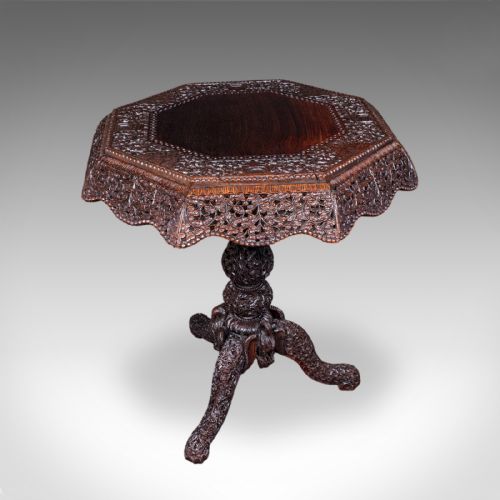
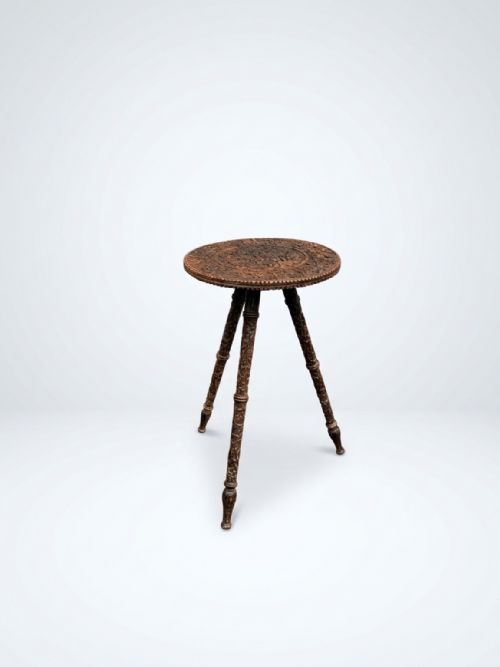
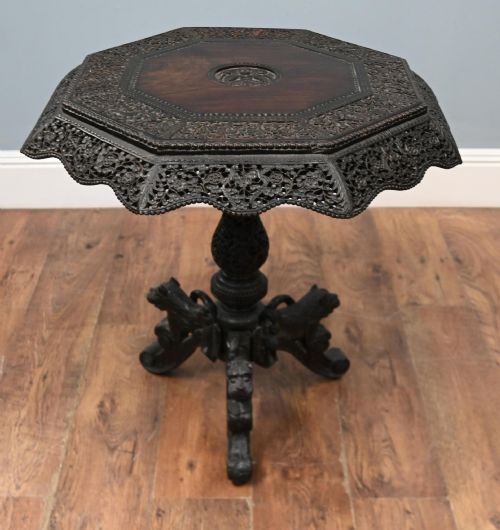
These are 19th-century colonial pieces manufactured in Asia using dense native hardwoods like teak, rosewood, and harwood. British demand for exotic furniture drove local workshops to produce heavily carved tables featuring dense foliage, geometric patterns, or figural elements.
Such pieces bring distinct regional carving styles into the British domestic tradition. They demonstrate how global trade influenced Victorian interior taste.