



Carved Wood Tabletop Chest
A carved wood tabletop chest brings miniature scale and meticulous craftsmanship together on a surface.
Carved Wood Tabletop Chest
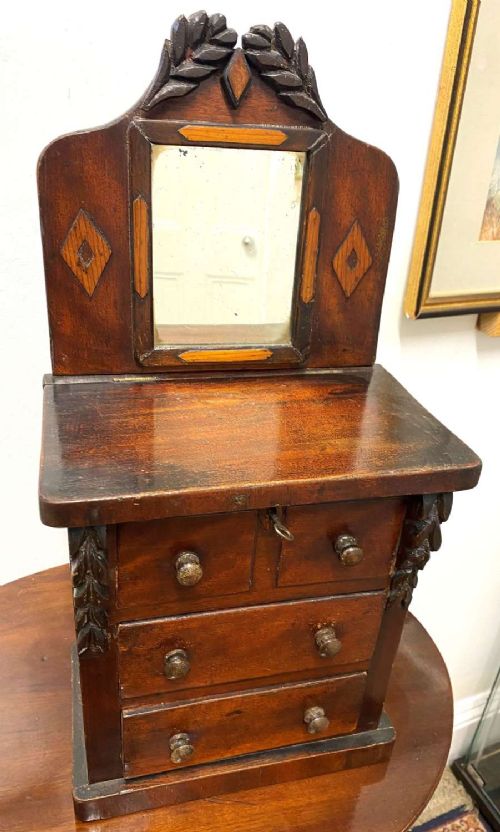
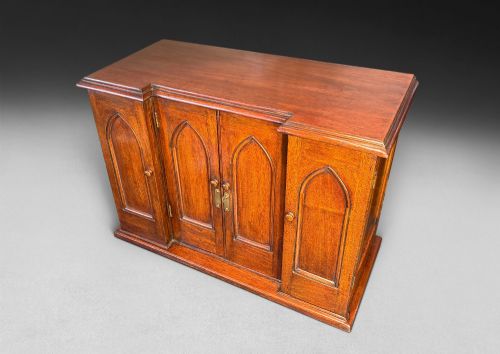
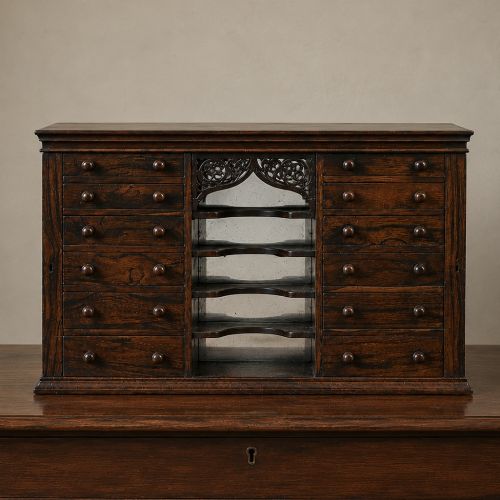
A carved wood tabletop chest sits on a table or surface, taking the form of miniature furniture, table cabinets, collectors cabinets, or jewellery chests. These small containers served domestic storage needs for valuables, trinkets, and collections.
The pieces on this page span the 17th century, Georgian, Regency, and Victorian periods, alongside specific years such as 1850 and 1880. Stylistic influences include Gothic Revival, French Country, Dutch Rococo, and Anglo-Indian designs.
Miniature forms such as apprentice pieces, coffor bach, miniature armoires, and small linen presses appear frequently among the listings. Oak, rosewood, walnut, and soft wood provide the primary structural bodies for these tabletop examples.
How they were made
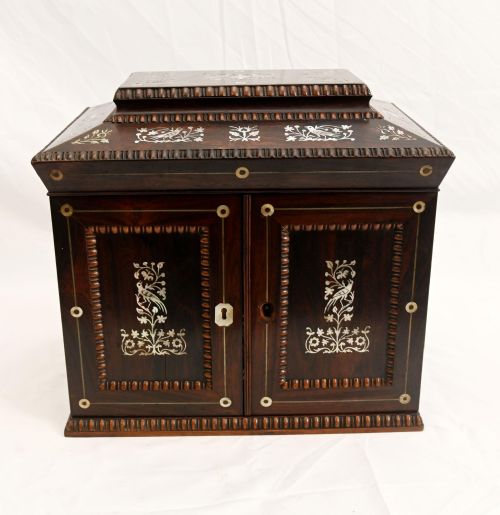
Makers shaped these small chests from solid timbers such as oak, rosewood, and walnut, often applying wood inlay to decorate the exterior surfaces. Carving work defines the structural details and ornamentation across the various styles.
Additional materials like brass hinges and locks, mirror glass panels, and mother of pearl inlays enhance the construction and visual texture of the boxes. Cabinetmakers utilised precise joinery to scale down full-size furniture forms into miniature dimensions.
Carved Wood Tabletop Chest Retail Price Guide 2026
Typical asking prices for carved wood tabletop chest among the pieces listed under this phrase on Sellingantiques today, from the lower quarter to the upper quarter. They describe what is for sale here now, not the wider market.
The listings span from the 17th century through the Georgian, Regency, and Victorian periods, utilising oak, rosewood, walnut, brass, and mother of pearl.
What varies in quality
The refinement of the carving and the precision of the miniature scale distinguish the finer examples from simpler work. Finer execution shows in the alignment of wood grain and the integration of decorative inlays or mother of pearl.
Quality rests on the selection of dense timbers like rosewood and walnut, paired with intact original brass hardware and glass elements. The sophistication of the period style, from Dutch Rococo to Gothic Revival, dictates the artistic ambition of the piece.
The Carved Wood Tabletop Chest Glossary
- Apprentice piece
- A small item demonstrating the advanced skill required for a craftsman to join a guild.
- Coffor bach
- A Welsh miniature coffer, typically constructed from oak during the Georgian period.
- Wellington chest
- A tall stack of drawers secured by a locking side flap, seen in miniature form during the Regency era.
- Linen press
- A tall cabinet designed for storing textiles, rendered here in miniature scale.
- Table cabinet
- A small freestanding cabinet intended for placement on a table or desk surface.
Carved Wood Tabletop Chest: Frequently Asked Questions
What is a carved wood tabletop chest?
A carved wood tabletop chest is a small storage piece designed for placement on furniture rather than the floor. These items take the form of miniature chests, collectors cabinets, and jewellery boxes.
Craftsmen built them across various historical periods using timbers such as oak, rosewood, and walnut, often incorporating detailed carving and brass hardware.
How were these miniature chests used historically?
People used these small chests to store jewellery, trinkets, letters, and specialised collections of natural history or coins. Their portable nature allowed owners to keep valuables secure and close at hand in domestic spaces.
Apprentice pieces also served as demonstrations of a maker's technical capability when applying for guild membership.
What woods appear in these chests?
Oak and walnut feature prominently in pieces from the earlier periods, while rosewood becomes common by the Regency era. Soft wood and various exotic timbers also appear across the selection.
Makers frequently enhanced these woods with decorative wood inlay, brass mounts, and mother of pearl.
How can I tell the period of a tabletop chest?
Stylistic indicators such as Gothic Revival tracery, Dutch Rococo curves, or Regency rosewood veneers point to specific eras of manufacture. Construction methods and material choices align with the 17th, 18th, and 19th centuries.
Examining the internal secondary woods and hardware helps confirm the age of the piece.