



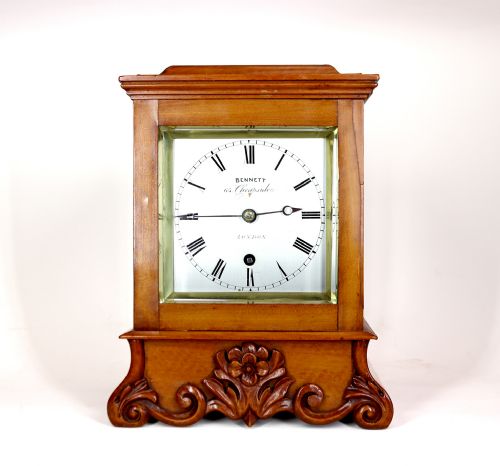


Carved Wood Table Clock
These carved wood table clock examples range from Regency mahogany to Black Forest Linden wood, combining mechanical precision with sculptural cabinetwork.
Carved Wood Table Clock
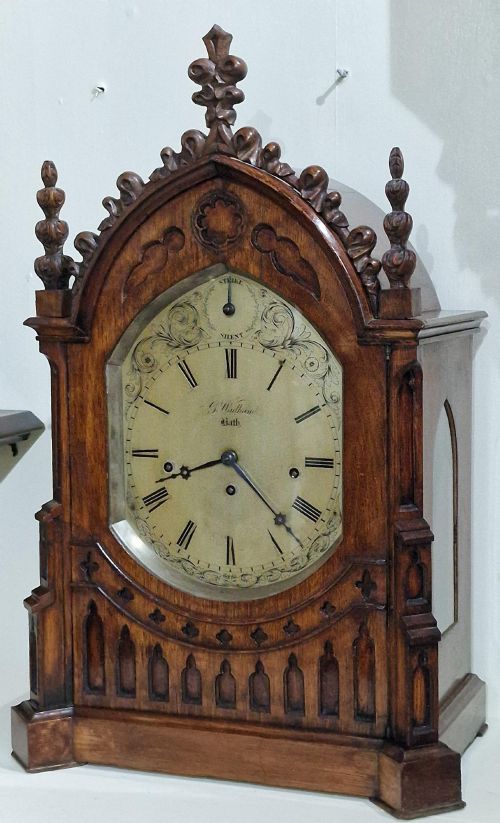
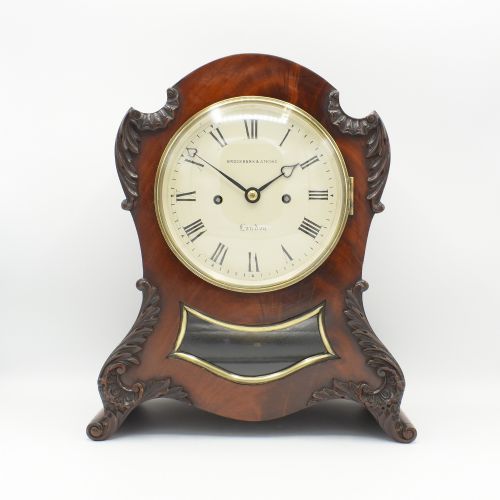
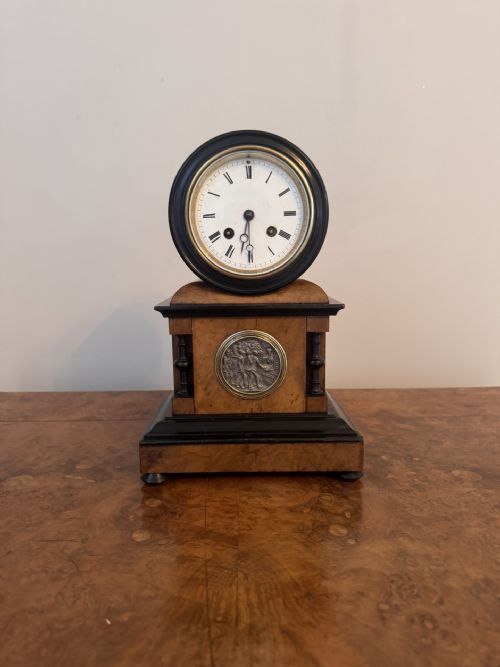
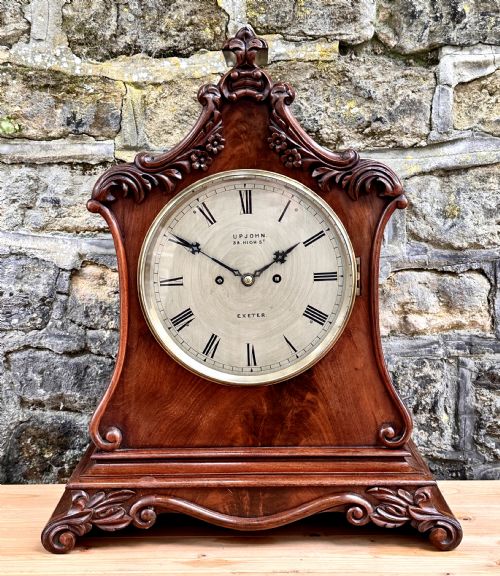
A carved wood table clock sits on a mantelpiece, bracket shelf or library table, keeping time through weight or spring-driven movements housed in timber cases. These pieces include bracket clocks, mantel clocks and library clocks originating from English, French, German and Swiss workshops across the nineteenth and early twentieth centuries.
The version most commonly met on this page is the Victorian mahogany mantel or bracket clock, often featuring fusee movements and architectural or Gothic details. Alongside these, Black Forest carved wood examples carved from Linden wood bring intricate foliage, animals and cuckoo mechanisms into domestic interiors.
Makers such as George Wadham, Brockbanks & Atkins, Mappin & Webb, Sir John Bennett, Piggin Norwich, Barrett London, Edwards of London, and Beha appear across the listings, representing established English watchmakers and continental woodcarvers.
What varies in quality
The refinement of the cabinetwork and the complexity of the clock movement set the standard for these pieces, distinguishing standard production from exceptional workshop output. Crispness in hand-carved Linden wood details or precision in mahogany case joinery indicates the skill of the original maker.
The reputation of the maker, whether an established London firm like Brockbanks & Atkins or a specialist Black Forest carver like Beha, influences the standing of the clock. Movement sophistication, such as triple fusee configurations or intricate striking trains, further separates ordinary examples from important pieces.
Listings feature 19th Century, Victorian, Regency, Edwardian and 1930s periods, incorporating brass, glass, mahogany, enamel, carved wood, oak, walnut and Linden wood.
George Wadham·Brockbanks & Atkins·Mappin & Webb·Sir John Bennett·Piggin Norwich·Barrett London·Edwards of London·Beha·Bergen & Co·H.A.C.
The Carved Wood Table Clock Glossary
- Fusee
- A conical pulley used in spring-driven clocks to equalise the torque of the mainspring as it unwinds. This mechanism helps maintain consistent timekeeping accuracy throughout the running period.
- Bracket clock
- A portable clock originally designed to sit on a wall bracket to allow sound to travel freely. Over time, the term came to describe any large table or mantel clock.
- Black Forest
- A geographic region in Germany renowned for intricate woodcarving and clockmaking. Pieces from this area typically feature Linden wood cases carved with naturalistic motifs and animal figures.
- Pad top
- A raised, domed wooden shape characteristic of Regency clock case design. This style provides a clean, architectural finish to the upper portion of the timber housing.
- Library clock
- A smaller scale timepiece intended for domestic study rooms or libraries. These pieces prioritise modest proportions and clear enamel dials for readability.
Carved Wood Table Clock: Frequently Asked Questions
What is a fusee movement?
A fusee movement uses a conical drum and a cord or chain to regulate the power delivered from the mainspring. This ensures steady force is applied to the gear train as the spring winds down.
You will find this mechanism in many English bracket and table clocks from the nineteenth century, prized for improving timekeeping precision.
How do I identify a Black Forest clock?
Black Forest clocks are distinguished by their carved Linden wood cases, which frequently display foliage, birds, stags or cuckoo mechanisms. They originate from nineteenth-century German and Swiss workshops.
These pieces range from modest mantel clocks to monumental carved sculptural sets featuring deep-relief ornamentation.
Where were table clocks placed?
Table clocks were designed for placement on mantelpieces, bracket shelves, library tables or dedicated wall brackets. Their portable nature allowed owners to move them between rooms as needed.
Bracket clocks earned their name from the wall brackets they originally rested upon to project sound from their striking bells.
What woods were used for cases?
Cabinetmakers utilised timbers such as mahogany, walnut, oak, satinwood, rosewood and Linden wood for these clock housings. Mahogany and walnut dominate English Victorian and Regency examples.
Linden wood served as the primary material for carved Black Forest pieces due to its suitability for detailed hand-carving.
What do 14-day and 8-day movements mean?
These terms refer to how long the clock movement runs before needing to be wound again with a key. An 8-day movement requires winding once a week, while a 14-day movement runs for two weeks.
Both types utilise weights or spring-driven trains to power the clockwork and any associated striking mechanisms.