

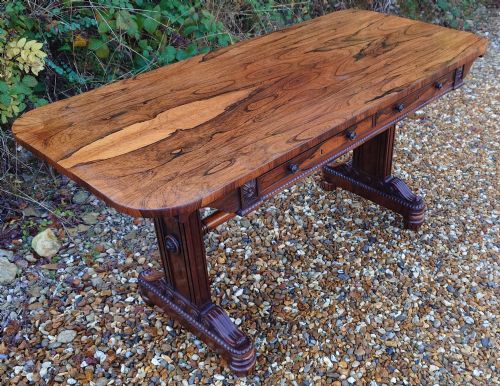
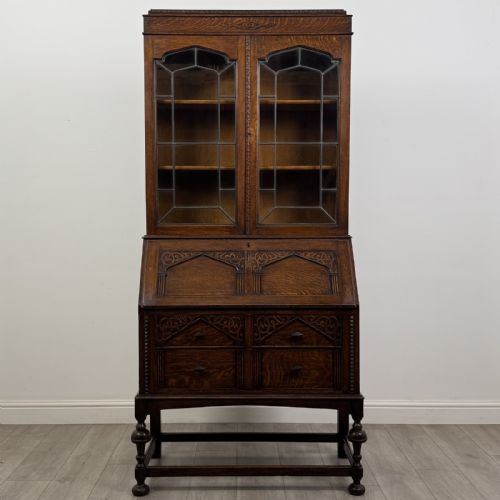
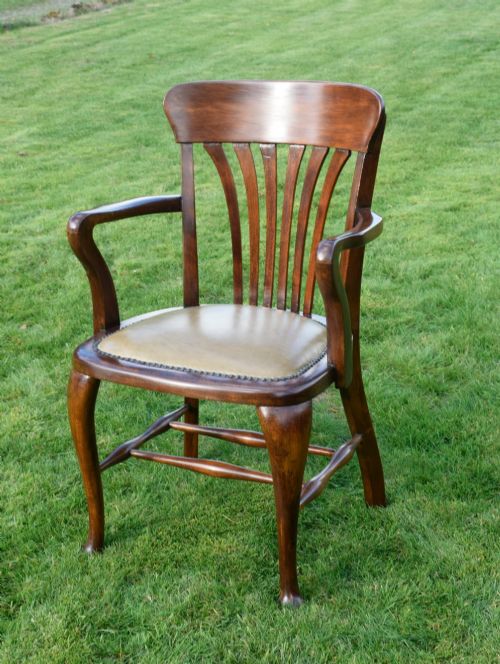
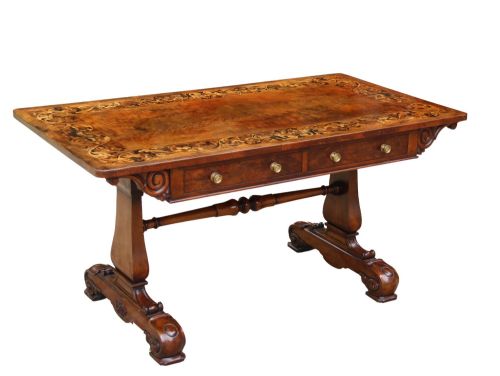
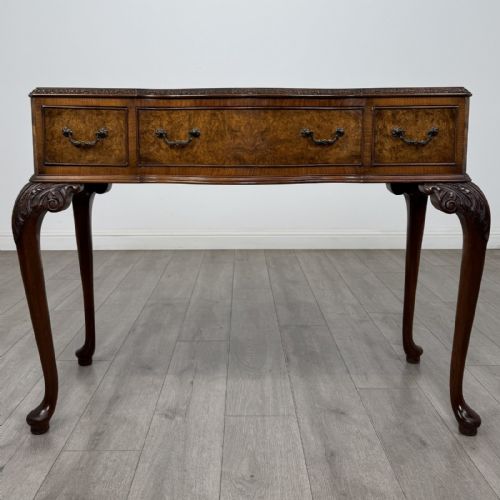
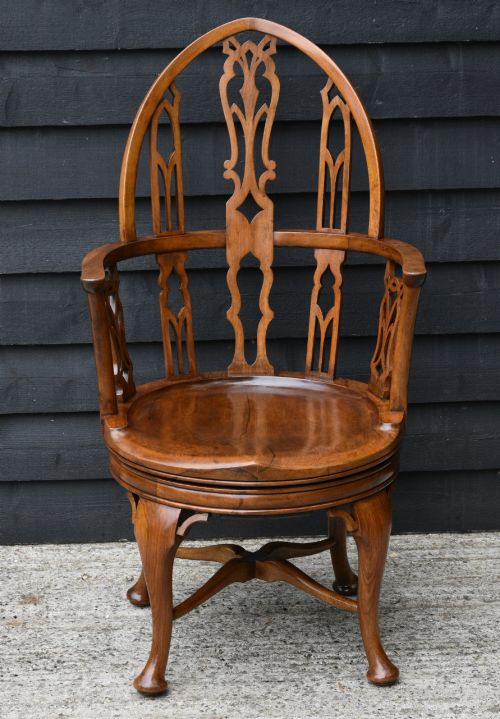
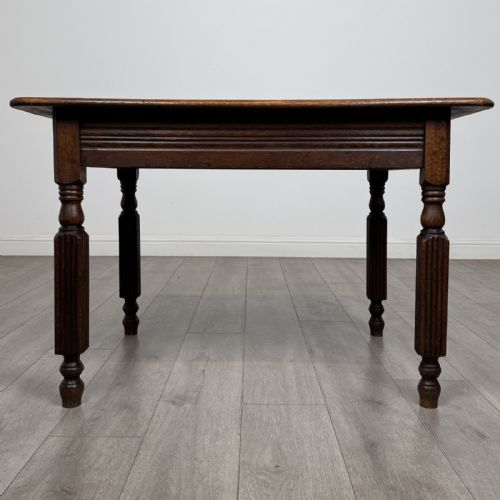
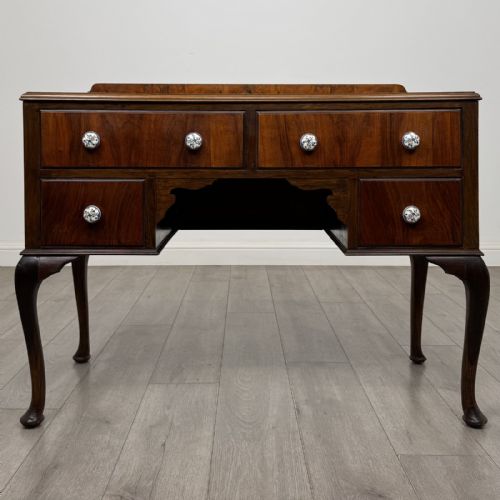
Carved Wood Study Desk
A carved wood study desk brings substantial character to a room, offering rich timber surfaces and detailed hand-carved ornamentation for daily writing and reading.
Carved Wood Study Desk
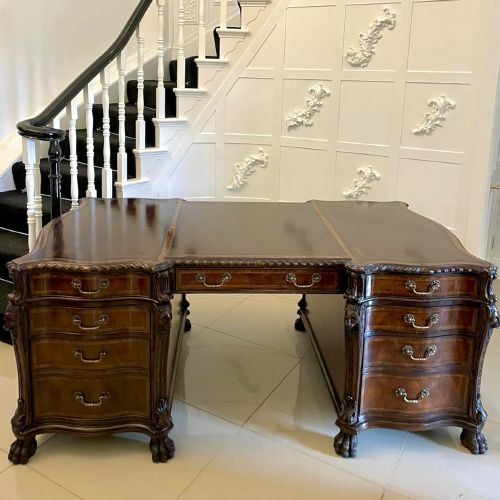
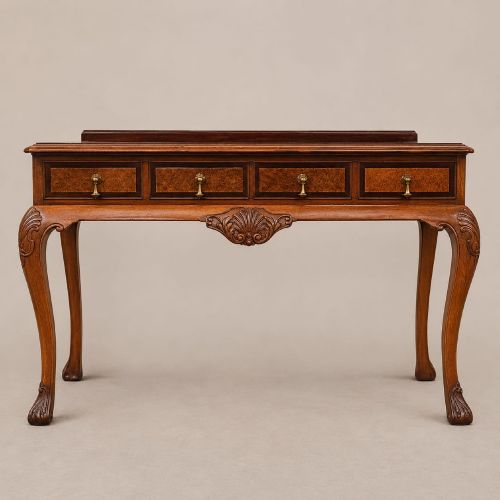
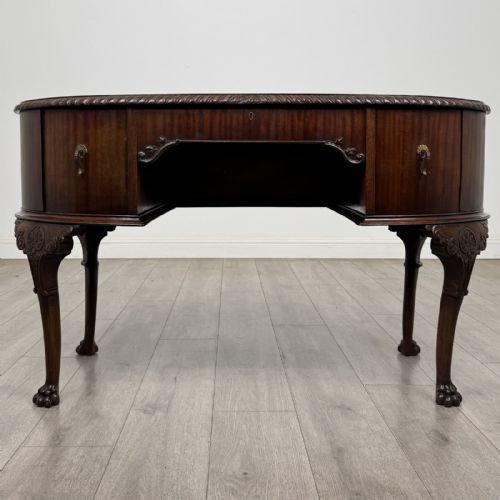
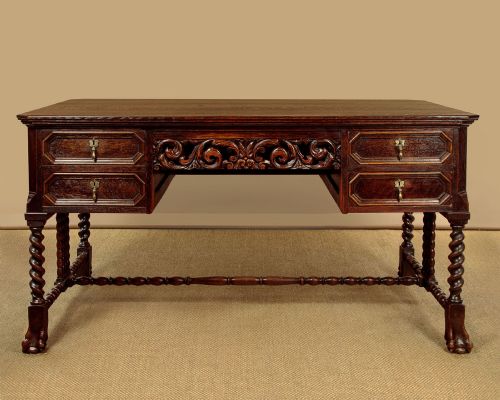
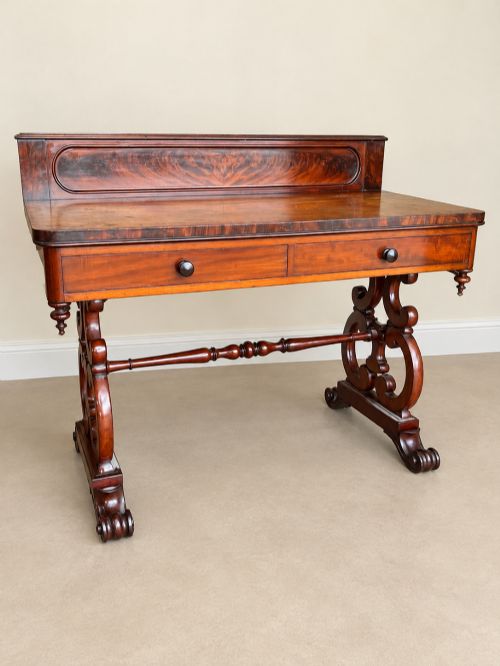
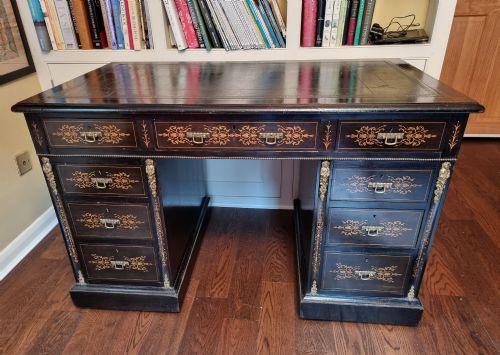
A carved wood study desk encompasses functional writing tables, pedestal desks, and partner's desks produced across the nineteenth and early twentieth centuries. These pieces reflect diverse historical revivals, ranging from robust oak examples to refined mahogany and walnut tables.
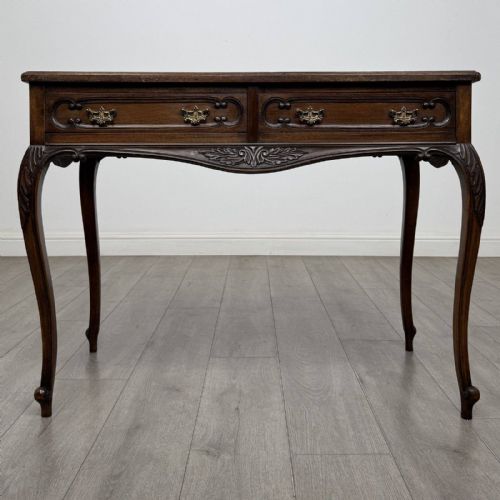
Buyers most frequently encounter Edwardian and Victorian versions on this page, often fitted with inset leather writing surfaces and carved architectural details. Writing tables and library tables dominate the selections, accompanied by matching desk chairs and occasional bookends.
Originating from English, French, and Anglo-Indian workshops, these items demonstrate the varied domestic and institutional needs of past eras. The selection bridges formal partner's desks intended for central room placement and compact writing desks suited for home offices.
Materials and construction methods
Cabinet makers utilised dense hardwoods such as mahogany, walnut, oak, and rosewood, frequently selecting figured veneers like flame mahogany and burr walnut for primary surfaces. Secondary structural elements relied on sturdy timber framing to support heavy writing loads.
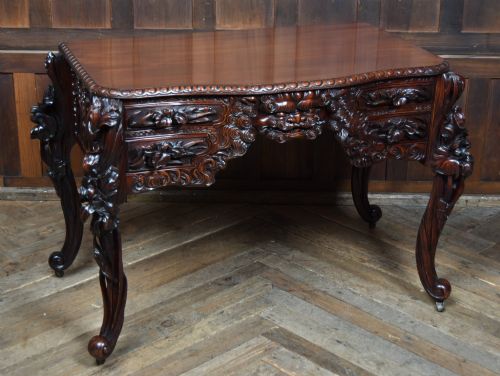
Carving was executed by hand, manifesting as linear fluting, foliate scrolls, and figural motifs on pillars, friezes, and feet. Desk interiors often incorporated brass hardware, dovetailed drawer construction, and tooled leather skivers.
Carved Wood Study Desk Retail Price Guide 2026
Typical asking prices for carved wood study desk among the pieces listed under this phrase on Sellingantiques today, from the lower quarter to the upper quarter. They describe what is for sale here now, not the wider market.
Listings feature woods including mahogany, walnut, oak, rosewood, padauk, and burr walnut across the nineteenth and early twentieth centuries.
Assessing craftsmanship and execution
The standard of carving defines the distinction between standard commercial output and superior workshop production, with crisp, deep relief work indicating accomplished hand execution. Secondary timbers and internal drawer linings reveal the care taken in concealed areas.
Proportion and timber selection heavily influence overall execution, where well-matched veneer grains and balanced architectural scaling elevate a piece. Maker attribution, such as work originating from established firms, separates notable items from unmarked domestic furniture.
Edwards and Roberts·Gill and Reigate·Mein of Kelso·Étienne Kohlmann
The Carved Wood Study Desk Glossary
- Pedestal desk
- A heavy freestanding writing desk comprising two supporting pedestals of drawers beneath a main writing surface. These are typically finished on all sides for central room placement.
- Partners desk
- A large double-sided desk designed for two people to sit opposite one another, featuring drawers and cupboards on both faces. They often display elaborate carved detailing.
- Library table
- A large freestanding table used for reading and sorting papers, finished with a finished top and often lacking the integrated pedestal drawer stacks of a standard desk.
- Skiver
- The inset panel of leather or fabric mounted to the top of a writing table or desk. It provides a smooth surface for writing.
- Davenport
- A compact Victorian desk featuring a sloping, hinged writing lid above a bank of side drawers. They frequently incorporate concealed stationary compartments.
Carved Wood Study Desk: Frequently Asked Questions
What is a partner's desk?
A partner's desk is a large, double-sided writing table built to accommodate two people working opposite each other. These substantial pieces feature drawers and cupboards accessible from both long sides.
Historically placed in the centre of a grand library or study, they require considerable floor space and serve as a prominent architectural feature in a room.
How do I care for antique leather skivers?
Leather skivers require gentle cleaning with a slightly damp cloth followed by specialised leather balms to prevent drying and cracking. Avoid using harsh chemical cleaners or excessive water.
Maintaining the leather preserves the rich colour and tactile writing surface integral to nineteenth-century and Edwardian desks.
Where were library tables placed?
Library tables were traditionally positioned in the middle of a room rather than pressed against a wall. Their finished backs and all-around detailing made them suitable for viewing from any angle.
In modern interiors, they function effectively as large writing desks or central display tables in spacious studies.
How do I identify an Edwardian desk?
Edwardian desks, dating from the early twentieth century, frequently utilise lighter mahogany or walnut timbers and display restrained neoclassical or revival decoration. They often incorporate serpentine fronts and delicate carved pillars.
Compared to heavier Victorian predecessors, Edwardian examples tend to feel slightly brighter and more compact in their overall scale.