





Carved Wood Stick Stand
These carved wood stick stand examples bring sculptural presence to an entrance, holding damp umbrellas and walking canes in solid timber.
Carved Wood Stick Stand
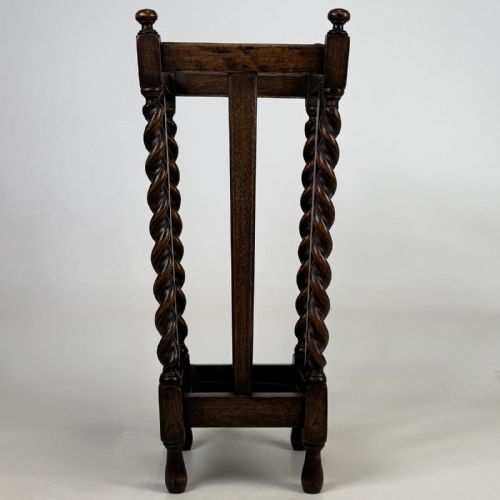
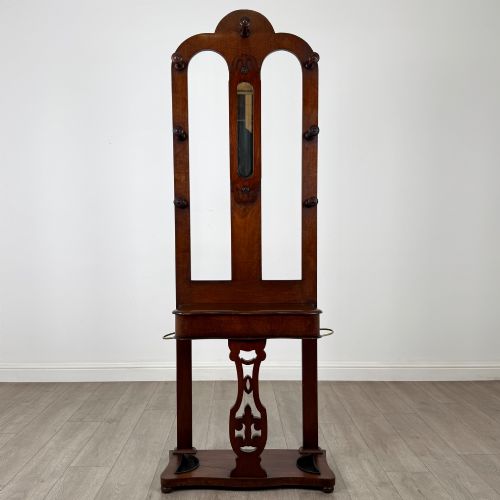
A carved wood stick stand serves as a functional item for hallways, designed to organise walking canes, umbrellas, and coats in domestic interiors. These pieces emerge from the nineteenth century and early twentieth century, spanning Victorian, Edwardian, and Arts and Crafts periods.
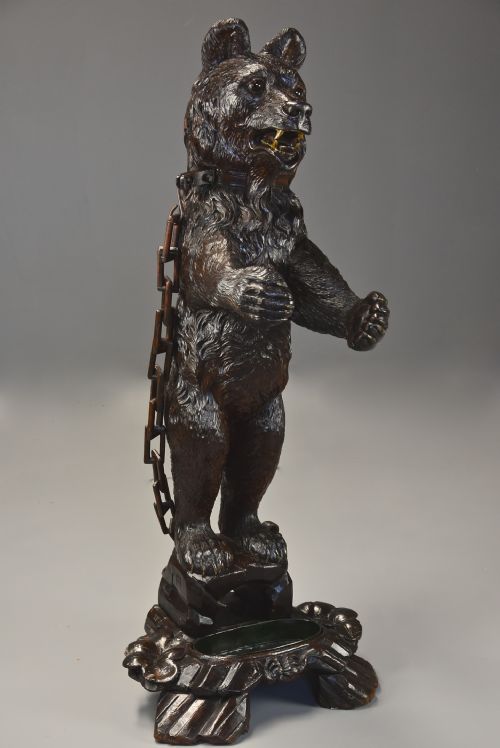
The most frequent versions encountered here are Black Forest carvings depicting bears, alongside oak and mahogany hall stands incorporating umbrella wells. Makers constructed these items from native and imported timbers, frequently integrating mirrors, marble shelves, and brass drip pans.
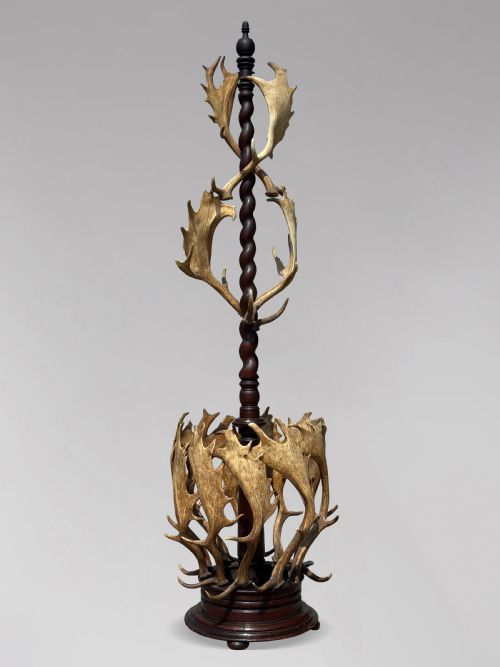
Other variations encompass folk art items and Italian walnut examples, reflecting diverse regional aesthetics from the eighteen-eighties to nineteen-twenty. Buyers select these functional furnishings to anchor an entrance hall with period character and practical storage.
How carved wood stick stands were made
Craftsmen utilised solid woods such as oak, mahogany, walnut, and linden wood to construct the main bodies of these hall furnishings. Timber selection dictated the depth and intricacy achievable in sculptural elements, particularly within Black Forest animal figures and foliate panels.
Joinery techniques combined pegged mortise and tenon joints with turned components like barley twist columns and applied carved ornamentation. Metal liners, brass drip trays, and cast iron sections were incorporated inside wooden umbrella wells to protect the timber from moisture.
Carved Wood Stick Stand Retail Price Guide 2026
Typical asking prices for carved wood stick stand among the pieces listed under this phrase on Sellingantiques today, from the lower quarter to the upper quarter. They describe what is for sale here now, not the wider market.
Recorded periods span from the early nineteenth century through the Victorian and Edwardian eras to nineteen-twenty.
What varies in quality
The standard of carving determines the distinction between ordinary production and superior craftsmanship, visible in the anatomical precision of animal figures and the crispness of foliate details. Depth of relief and naturalistic texturing in fur or foliage indicate the time dedicated by the maker.
Structural integrity and material selection separate utilitarian items from exhibition pieces, particularly in the thickness of the timber utilised for load-bearing hall stands. Original components, such as matching drip trays and unaltered mirror plates, maintain the integrity of the piece.
J Parker Of Woodstock
The Carved Wood Stick Stand Glossary
- Black Forest
- A regional style of wood carving originating from the Swiss and German borderlands, characterised by naturalistic depictions of animals, particularly bears, integrated into furniture.
- Hall Stand
- A large multi-functional entrance piece combining a mirror, coat hooks, a shelf, and umbrella storage with a drip tray.
- Bergere
- A type of woven cane panelling utilised for decorative inserts within wooden furniture frames.
- Barley Twist
- A turned wooden column resembling the spirals of barley sugar, popular in Jacobean Revival and later nineteenth century joinery.
- Treen
- Small handmade wooden household objects and decorative items produced on a lathe or carved by hand.
Carved Wood Stick Stand: Frequently Asked Questions
How do I clean a carved wood stick stand?
Dust the carvings regularly with a soft dry brush to prevent dirt settling in the recesses. Apply occasional applications of beeswax to nourish the timber without building up heavy residue.
Avoid placing wet umbrellas directly against untreated wood by ensuring metal or ceramic liners are used inside the well. Keep the furniture away from direct heat sources to prevent the timber from splitting.
What periods do these stick stands come from?
The pieces primarily date from the nineteenth century through to the early twentieth century, encompassing the Victorian and Edwardian eras. Stylistic indicators such as Arts and Crafts simplicity or Black Forest naturalism help identify the specific decade of manufacture.
Craftsmanship methods evolved over this span, moving from hand-carved linden wood animal figures to structured oak and mahogany hall furnishings. Examining the joinery and hardware provides further clues to the exact age of the item.
Where should I place a hall stand?
Position the piece in an entrance hall or vestibule where visitors remove coats and umbrellas. Ensure there is adequate clearance around the structure to appreciate the carved details and utilise the coat hooks safely.
Keep the item out of direct sunlight to protect the polish and prevent fading of the timber. Adequate floor space is essential for larger hall stands that incorporate mirrors and umbrella wells.
Are drip pans usually original?
Metal trays placed at the base of umbrella stands collected water from wet canes and frequently show signs of corrosion or replacement over time. Finding a matching metal or brass insert adds to the completeness of the item.
Replacements remain common due to the practical nature of these objects and exposure to moisture. Collectors look for patination on the metal that matches the age of the wooden surround.