




Carved Wood Shibayama
Carved wood shibayama brings intricate Japanese craftsmanship into a room through inlaid panels and sculpted hardwood furniture.
Carved Wood Shibayama
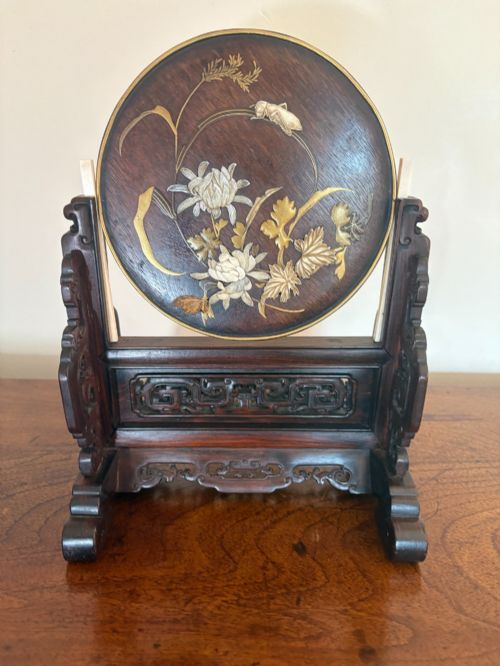
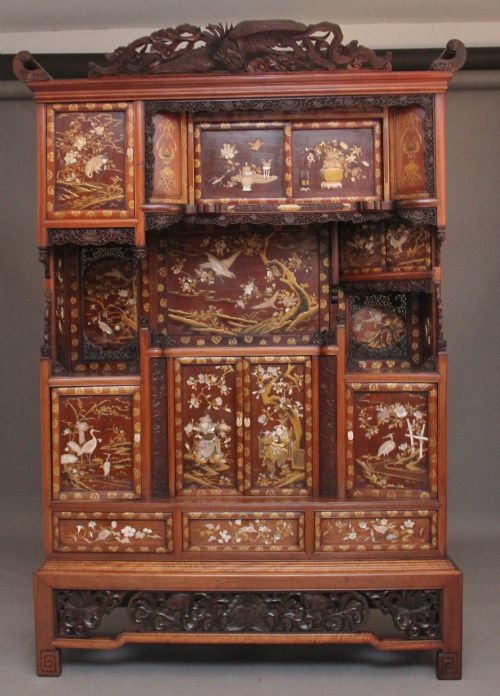
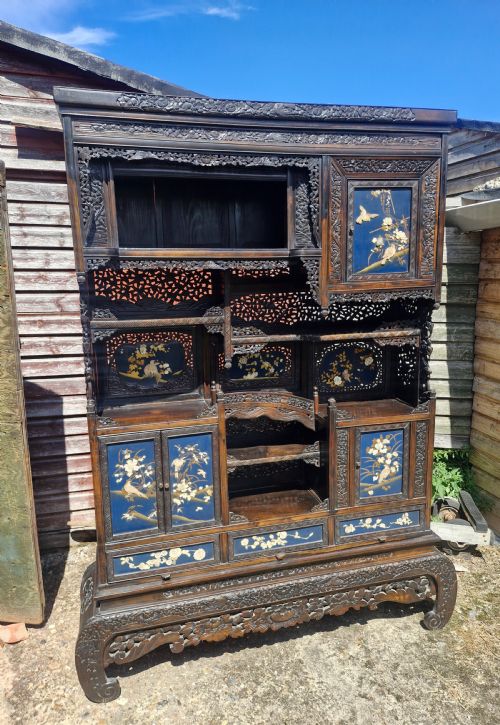
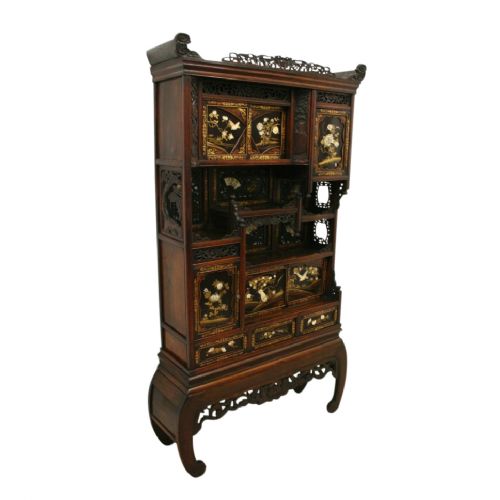
These items encompass Japanese furniture and decorative objects created during the Meiji period, featuring intricate inlay work on hardwood bodies. When exploring carved wood shibayama, a buyer encounters substantial display cabinets, folding screens, and table screens.
The objects span the nineteenth century and the early twentieth century, showing a clear preference for ornate display pieces and architectural room dividers. Cabinets known as shodana and multi-fold screens dominate the forms available on this page.
Makers utilised traditional Japanese design principles, combining deep relief carving with delicate surface decoration. Each piece serves as both a functional item of furniture and a detailed canvas for decorative artistry.
How they were made
Artisans built these pieces using dense hardwood and applied detailed lacquer finishes to the structural surfaces. The primary construction relies on traditional joinery to support the weight of heavy panels and shelving.
Decoration involved meticulous inlay techniques, setting bone and mother-of-pearl directly into the wood or lacquer ground. Craftsmen carved figures and natural motifs with high relief, creating deep shadows and tactile surface textures.
Carved Wood Shibayama Retail Price Guide 2026
Typical asking prices for carved wood shibayama among the pieces listed under this phrase on Sellingantiques today, from the lower quarter to the upper quarter. They describe what is for sale here now, not the wider market.
Every listed item originates from the nineteenth or early twentieth century, spanning the Meiji period.
What varies in quality
The depth and precision of the wood carving separate standard items from superior examples. Master carvers achieved clean, sharp details in figures and foliage that retain their definition across large surfaces.
The security and variety of the inlay work dictate the overall refinement of a piece. Finer items feature tightly fitted bone and mother-of-pearl sections with minimal adhesive visible around the edges.
The Carved Wood Shibayama Glossary
- Shibayama
- A style of Japanese decorative art involving inlay of precious materials such as bone and shell into wood or lacquer. The technique creates pictorial scenes in relief.
- Shodana
- A traditional Japanese tabletop or floor-standing display cabinet with asymmetric shelving and cupboards. These cabinets were designed to showcase small art objects.
- Meiji Period
- The era in Japanese history lasting from eighteen sixty-eight to nineteen twelve. This period saw a surge in decorative arts produced for export.
- Mother-of-Pearl
- The iridescent inner layer of certain mollusc shells used for inlay work. Craftsmen cut thin sections to depict robes, flowers, and clouds.
- Folding Screen
- A multi-panel hinged room divider or decorative screen. These large items feature carved panels and extensive inlay work across several folds.
Carved Wood Shibayama: Frequently Asked Questions
What is a shodana cabinet?
A shodana is a Japanese display cabinet featuring asymmetrical shelving and small cupboards. These pieces were built to hold delicate ornaments and scholarly items.
Craftsmen often decorated the doors and panels with inlaid bone and carved motifs. They serve as striking focal points in a modern interior.
How do I date these pieces?
Dating relies on stylistic markers from the Meiji period and the nineteenth century. Construction methods and materials like hard lacquer and bone inlay help place objects in this timeframe.
Cabinetry from this era often shows specific joinery techniques native to Japanese workshops. Examining the back panels and interior hardware provides further chronological clues.
Where should I place a folding screen?
Folding screens work best against large, plain walls where their carved details can be fully appreciated. They also function well as room dividers in open-plan spaces.
Placement should avoid direct sunlight to protect the lacquer finish and natural inlay materials. Proper positioning prevents warping of the wooden panels.
What materials are used in the inlay?
Makers predominantly used bone and mother-of-pearl for their decorative inlays. These materials were shaped into figurative scenes, birds, and floral arrangements.
Lacquer and occasionally brass elements complement the shell and bone components. The contrast between the dark hardwood and the pale inlay defines the aesthetic.