


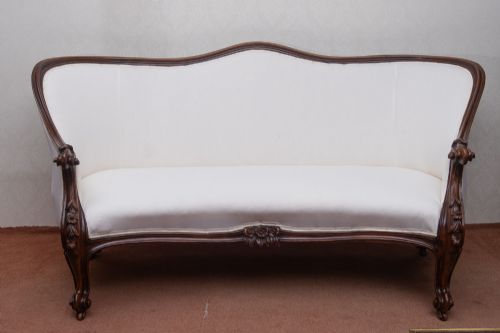


Carved Wood Parlour Settee
A carved wood parlour settee brings formal nineteenth-century reception rooms to life with carved frames and upholstered seating designed for drawing room gatherings.
Carved Wood Parlour Settee
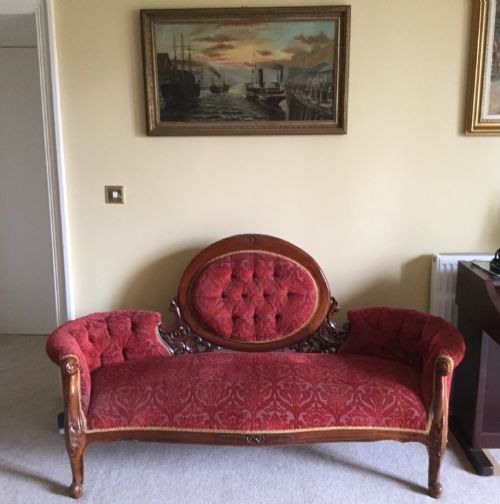
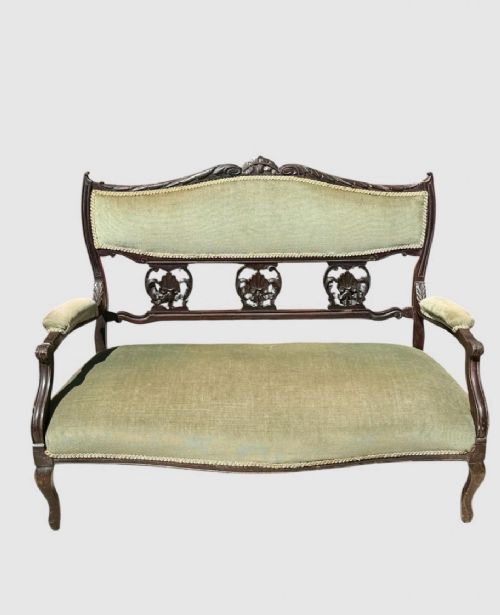
A carved wood parlour settee is a formal seat designed for nineteenth-century drawing rooms and reception spaces, appearing in styles from the Regency period through the Edwardian era. You will most frequently encounter Victorian walnut and mahogany examples alongside French-inspired designs featuring exposed wooden frames.
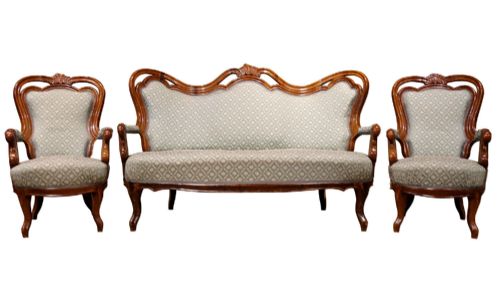
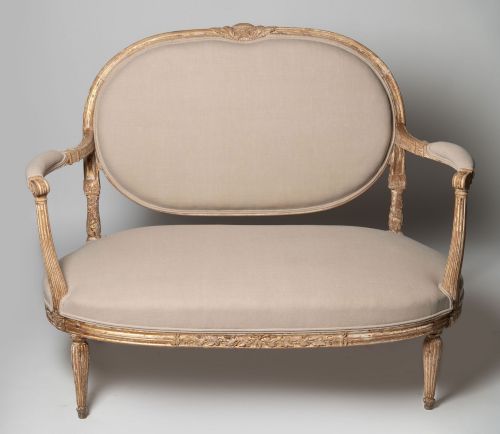
The evidence shows these pieces span simple double-ended sofas to elaborate salon suites and giltwood canapés. Makers utilised diverse forms ranging from compact two-seaters to large country house sofas and multi-piece drawing room arrangements.
Originating across English and continental workshops, these settees reflect changing domestic fashions through the nineteenth century. The selection includes specific regional interpretations such as German pieces in the rococo taste and French Louis XVI style frames.
How they were made
Frames are constructed from dense timbers including mahogany, walnut, beech, and giltwood, carved with ornamental details suited to formal reception rooms. Woodwork is frequently paired with brass hardware and substantial textile upholstery.
Upholstery techniques involve deep buttoned finishes and sprung settee bases covered in fabrics such as velvet, brocade, and general textiles. Sewing and padding methods support the structural wooden frames while providing formal comfort.
What varies in quality
Quality separates through the depth and precision of the wood carving on the frame, where crisply executed ornamentation distinguishes finer salon pieces from simpler iterations. The choice of primary timber, such as figured walnut or solid mahogany, also dictates the standard of the piece.
The integrity of the structural joinery and the execution of the upholstery, whether retaining deep buttoning or period brocade, mark the difference between standard workshop production and high-status drawing room furniture.
The Carved Wood Parlour Settee Glossary
- Settee
- A long upholstered seat with a back and arms, designed for multiple occupants in formal rooms. This form serves as the primary seating type across the listed inventory.
- Salon Suite
- A matched set of seating furniture comprising a settee and matching chairs for a drawing room. These suites provide uniform seating arrangements for formal entertaining.
- Giltwood
- Timber treated with gold leaf or gold paint to create a lustrous decorative surface. This finish appears frequently on continental and French revival frames.
- Canape
- An ornamental French-style sofa with an exposed wooden frame and upholstered seat and back. The term typically denotes pieces following continental design traditions.
Carved Wood Parlour Settee: Frequently Asked Questions
Where were parlour settees placed?
These settees stood in formal drawing rooms, parlours, and reception spaces where hosts entertained guests. Their decorative frames were designed to be viewed from multiple angles within large rooms.
In period homes, they formed the centrepiece of a salon suite alongside matching chairs, creating dedicated conversational areas.
How do I identify a Victorian settee?
Victorian settees are typically built from heavy mahogany or walnut timber featuring robust carved woodwork and sprung bases. Many examples utilise deep buttoned upholstery and curved frames characteristic of mid-nineteenth-century manufacturing.
Later Victorian pieces often incorporate inlaid decoration while retaining the substantial proportions typical of the era.
What is the difference between a sofa and a settee?
The terms are often used interchangeably in historical listings, though parlour settee generally denotes a formal wooden-framed seat designed for display and polite conversation. Sofas in this inventory frequently describe larger or more deeply upholstered seating.
Both forms served similar functions in nineteenth-century domestic interiors depending on the room's formality.
Are these settees comfortable for daily use?
Nineteenth-century parlour settees were built with upright postures in mind, reflecting the formal etiquette of the period. Many feature sprung bases and padded backs intended for upright sitting during social calls.
While some examples offer deep cushioning, their primary design priority remained aesthetic elegance within a reception room.
How do I date a carved wood settee?
Dating relies on examining the timber species, carving style, and upholstery construction methods present in the piece. Regency and early nineteenth-century pieces show neoclassical or empire influences, while later Victorian and Edwardian examples display heavier carving or delicate inlay.
Stylistic markers such as cabriole legs or giltwood finishes help assign pieces to specific decades between eighteen-twenty and nineteen-hundred.