
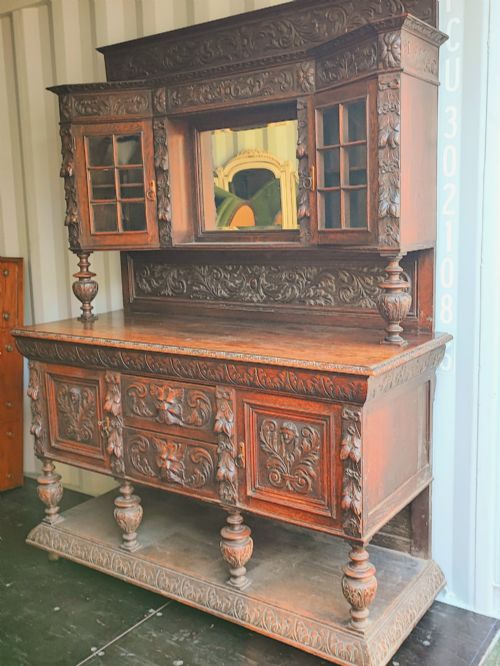
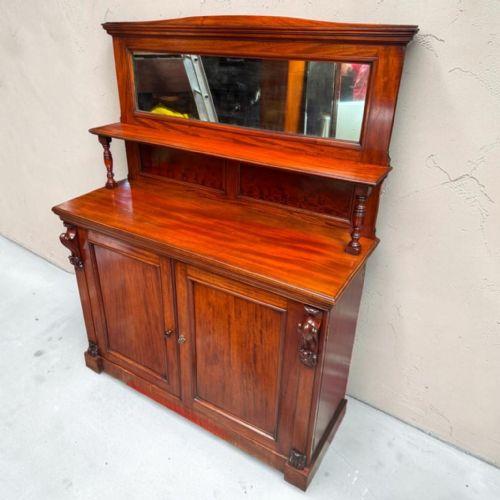
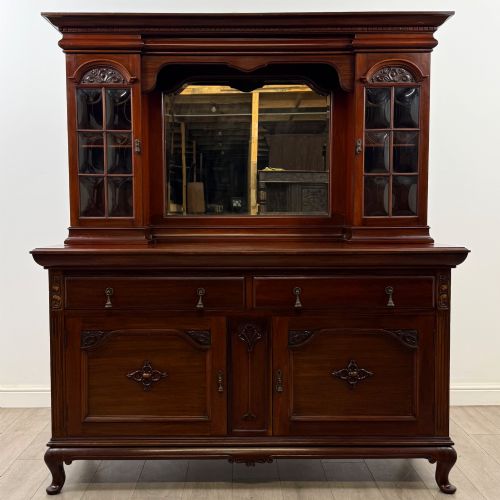
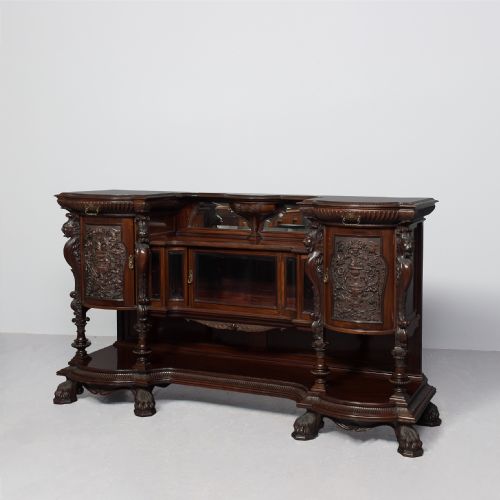



Carved Wood Mirror Credenza
These carved wood mirror credenza pieces combine heavy timber frames with glass plates, offering storage and a reflective surface for your interior.
Carved Wood Mirror Credenza
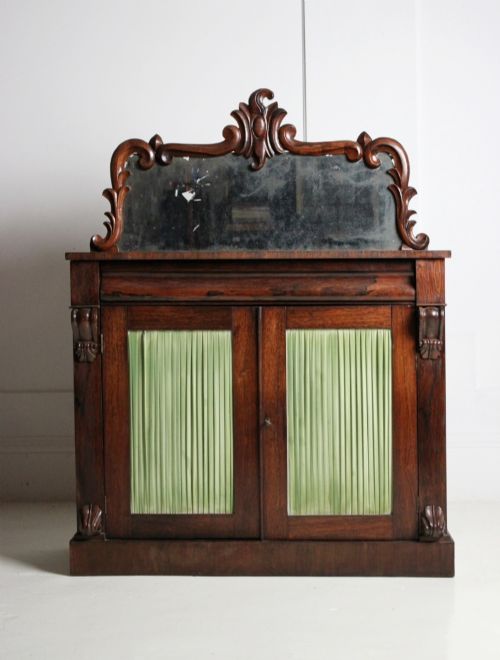
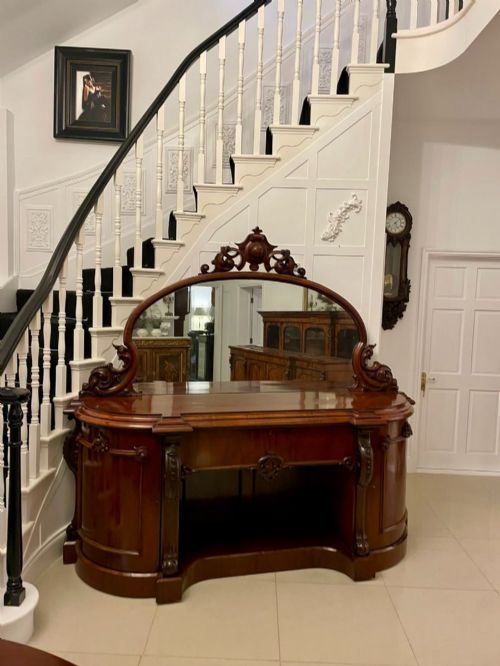
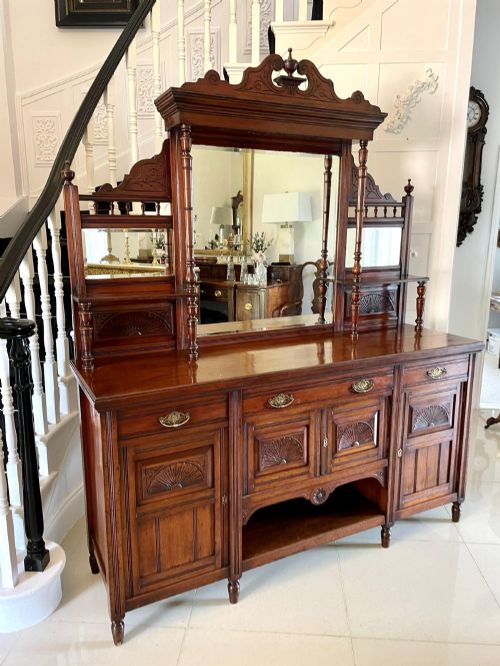
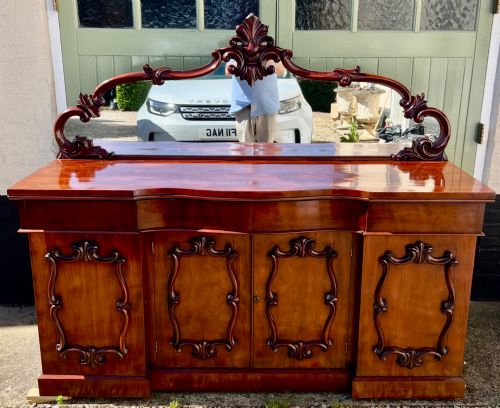
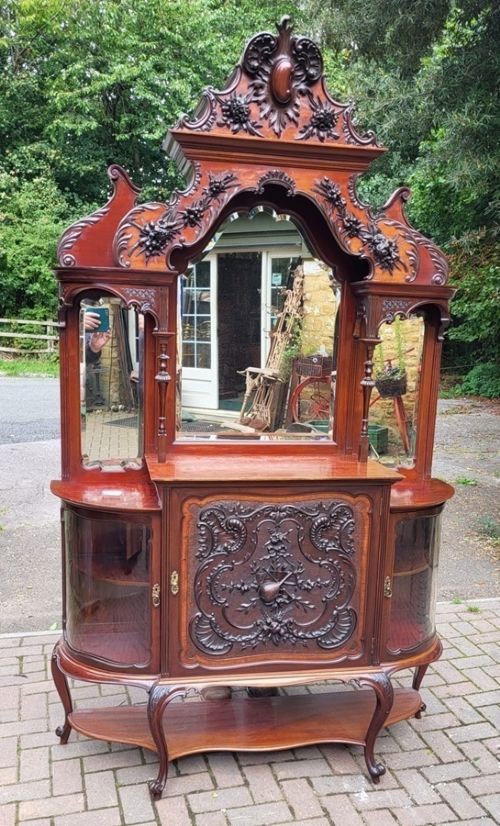
When you search for a carved wood mirror credenza, you encounter large storage furniture originating primarily from the Victorian and Edwardian periods. These items typically function as sideboards, credenzas, side cabinets, and chiffoniers fitted with prominent mirror backs.
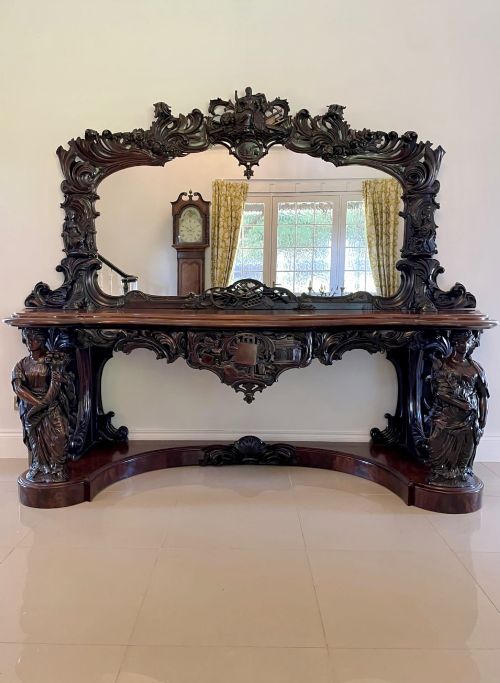
The selection on this page leans heavily toward Victorian mahogany, walnut, and oak examples produced across the nineteenth century. Pieces range from grand mirror back sideboards to smaller display cabinets and console tables incorporating carved wooden details.
Makers and workshops of the era utilised diverse stylistic influences, including Rococo Revival, Gothic Revival, Renaissance Revival, and Arts and Crafts movements. The primary form combines a lower cabinet base with an upright wooden frame holding a mirror glass plate.
Distinctions in craftsmanship
The standard of carving and the selection of timber dictate the distinction between ordinary production items and exhibition pieces. Superior examples display deeply undercut wooden relief work and beautifully figured mahogany or burr walnut veneers.
Structural heft and scale also separate standard items from grander commissions, with larger pedestal sideboards and credenzas utilising thick timber scantlings. Original hardware, intact mirror glass, and refined joinery mark out the finer productions.
Listings feature items built from mahogany, walnut, oak, rosewood, and brass hardware, spanning the Victorian and Edwardian eras.
Howard and Sons·Maple and Co
The Carved Wood Mirror Credenza Glossary
- Chiffonier
- A compact sideboard or side cabinet popular during the nineteenth century. It frequently includes a raised shelf or a small mirror back above the main carcase.
- Mirror Back
- An upright wooden superstructure holding a glass mirror plate attached to the rear of a sideboard or credenza. This feature reflects light and displays ornamental carving.
- Pedestal Sideboard
- A heavy dining room piece comprising a central section flanked by two structural pillars or pedestals containing cupboards and cellarets. These typically date from the Victorian era.
- Rococo Revival
- A nineteenth century design style emulating the theatrical curves, shell motifs, and asymmetrical scrollwork of the French eighteenth century. It appears frequently on Victorian walnut and mahogany furniture.
Carved Wood Mirror Credenza: Frequently Asked Questions
What is a carved wood mirror credenza used for?
These pieces served historically in dining rooms and formal parlours for storing crockery, glassware, and linens. The flat top surface acted as a sideboard for serving food, while the mirror reflected light into the room.
Today, they function as substantial storage units and decorative focal points in living areas, hallways, or dining spaces. The lower cupboards accommodate modern items while the surface displays ornaments.
How do I tell a Victorian piece from an Edwardian one?
Victorian examples span the nineteenth century and often feature darker timbers like mahogany and rosewood with heavy, ornate carvings reflecting styles such as Gothic or Rococo Revival. They tend to have grand proportions and elaborate mirror frames.
Edwardian pieces, dating around the turn of the twentieth century, generally exhibit lighter construction, cleaner lines, and influences from the Arts and Crafts movement. The carving is sparser and the overall aesthetic feels less imposing than mid-Victorian furniture.
Are these credenzas difficult to move?
Most of these items are exceptionally heavy due to the solid hardwoods, thick marble tops, and large mirror glass assemblies. They were built to remain stationary in one room.
Moving them usually requires two or more people, and the mirror back or upper superstructure often detaches from the lower base cabinet to ease transport.
How should I care for the wood and mirror?
Maintain the timber surfaces by applying appropriate beeswax or furniture polish periodically to nourish the grain of mahogany, walnut, or oak. Avoid placing the piece in direct sunlight to protect the polish.
Clean the mirror glass with a soft cloth and standard glass cleaner, taking care not to let moisture seep behind the silvered backing or into the surrounding carved wooden frame.