
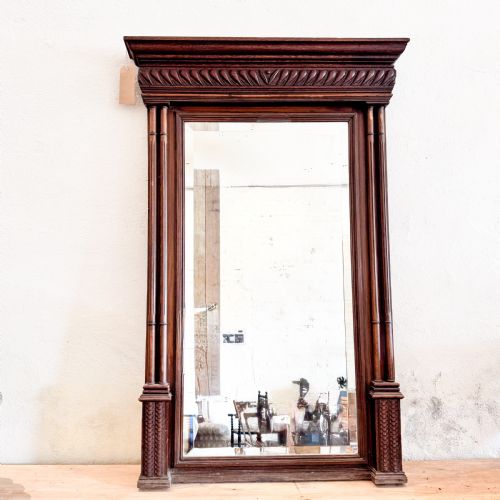

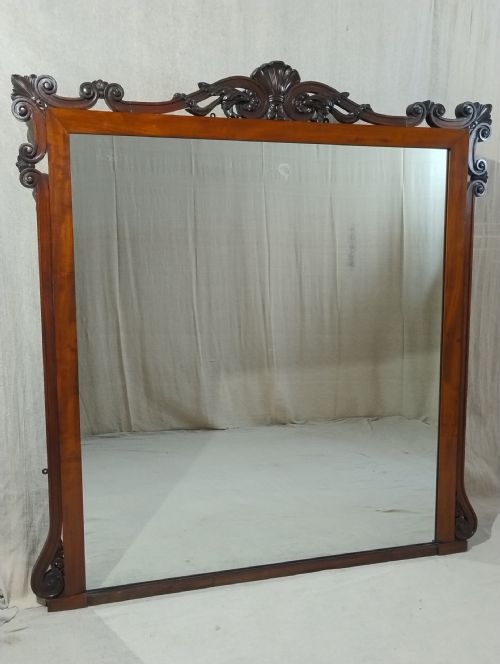

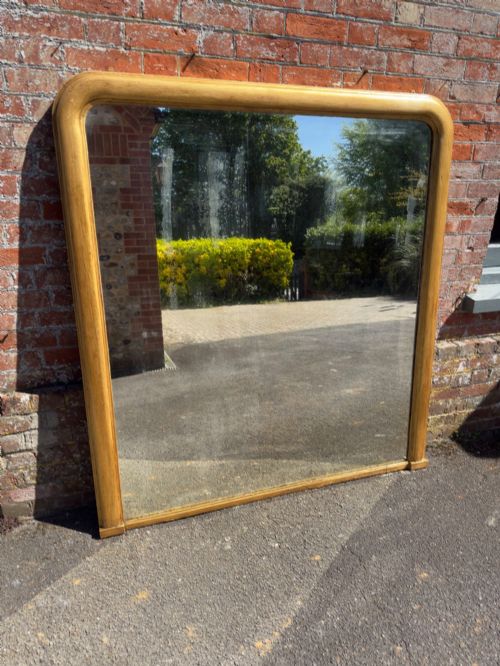


Carved Wood Mantle Glass
These carved wood mantle glass pieces are substantial wall and overmantel looking glasses designed to anchor a principal room.
Carved Wood Mantle Glass
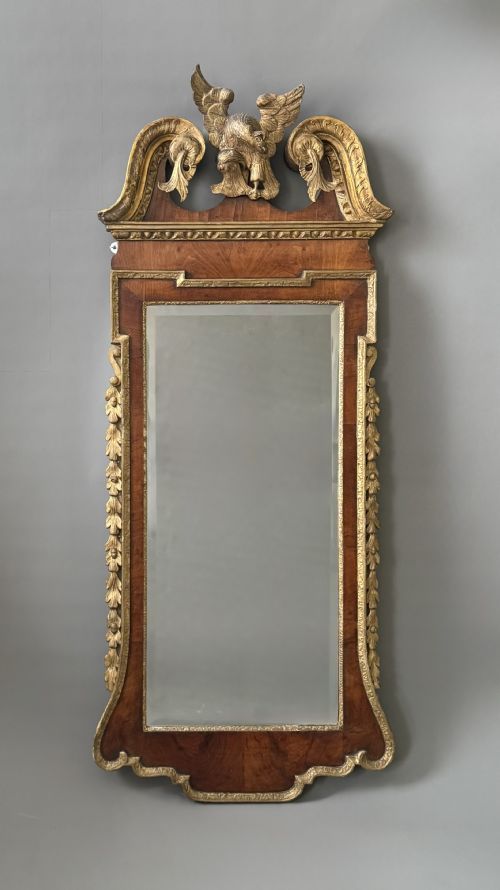
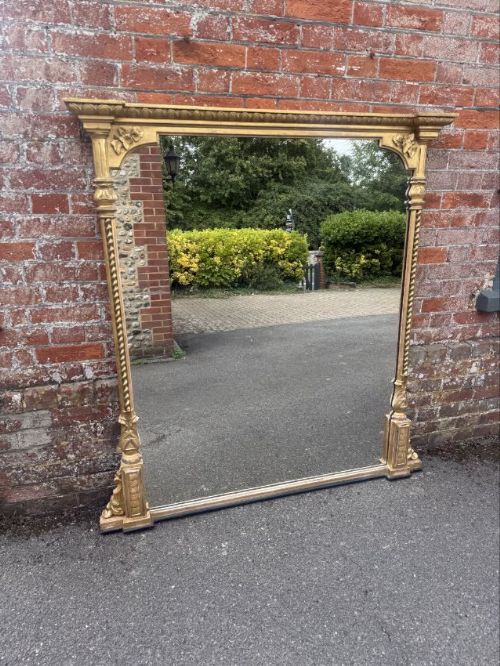
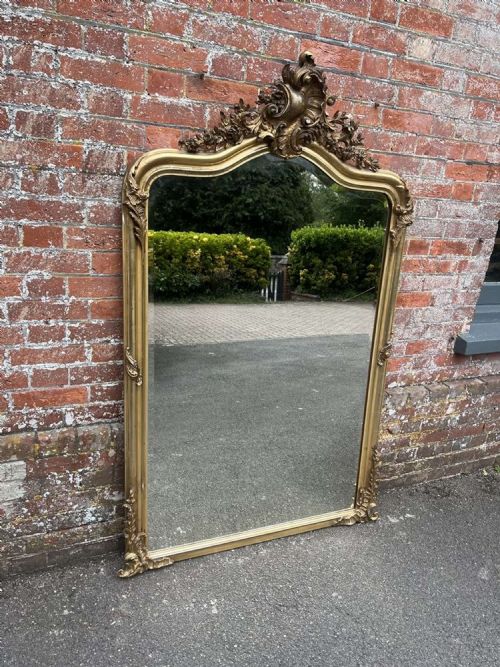
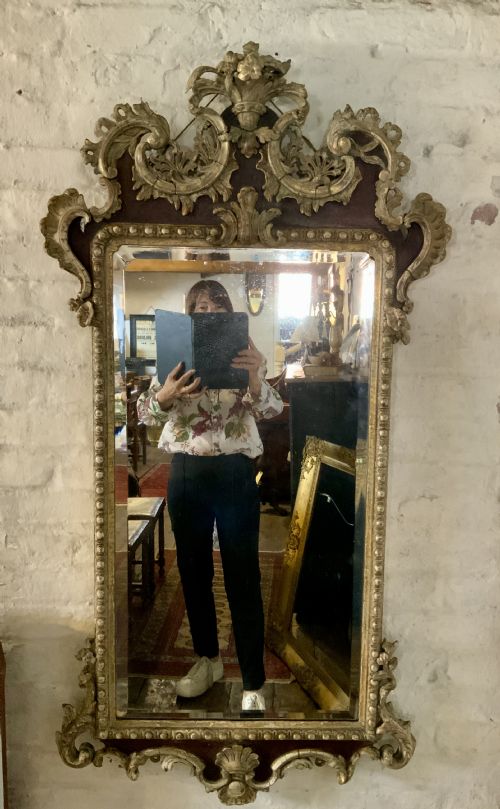
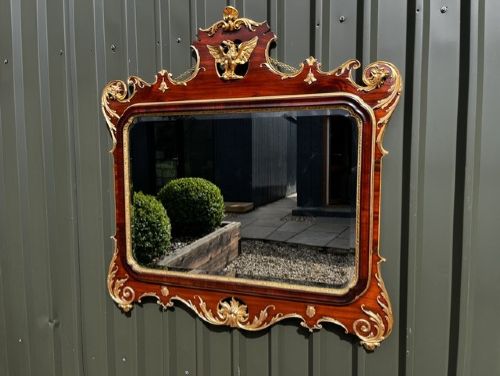
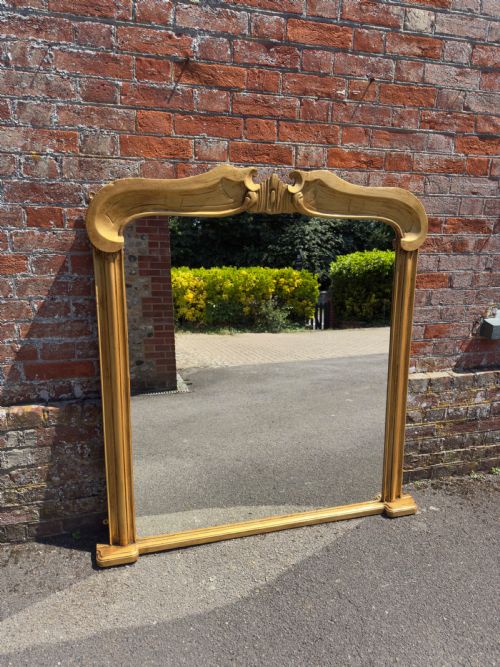
A carved wood mantle glass typically takes the form of an overmantel mirror designed to sit directly above a fireplace hearth, though standard wall mirrors also appear in the selection. The version you are most likely to meet on this page is a nineteenth-century English or French piece, often featuring a shaped or arched top set within a giltwood, gesso, or carved wooden frame.
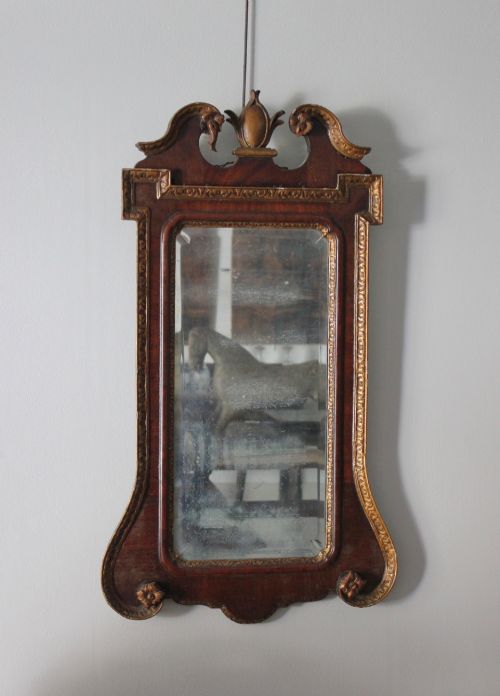
The assortment spans from eighteenth-century Georgian walnut and parcel gilt designs up to early twentieth-century Edwardian and oak examples. Overmantel mirrors dominate the offerings, providing scale and proportion intended to reflect light and fill the expanse of a chimney breast.
How they were made
Frames rely heavily on carved wood foundations, frequently augmented with gesso to build up intricate relief ornamentation such as rope twists and ribbed mouldings. Gold leaf and paint are then applied to the prepared surfaces to achieve either a brilliant gilded finish or a painted decorative scheme.
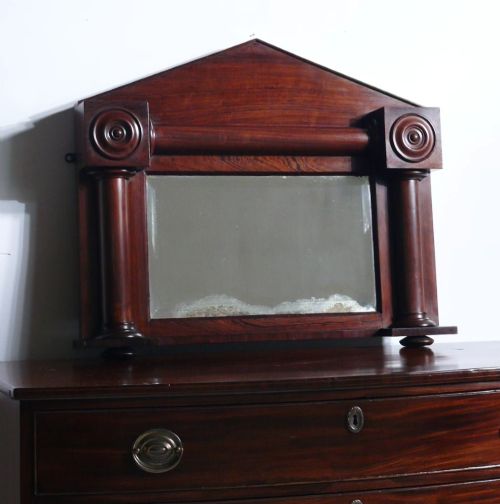
Primary timbers include mahogany, walnut, oak, and rosewood, chosen for their grain and structural stability. Joinery methods and surface preparations reflect the period of manufacture, from eighteenth-century parcel gilt techniques to later Victorian framing.
Several mirrors feature hour-glass shaped tops, adding an unexpected silhouette to the standard rectangular chimney breast display.
What varies in quality
The refinement of the carving dictates the visual hierarchy, distinguishing deeply undercut, crisply rendered ornamentation from simpler, more mechanical mouldings. The integrity of the original gesso and the crispness of the gilt or paint layers also determine the standing of an individual looking glass.
Proportion and scale play a crucial role in establishing the character of the piece, particularly in larger overmantel formats where balance across the chimney breast is paramount. The harmony between the original timber frame and the mirror plate itself governs the overall execution.
The Carved Wood Mantle Glass Glossary
- Overmantel mirror
- A large mirror specifically proportioned to hang on the wall directly above a fireplace mantelpiece. These pieces often feature horizontal emphasis or arched tops to suit chimney breasts.
- Gesso
- A plaster-like mixture applied to wood frames to provide a smooth base for carving intricate relief details and subsequent gilding. It allows for sharp decorative moulding before the application of gold leaf.
- Parcel gilt
- A surface treatment where only specific portions of a wooden object, such as carved highlights or mouldings, are covered in gold leaf while the underlying wood remains visible.
- Giltwood
- Timber that has been decorated with gold leaf or gold paint applied to its surface. It creates a reflective, luminous frame popular across various historical periods.
- Rope twist
- A carved decorative motif resembling the spiralling strands of a rope. This pattern frequently edges the inner or outer borders of nineteenth-century mirror frames.
Carved Wood Mantle Glass: Frequently Asked Questions
Where should a mantle glass be hung?
These mirrors are traditionally positioned centrally above a fireplace mantelpiece to reflect light and anchor the decorative scheme of the room.
They also function effectively on large expanse walls in principal reception rooms where their substantial scale can be fully appreciated.
How do I identify a Georgian mirror?
Georgian pieces typically display restrained classical proportions, often utilising walnut or mahogany with subtle parcel gilt accents rather than heavy gesso relief.
Construction details and timber choice align with eighteenth-century cabinet-making traditions, avoiding the exuberant moulding popular in later periods.
What is the difference between a wall mirror and an overmantel mirror?
Overmantel mirrors are specifically proportioned for placement above a fireplace, often featuring wide horizontal formats or arched tops designed for chimney breasts.
Standard wall mirrors follow varied vertical or oval shapes intended for general room placement rather than hearth alignment.
How do I care for a giltwood frame?
Giltwood surfaces require gentle dusting with a soft, dry brush to prevent accumulation without disturbing the delicate gold leaf or underlying gesso.
Moisture and harsh cleaning agents must be avoided entirely to preserve the integrity of the historic finish.