





Carved Wood Lockers
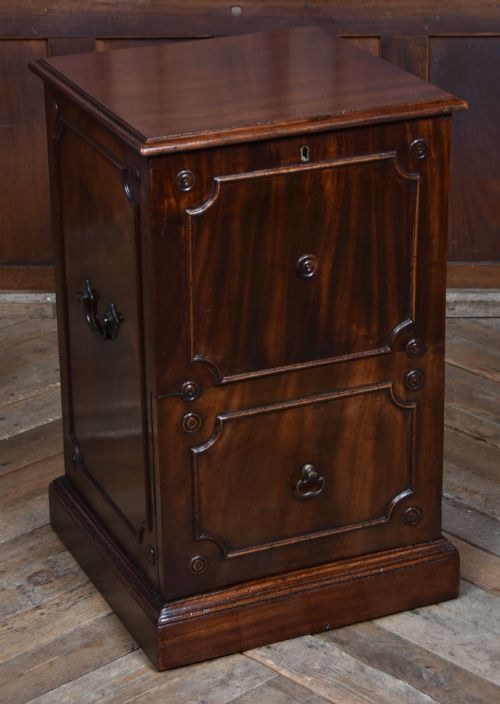
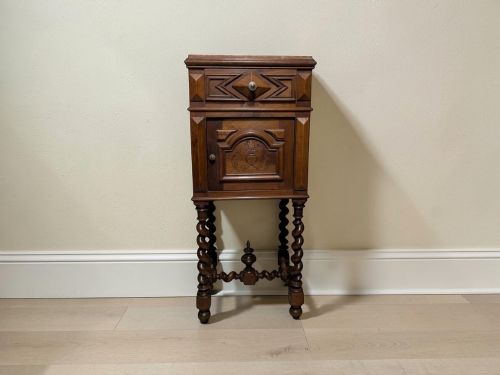
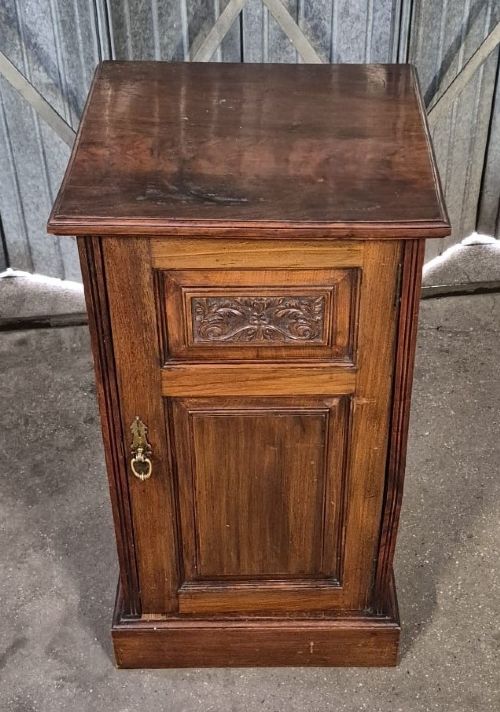
These carved wood lockers bring practical storage and rich period character to the bedside, spanning various styles from Victorian to Edwardian workshops.
Carved Wood Lockers
When you search for carved wood lockers, you are looking at nineteenth and early twentieth-century bedside cabinets, cupboards, and side cabinets designed for domestic use. These pieces offer enclosed storage beside a bed or in smaller rooms, combining utility with decorative cabinetwork.
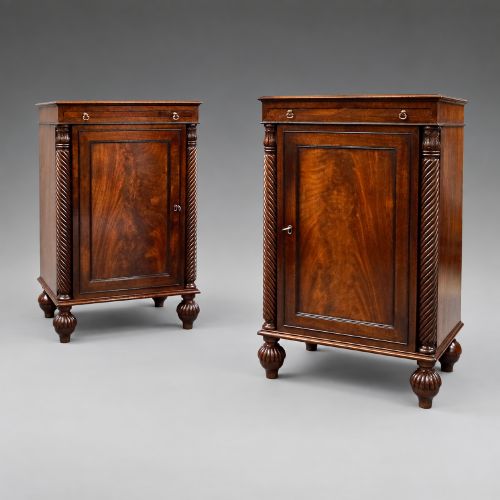
The versions you are most likely to meet on this page date from the nineteenth century up to the 1910s, with a strong representation of Victorian examples. They appear singly or in matching pairs, shaped by regional British, Irish, and continental French traditions.
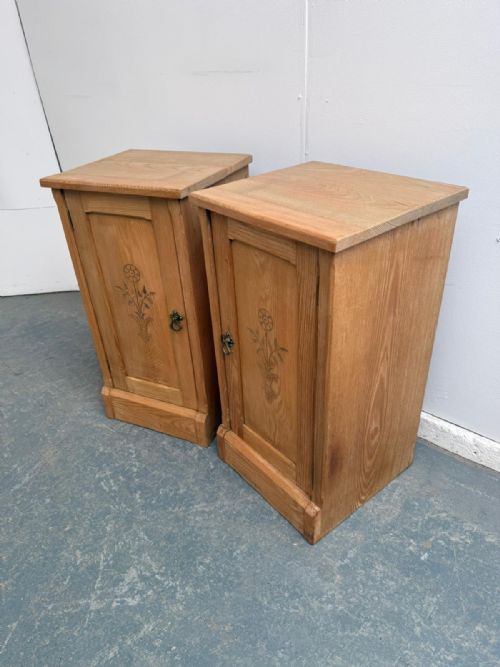
Makers and makers' workshops of the period utilised forms ranging from tall ash structures to low mahogany cupboards. Their varied origins account for the mix of simple country pieces and elaborate urban designs seen across the inventory.
How they were made
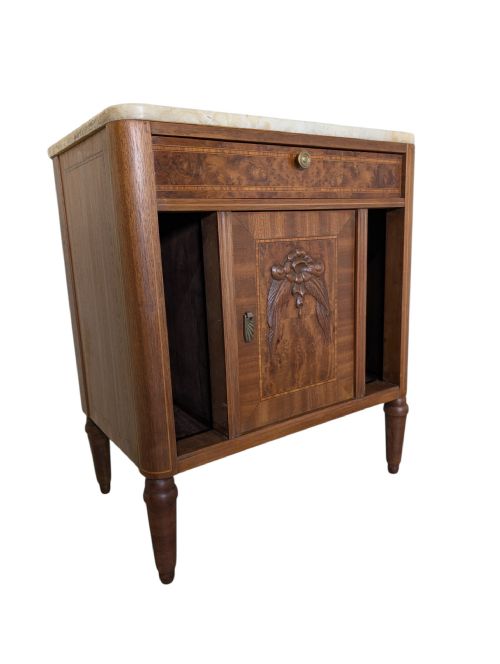
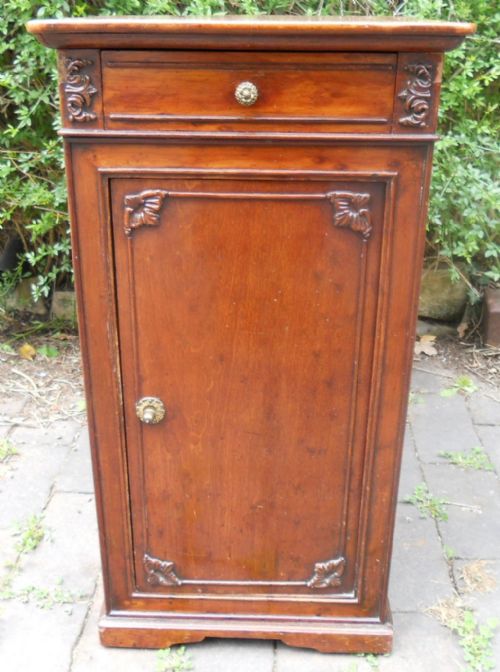
Cabinetmakers constructed these pieces primarily from solid and veneered timbers including mahogany, walnut, ash, and satinwood. Many examples incorporate marquetry inlay, painted wood details, or applied gold leaf to accentuate the woodwork.
Hardware played an essential functional and decorative role, with brass fixtures frequently fitted to doors and drawers. Selected pieces also integrated marble tops to provide a durable, hardwearing surface for daily use.
Carved Wood Lockers Retail Price Guide 2026
Typical asking prices for carved wood lockers among the pieces listed under this phrase on Sellingantiques today, from the lower quarter to the upper quarter. They describe what is for sale here now, not the wider market.
One late Victorian cabinet bears the stamp of Heal's, proving even modest bedside storage once passed through famous London showrooms.
What varies in quality
The distinction between standard utility items and finer cabinetmaking lies in the selection of timber and the precision of the joinery. Dense hardwoods and carefully matched veneers demonstrate greater workshop skill than simpler, utilitarian builds.
The complexity of the decorative program separates ordinary pieces from superior examples. Finely executed marquetry inlay, purposeful brass hardware, and maker stamps elevate a cabinet beyond standard commercial production.
Heals·Gillows
The Carved Wood Lockers Glossary
- Marquetry inlay
- The art of applying pieces of veneer to a structure to form decorative patterns. This technique is often seen in geometric or floral designs on cabinet doors.
- Bedside cabinet
- A small freestanding cupboard or locker intended to stand next to a bed. It typically encloses a shelf space behind a single door.
- Satinwood
- A durable, yellowish timber native to India and Ceylon, prized for its lustrous grain. It was frequently used for fine veneering and inlay work.
- Arts and Crafts
- A design movement prioritising traditional craftsmanship and honest construction over mass production. Pieces from this style often feature exposed grain and waxed finishes.
Carved Wood Lockers: Frequently Asked Questions
What are carved wood lockers used for?
These pieces serve primarily as bedside cabinets and small side cupboards for enclosed storage. They hold personal items while occupying a minimal footprint in a bedroom or dressing room.
Historically, they provided a clean, enclosed space for chamber pots or night essentials before modern plumbing. Today, buyers utilise them as functional bedside tables with concealed storage.
How do I date a Victorian bedside cabinet?
Dating relies on examining the timber, construction methods, and stylistic cues present in the piece. Victorian examples often feature mahogany or walnut, sometimes bearing stamps from known firms.
Comparing the hardware, such as brass pulls and hinges, alongside secondary timbers helps narrow the decade of manufacture. Period styles like Arts and Crafts or French Art Nouveau offer further chronological markers.
Are these cabinets sold as pairs?
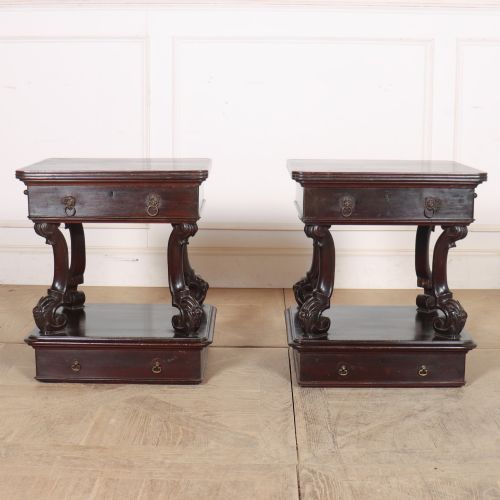
The inventory includes both individual cabinets and matched pairs. Pairs are particularly sought after for placing on either side of a larger bed.
Single pieces often turn up as standalone items from different makers or regions. Checking the dimensions and wood grain helps determine if two similar cabinets form a genuine pair.
What timbers were commonly used?
Makers relied heavily on dense hardwoods like mahogany and walnut for durability and rich colour. Ash and satinwood also appear, particularly in later nineteenth-century and Edwardian pieces.
Decorative elements frequently incorporated marquetry inlay using contrasting woods. Some cabinets also feature marble tops set directly into the wooden frame.