


Carved Wood Lighting
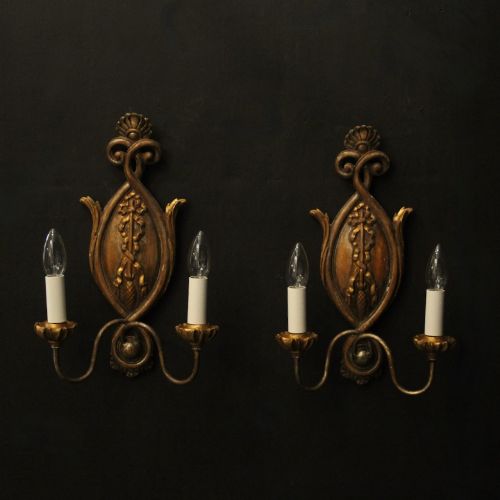
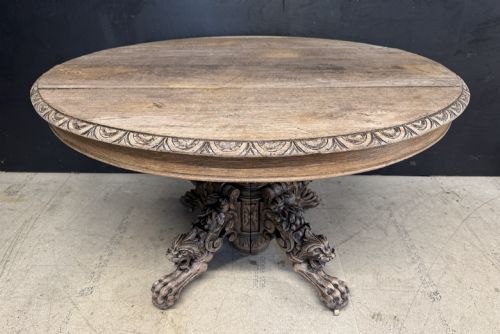
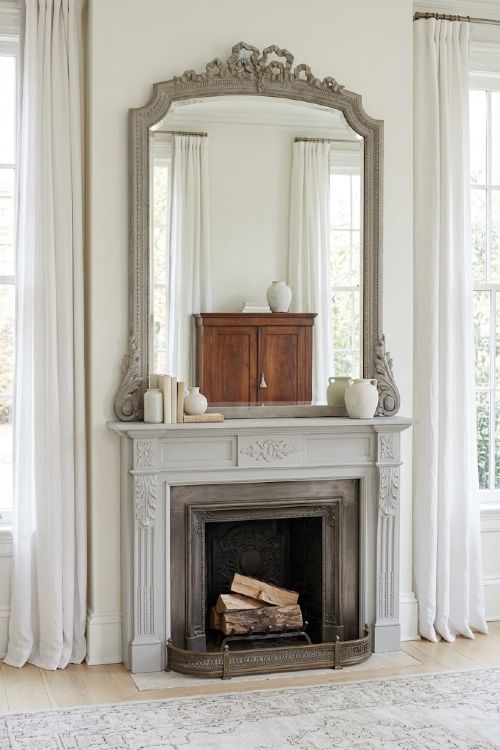
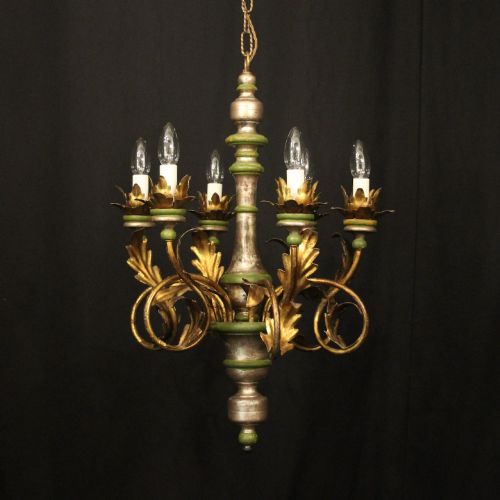
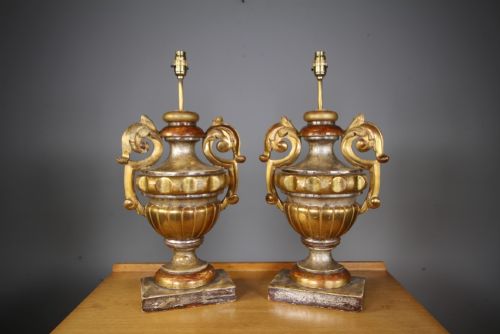
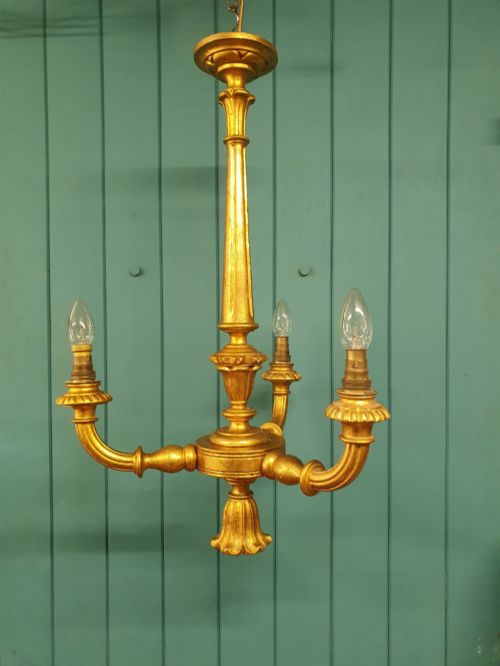
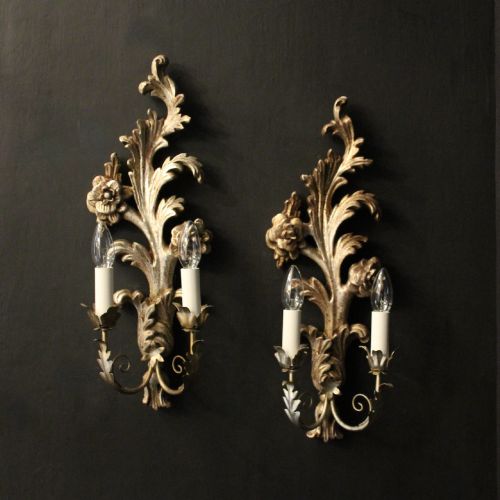
Carved wood lighting brings sculptural warmth to an interior through items shaped from oak, walnut, mahogany, and giltwood.
Carved Wood Lighting
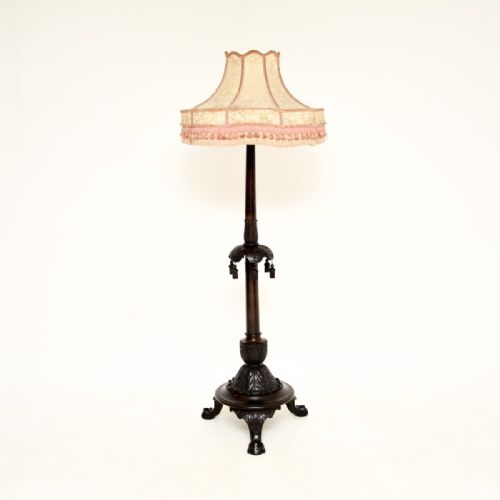
Carved wood lighting spans table lamps, floor lamps, wall lights, and chandeliers originating from periods such as the eighteenth and nineteenth centuries, alongside Edwardian and 1930s examples.
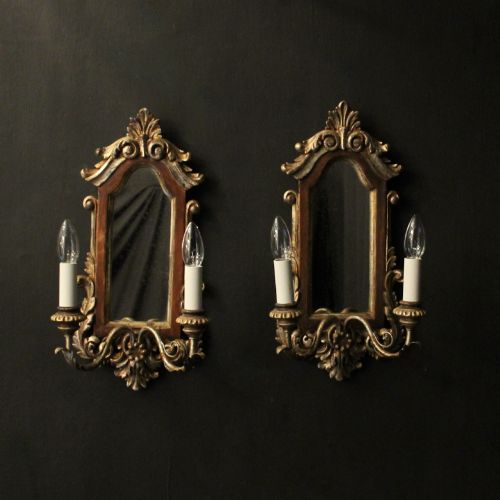
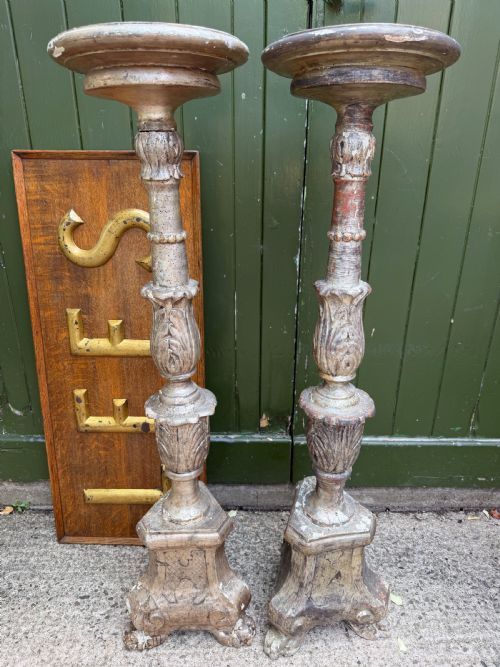
Italian Florentine pieces and French or English standard lamps dominate the selection, utilising carved wooden bases, arms, and brackets often adapted for electricity from earlier candle-stands or torcheres.
Materials and Construction
Woodcarvers shaped oak, walnut, pine, and mahogany by hand, applying gesso and layers of gold or silver leaf to surfaces intended for Florentine and giltwood wall lights and chandeliers.
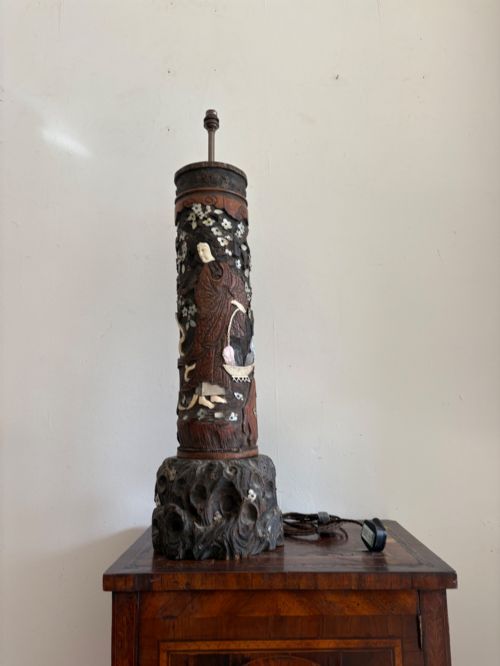
Makers integrated brass and metal fittings into wooden standards and wall sconces, combining structural turning with hand-chiselled detail on figures, acanthus leaves, and fluted columns.
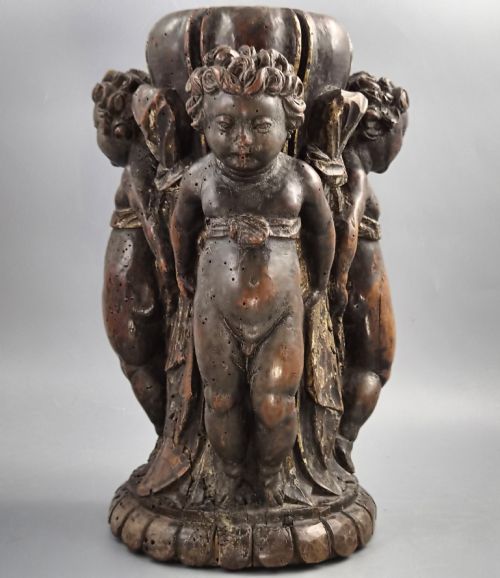
Several wooden standards started life as solemn church candle-stands before receiving electrical upgrades to illuminate domestic parlours.
Execution and Detail
Quality rests in the crispness of the hand-carving and the depth of the gesso and gilding, where refined chisel work on walnut and pine creates distinct definition in foliage and human forms.
The integration of original metal arms, brass sockets, and balanced proportions distinguishes exceptional standards and girandoles from simpler turned timbers.
The Carved Wood Lighting Glossary
- Giltwood
- Wood carved and coated with gold leaf over a prepared gesso layer. This surface treatment appears frequently on Florentine chandeliers and wall sconces.
- Torchiere
- A tall stand originally designed to hold a torch or candle, often carved from wood in Italian workshops. Many examples later undergo conversion into floor lamps.
- Girandole
- An ornamental bracket for candles featuring a mirrored backplate that reflects light into a room. These fixtures often showcase intricate carved wood and gilt frames.
- Gesso
- A plaster-like mixture applied to wood surfaces to create a smooth base for gilding and painting. It allows carvers to achieve sharp details before applying gold leaf.
- Pricket
- A sharp metal spike on a candleholder designed to secure a wax candle in place. This form persists on older carved wooden altar sticks adapted as lamps.
Carved Wood Lighting: Frequently Asked Questions
How do I clean carved wooden lighting?
Dust surfaces gently using a soft, dry brush to protect delicate gesso and gold leaf layers.
Avoid liquid cleaners or polishes that might damage historic finishes on giltwood and antique timber.
Are these lamps safe to use today?
Many older pieces arrive newly rewired or adapted from past candle-stands to accommodate modern electrical standards.
Have a qualified electrician inspect older internal wiring before connecting the fixture to a mains supply.
Where should I place a floor lamp?
Tall standard lamps suit corners of reception rooms or beside seating areas to provide ambient illumination.
Ensure the heavy timber or weighted base rests on a stable, level floor surface.