





Carved Wood Lacquered Screen
A carved wood lacquered screen brings layered depth and rich narrative scenes into a room, offering both decorative presence and functional division.
Carved Wood Lacquered Screen
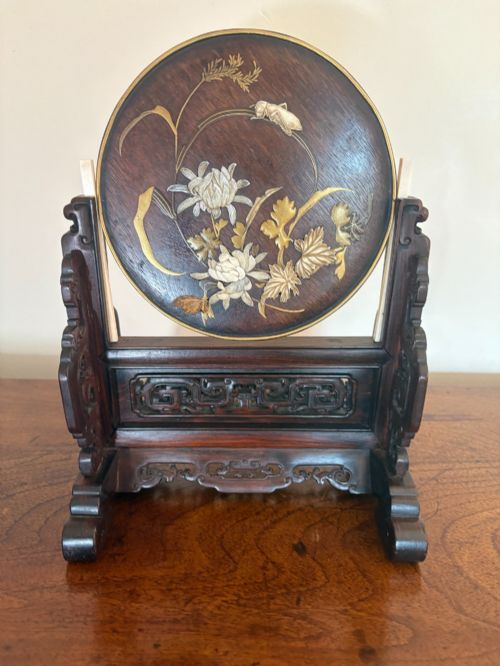
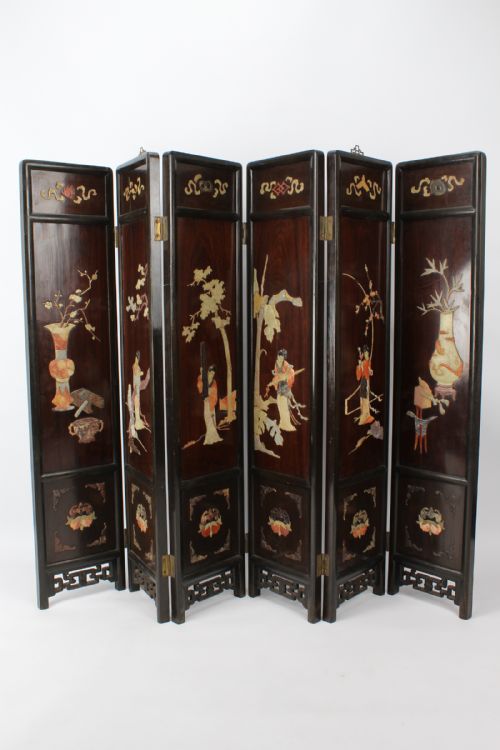
When you search for a carved wood lacquered screen, you are looking at substantial panels designed to divide spaces, dress rooms, or sit upon tables as decorative art. The versions you are most likely to meet on this page span the nineteenth century through to the mid-twentieth century, drawing on Japanese, Chinese, and Burmese traditions.
The formats vary from grand multi-fold folding screens and fire screens to intimate table screens and framed wall panels. These pieces combine wooden frames and panels with finished lacquer surfaces, often integrating intricate relief work that catches the light within a room.
Origins represented across these examples stretch from the Meiji period and Qing dynasty to the Chinese Republic Era and later mid-century works. Each piece reflects the specific decorative vocabulary of its maker and period, whether through folding room dividers or stationary wall art.
How they were made
Makers built these panels using sturdy timbers and hardwoods, applying successive coats of lacquer to create a smooth, durable foundation. Wood selection provided a stable base capable of supporting heavy surface decoration without warping over time.
Craftsmen enriched the lacquered surfaces through deep carving techniques that cut into the finish to reveal contrasting layers or underlying materials. They inlaid bone, hardstone, mother-of-pearl, and brass into the wood and lacquer, securing each element to build complex pictorial scenes.
Certain panels employed techniques reminiscent of Coromandel or Bantam work, where artisans incised designs into the lacquer and filled the recesses with colour or gold leaf. This combination of joinery, carving, and inlay required precise hand skills passed down through workshops.
Carved Wood Lacquered Screen Retail Price Guide 2026
Typical asking prices for carved wood lacquered screen among the pieces listed under this phrase on Sellingantiques today, from the lower quarter to the upper quarter. They describe what is for sale here now, not the wider market.
Materials recorded across the available selection include lacquer, wood, hardwood, bone, brass, mother-of-pearl, gold leaf, and hardstone.
What varies in quality
The distinction between standard examples and superior pieces rests on the depth and precision of the carving. Finely executed work shows sharp definition in figures and foliage, whereas lesser examples rely on shallow surface etching that lacks dimension.
Material selection and inlay integration define the upper tier of these pieces. The inclusion of carefully shaped bone, mother-of-pearl, and gold leaf indicates a higher level of workshop investment and artisan skill.
The Carved Wood Lacquered Screen Glossary
- Lacquer
- A durable finish applied to wood in multiple coats, derived from tree sap and polished to a smooth sheen. It protects the underlying timber while providing a canvas for carving and inlay.
- Shibayama
- A Japanese decorative technique involving the inlay of precious materials such as bone, ivory, shell, and coral into wood or lacquer bases. It creates raised, colourful pictorial motifs.
- Coromandel work
- A form of Chinese incised lacquer where designs are carved into a dark lacquer ground and filled with pigments or gold. The resulting panels present rich, textured surface patterns.
- Table screen
- A smaller version of a folding screen supported by a stand, designed for placement on desks or tables. These decorative objects often feature detailed carving or inlay on both sides.
- Folding screen
- A flexible room divider composed of multiple panels joined by hinges. They allow spaces to be partitioned dynamically while displaying continuous artwork across their surfaces.
Carved Wood Lacquered Screen: Frequently Asked Questions
How do I use a folding screen at home?
These screens work effectively to divide large open spaces, create private corners, or simply stand against a wall as a large artwork. Their hinged panels allow you to angle them to fit the room.
Position them away from direct heat sources and strong direct sunlight to protect the wood and lacquer finishes from drying out or fading over time.
Where should I place a table screen?
Table screens are designed for display on flat surfaces such as sideboards, desks, or mantelpieces. They offer an intimate way to enjoy detailed carving and inlay at eye level.
Ensure the supporting feet or stand are stable and place the screen where accidental knocks from daily movement are unlikely.
How do I care for lacquered wood?
Dust the surface regularly with a soft, dry cloth to prevent dirt accumulation within the carved recesses and inlay work. Avoid using water, polishes, or chemical cleaners, which can damage the historic lacquer finish.
Maintain a stable indoor humidity level to prevent the wood beneath the lacquer from expanding or contracting, which can stress the decorative surface.
How do I identify the period of a screen?
Look closely at the joinery, the style of the carved figures, and the materials used in the inlays. Pieces from the nineteenth century often show heavier hardwood construction and deep bone or mother-of-pearl relief.
Compare the stylistic elements, such as Meiji period motifs or Chinese export characteristics, against established design periods to narrow down the date of manufacture.