


Carved Wood Dining Table
A carved wood dining table brings centuries of cabinet-making skill straight into the home, offering solid timbers and robust forms built to host daily meals.
Carved Wood Dining Table
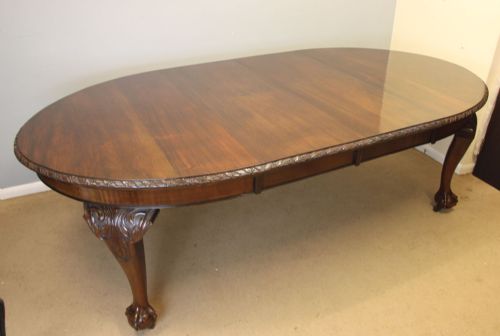
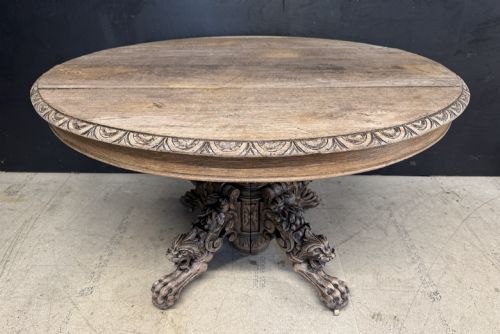
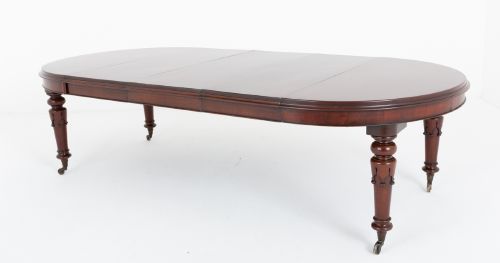
When you search for a carved wood dining table, you encounter an array of antique forms spanning the eighteenth, nineteenth, and early twentieth centuries. These pieces encompass extending dining tables, pedestal breakfast tables, and rustic farmhouse boards designed for communal gatherings.
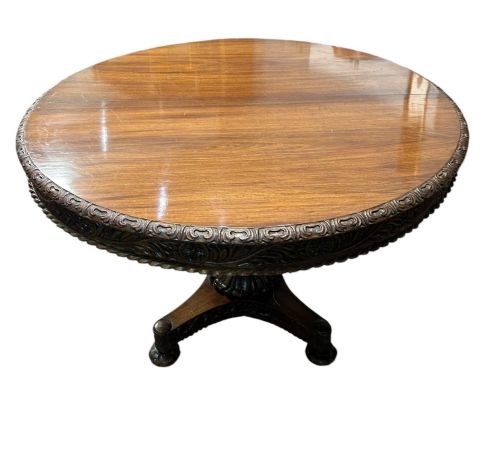
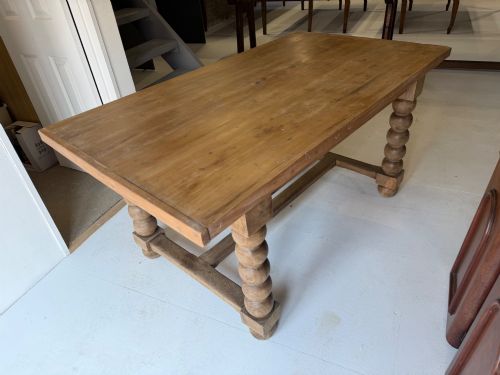
The selections on this page lean heavily towards nineteenth-century Victorian and William IV examples, frequently shaped from rich rosewood and dense mahogany. Alongside these grand formal designs appear simpler oak and beech pieces reflecting country house and farmhouse traditions.
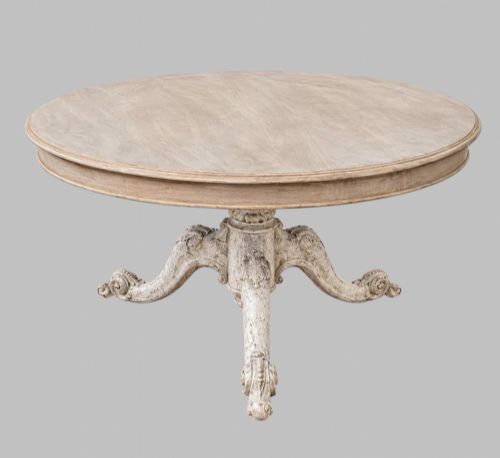
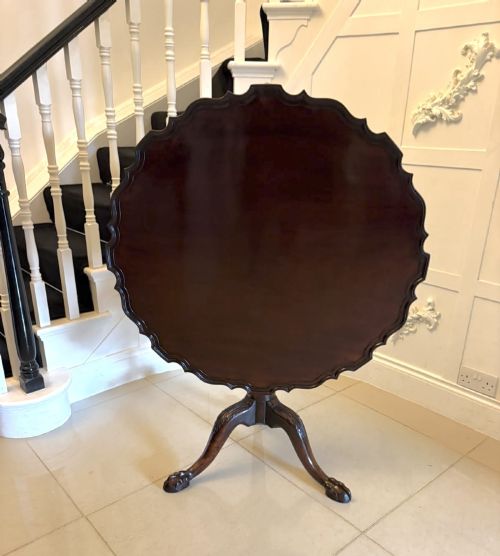
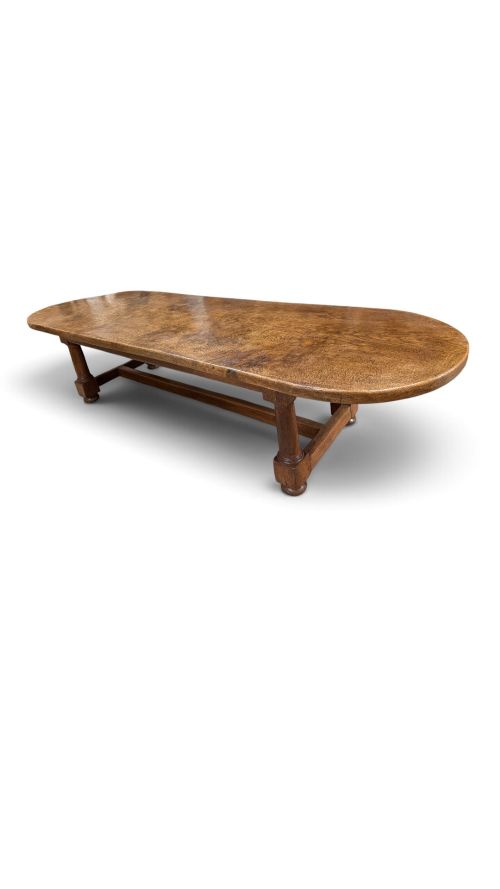
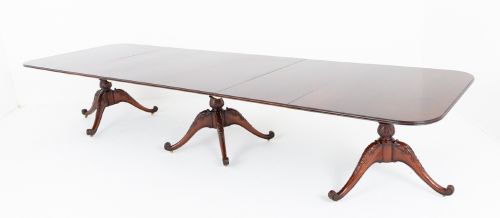
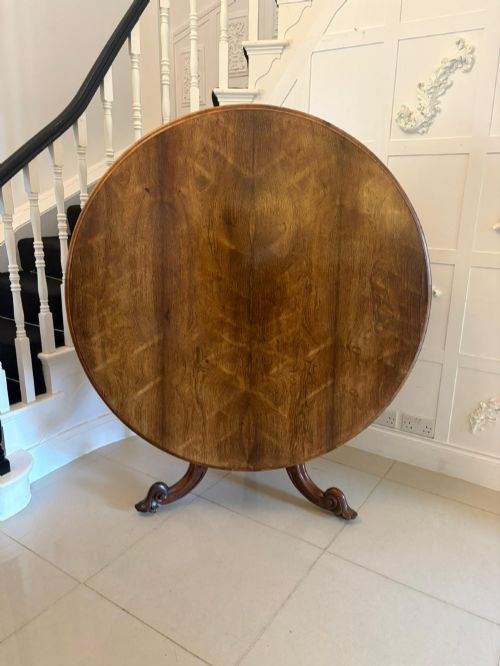
Buyers also meet specialised variations including D-end dining tables with extra leaves, tilt-top breakfast tables, and circular centre tables resting on carved solid bases. Each form reflects the specific domestic habits and social rituals of its period of origin.
Materials and construction methods
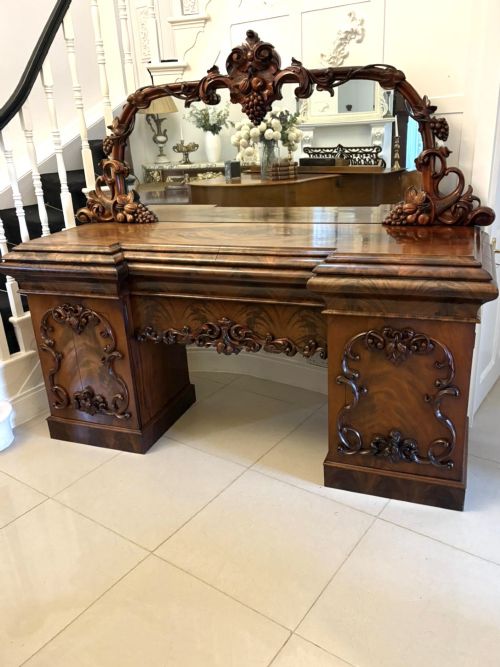
Cabinet-makers relied on heavy hardwoods such as mahogany, rosewood, oak, and walnut, often selecting flame mahogany veneer to cover structural panels with dramatic grain patterns. Softer woods like beech and birch appear in regional or vernacular pieces alongside specialised imports like padauk and albuera wood.
Carving was executed directly into solid timber bases, pedestals, and friezes, utilising deep relief work for floral motifs, cabriole legs, and paw feet. Mechanical ingenuity matched this manual skill through draw-leaf mechanisms, tilt-top pivots, and screw-driven extending dining table frames.
Distinctions in quality and execution
The separation between standard and superior pieces rests in the ambition of the design and the crispness of the hand-carved detail on pedestals and legs. Master workshops invested substantial labour into deep, undercut foliage and robust structural framing that resists the shifting strains of daily use.
Timber selection and veneer matching dictate visual depth, with premium tables utilising dense, highly figured grain across leaves and tabletops rather than uniform, flat surfaces. The integrity of internal mechanisms, from brass castor mountings to smooth extending runners, marks the difference between practical utility and high-status manufacture.
Gillows·Maple & Co·William and Gibton
The Carved Wood Dining Table Glossary
- Extending dining table
- A table equipped with a central mechanism and removable leaves to lengthen the top. This design accommodates large dinner parties and collapses for daily domestic space.
- Tilt-top table
- A table with a hinged top that pivots vertically to stand flat against a wall when not in use. This clever space-saving invention was popular in nineteenth-century drawing rooms.
- Triform base
- A heavy three-sided pedestal support resting on shaped feet. It provides sturdy balance for circular rosewood breakfast tables.
- Draw-leaf table
- A table fitted with pull-out extension leaves stored beneath the main surface. The clever sliding design allows quick expansion without removing separate boards.
- D-end table
- A dining table composed of sections with semi-circular ends joined by leaves. This modular construction allowed versatile room arrangements in Georgian and Regency dining rooms.
Carved Wood Dining Table: Frequently Asked Questions
How do I maintain a polished wood surface?
Apply a traditional beeswax polish sparingly and buff with a soft cloth to nourish the historic grain. Avoid placing hot dishes or damp glasses directly on the timber to protect the finish.
Keep these tables away from direct heat sources and strong sunlight to prevent the timber from drying out or splitting over time. Gentle, regular dusting preserves the natural lustre of mahogany and rosewood.
How do I tell Regency from Victorian tables?
Regency tables generally display restraint with clean architectural lines, brass inlay, and classical reeding. Victorian pieces embrace heavier proportions, darker rosewood timbers, and exuberant floral carvings.
Examine the undercarriage and fixing methods, as construction hardware changed significantly between the early and late nineteenth century. Regency examples often show lighter scale, while Victorian designs emphasise solid mass and deep relief work.
Can I use an antique table daily?
These pieces were built for heavy domestic service using dense hardwoods designed to withstand generations of family life. Using heat mats and table linen protects the antique polish during meals.
Regular use keeps the timber conditioned and functional, provided the mechanisms are operated with care. Extending runners and tilt-top pivots benefit from occasional gentle waxing rather than heavy industrial lubricants.
What is a tilt-top table used for?
A tilt-top table served as a versatile breakfast or occasional table that could be pushed against a wall to clear the floor space. Servants would tip the surface upright when the room was needed for other daytime activities.
In modern homes, these tables function well as prominent display surfaces or lamp tables in corners. The mechanism allows collectors to appreciate the carved pedestal and tripod base when the table is stored upright.