


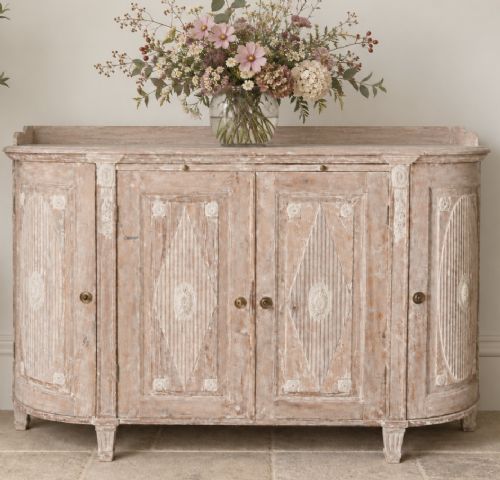
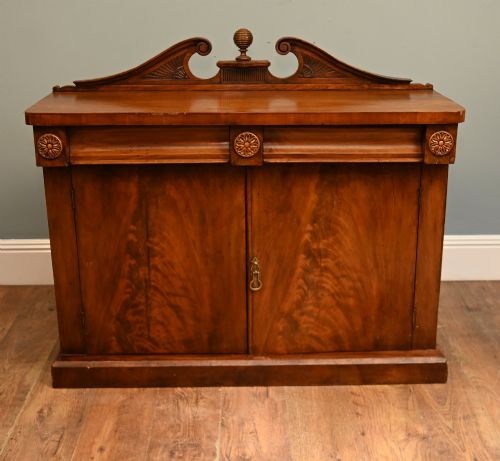
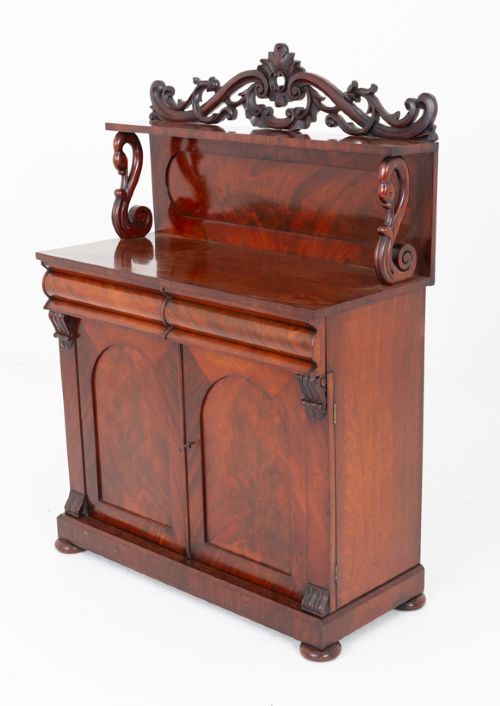
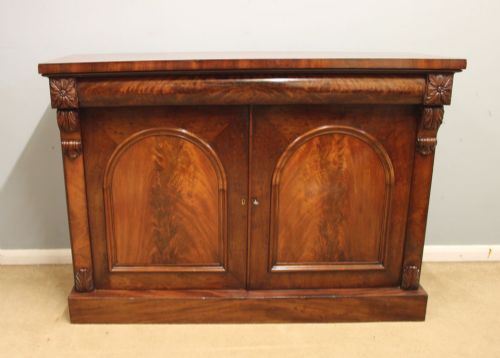
Carved Wood Dining Cabinet
A carved wood dining cabinet brings solid utility and presence to a room, offering generous storage through fitted drawers and cupboards for dining silver and linens.
Carved Wood Dining Cabinet
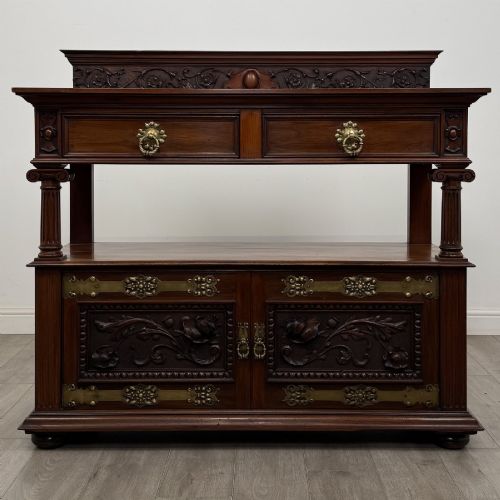
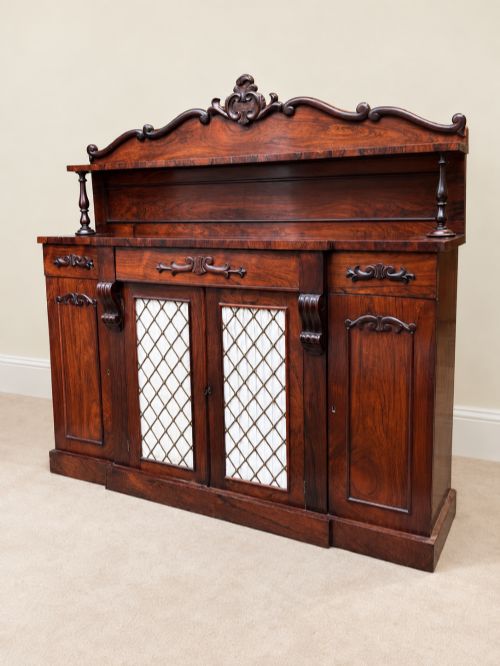
A carved wood dining cabinet encompasses sturdy oak buffets and mahogany sideboards built to anchor formal dining spaces across the Victorian, Edwardian and William IV periods.
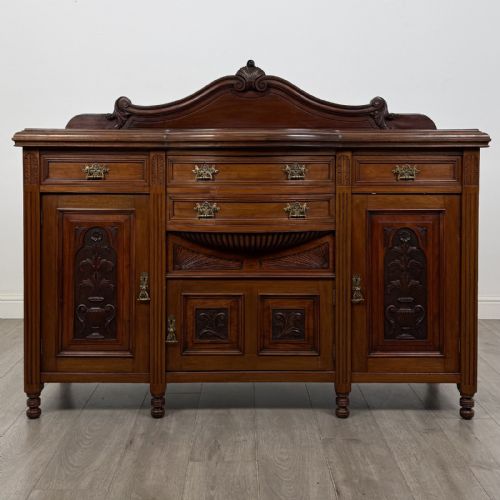
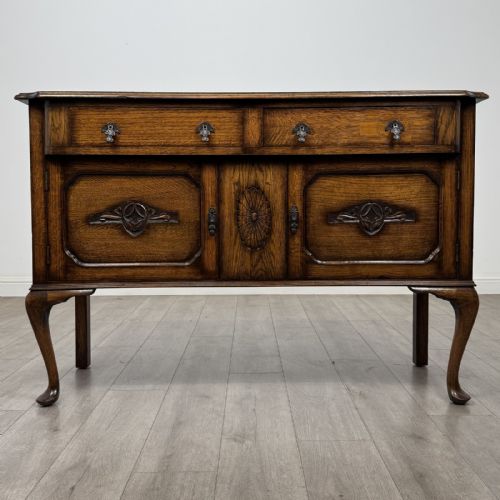
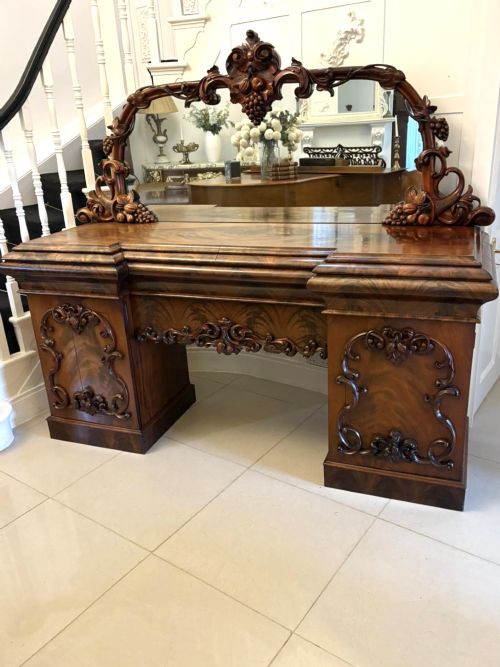
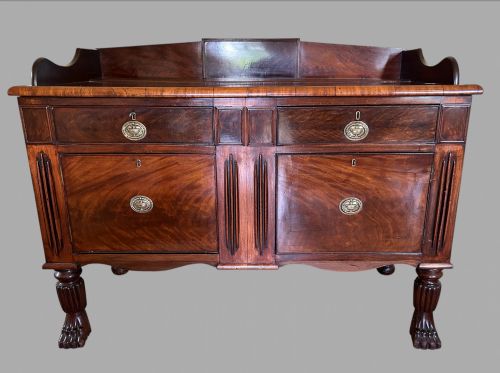
The most common examples on this page are substantial Victorian mirror-back sideboards and Edwardian oak servers resting on claw and ball feet or barley twist legs.
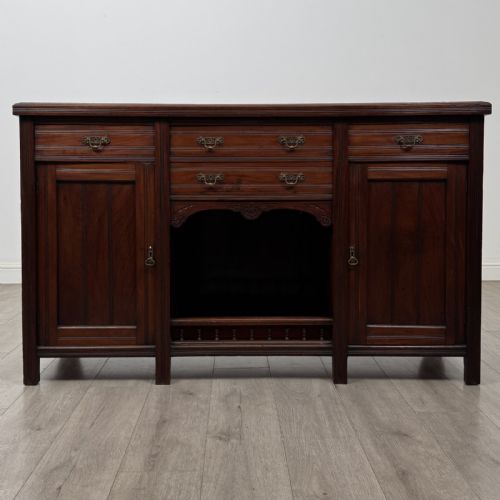
Pieces span forms from serpentine front servers to breakfront chiffoniers, reflecting domestic requirements for hosting and display through the nineteenth and early twentieth centuries.
Materials and Construction
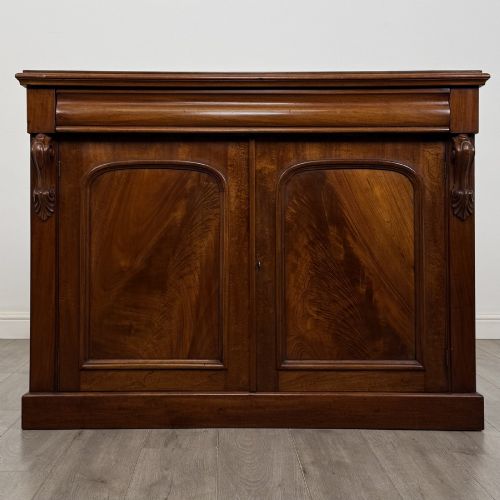
Cabinet makers utilised dense hardwoods including mahogany, pollard oak and walnut, frequently applying flame mahogany veneer or burr walnut to drawer fronts for visual depth.
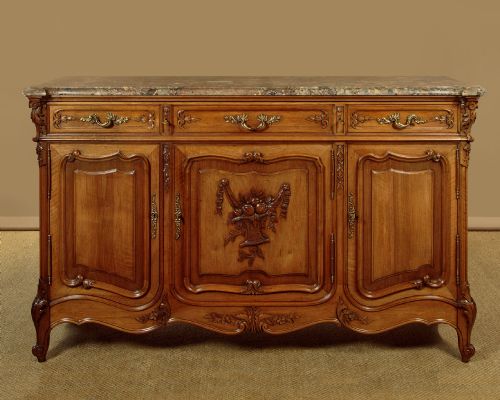
Structural embellishments rely on hand-carved details, raised panels and brass hardware, complemented by bevelled glass in mirror backs and display sections.
Carved Wood Dining Cabinet Retail Price Guide 2026
Typical asking prices for carved wood dining cabinet among the pieces listed under this phrase on Sellingantiques today, from the lower quarter to the upper quarter. They describe what is for sale here now, not the wider market.
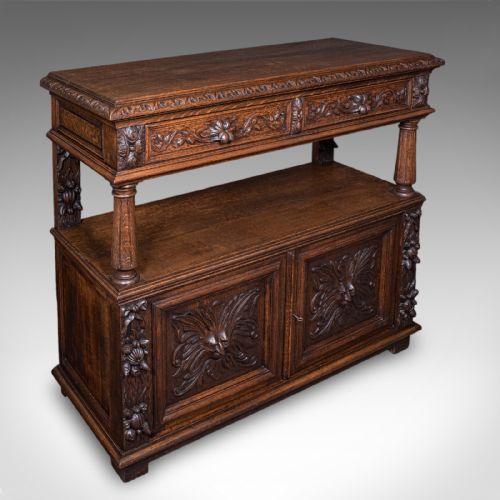
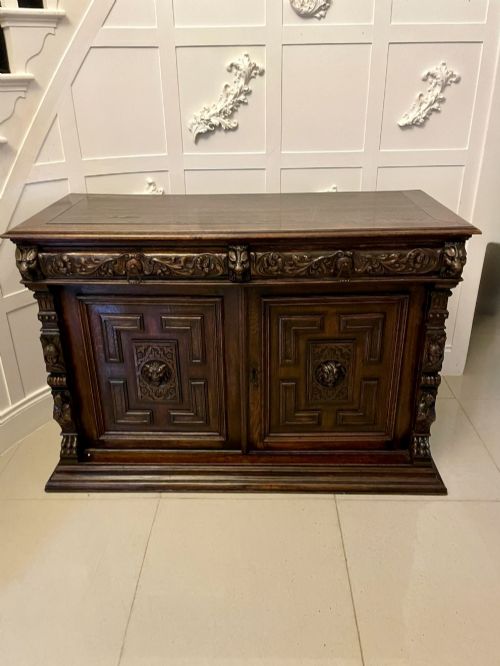
Several heavy oak sideboards feature fierce Green Man carvings keeping watch over the dining room.
The Measure of Craft
Quality rests upon the selection of timber figures, such as heavily figured mahogany or matched burr walnut, alongside the crispness and depth of the hand carving.
Superior examples demonstrate meticulous joinery in structural elements like stretcher bases and serpentine fronts, paired with original brass fittings and intact mirror plates.
The Carved Wood Dining Cabinet Glossary
- Chiffonier
- A compact sideboard or low cabinet typically fitted with enclosed shelving below and sometimes a raised mirror back above.
- Breakfront
- A piece of furniture whose central section projects forward from the flanking outer sections.
- Serpentine front
- A furniture front curved in a wave shape, featuring a convex centre flanked by concave ends.
- Barley twist
- A turned wooden furniture leg or support resembling the spirals of a barley stalk.
- Flame mahogany
- A veneer cut from the fork of a mahogany tree that displays a distinctive flickering flame pattern.
Carved Wood Dining Cabinet: Frequently Asked Questions
What is a carved wood dining cabinet?
A carved wood dining cabinet is a large storage piece designed for a dining room, encompassing sideboards, buffets and chiffoniers built to hold tableware.
These items combine deep cupboards and drawers with decorative timber surfaces and occasional mirror backs.
How were these cabinets used?
Historically, these pieces served as functional serving stations during large meals, holding platters, cutlery and glassware on top while storing household linens below.
In modern homes, they function as substantial dining room storage units and display surfaces.
How do I date a sideboard?
Dating relies on observing the combination of timber species, hardware styles, structural motifs and manufacturing techniques present across different eras.
Victorian pieces often feature heavy carved oak or mirror backs, whereas Edwardian examples frequently showcase lighter mahogany or inlaid details.
How do I maintain wood furniture?
Maintenance requires keeping wooden cabinets away from direct heat sources and sudden humidity shifts to prevent timber splitting and veneer lifting.
Regular dusting with a soft cloth and occasional application of appropriate wax keeps the timber nourished and preserves the finish.